

Army Unit Patches: Types and Insignia Explained
Table of Contents
- Understanding Army Unit Patches and Their Significance
- Shoulder Sleeve Insignia (SSI): Command and Division Identity
- How to Identify Military Patches and Their Components
- Shoulder Sleeve Insignia Meaning and Wear Regulations
- Combat Service Identification Badge and Deployment History
- Additional Patch Types: Airborne Tabs, Skill Badges, and Branch Tapes
- Patch Care and Maintenance for Long-Lasting Wear
- Frequently Asked Questions
Last Updated: October 3, 2026
Understanding Army Unit Patches and Their Significance
Army unit patches tell the story of a soldier's service, unit affiliation, and military achievements. Each patch communicates identity, accomplishment, and belonging to a specific command structure or specialized group.
Army unit patches serve distinct purposes: some identify the soldier's primary unit, others mark specialized training or combat deployment, and still others commemorate achievements. Understanding these patches helps service members and civilians appreciate military dress and uniform standards.
Shoulder Sleeve Insignia (SSI): Command and Division Identity
Shoulder Sleeve Insignia (SSI) is the primary patch worn on the upper arm, identifying a soldier's major command or division. Soldiers wear SSI on the right shoulder for current assignment and on the left shoulder to display former units or deployment history.
The SSI communicates organizational hierarchy at a glance. Each design reflects the unit's history, mission focus, and sometimes geographic area of responsibility through distinctive colors, symbols, and heraldry.
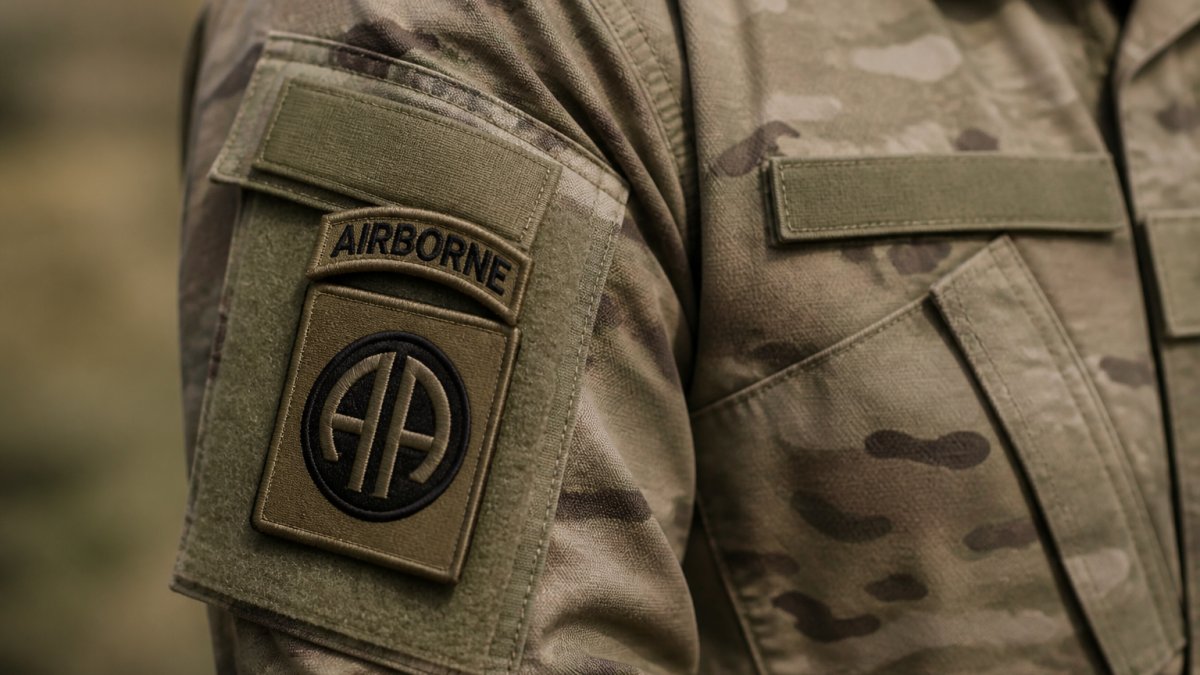
Examples include the 82nd Airborne Division patch with its distinctive all-American symbol and brigade-level insignia that identify subordinate units within larger commands.

| Unit Type | Typical Size | Wear Location | Purpose |
|---|---|---|---|
| Division SSI | 2.5"-3.5" | Right shoulder (current) | Current unit assignment |
| Brigade SSI | 2.5"-3" | Right shoulder (current) | Command identification |
| Historical SSI | 2.5"-3.5" | Left shoulder (former) | Service history |
| Reserve Command | 2.5"-3" | Right shoulder | Reserve component assignment |
US Troop Gear, Inc. stocks a selection of iron-on SSI patches including the 1st Army Iron On Patch ($10.50) and the 82nd Airborne Iron On Patch ($8.50), making it easy to display unit pride on caps, jackets, or other gear.

How to Identify Military Patches and Their Components
Identifying military patches requires understanding their visual elements: color scheme, symbols, text, and placement all carry specific meaning within military tradition and regulation. A systematic approach helps distinguish between similar designs and understand the hierarchy they represent.
The Visual Hierarchy: Shape, Size, and Placement
Patch shape is often the first identifier. SSI patches are typically rectangular or square (2.5-3.5 inches). Airborne and Air Assault tabs are curved or tab-shaped, sitting above the SSI. Combat Service Identification Badges feature a rifle-and-wreath design. This hierarchy of size and shape allows trained eyes to identify patch type at a distance.
Standardized placement (governed by AR 670-1) reinforces identification: current unit SSI on the right shoulder, former units on the left, airborne tabs above the right shoulder SSI, name tapes across the chest, and combat patches on the left shoulder. This allows rapid assessment of a soldier's current assignment, qualifications, and service history.
Reading Patch Colors and Designs
Patch colors follow military symbolism: gold/yellow represent command authority or artillery; blue indicates Air Force or naval heritage; red appears in artillery, medical, or combat support patches; green dominates Army patches; black denotes special operations or reconnaissance units.
Symbols within patches represent specific operational roles: eagles indicate divisions or major commands, crossed sabers represent cavalry, rifles denote infantry, crossed cannons indicate artillery, shields suggest brigades, and geographic symbols reference area of responsibility or historical origin.
Text on patches includes unit designation, command name, or specialized qualification. Reading these elements provides a complete picture of a soldier's assignment and capabilities.
Full Color vs. Subdued Versions and Infrared Considerations
Military regulations require patches in two versions: full color for dress uniforms and formal occasions, and subdued (muted) versions for combat and field uniforms using darker, less reflective colors appropriate for tactical environments.
Subdued versions maintain all identifying elements in muted tones, ensuring uniform compliance across different operational contexts under AR 670-1.
Infrared (IR) patches, designed to be visible under night-vision equipment while remaining subdued to the naked eye, use specialized materials reflecting infrared light for unit identification during night operations. IR patches are increasingly standard in combat units.
Distinguishing Similar Patches: A Practical Framework
When patches appear similar, examine: (1) unit number or name for text differences, (2) primary color field, (3) central symbol, (4) secondary symbols or borders, and (5) placement on uniform. This systematic approach distinguishes between patches from different divisions, brigades, or commands.
Shoulder Sleeve Insignia Meaning and Wear Regulations
Proper wear of SSI patches follows Army Regulation 670-1 (Uniform and Insignia), which governs positioning, securing, and maintenance to ensure compliance and professional appearance.
AR 670-1 Placement Standards
AR 670-1 specifies exact placement: right shoulder for current unit assignment, left shoulder for former units (typically 12+ months service). This dual-patch system creates a visual record of service history.
SSI patches sit on the upper arm, centered between shoulder and elbow, with the top approximately 1 inch below the shoulder seam. Multiple former-unit patches on the left shoulder are stacked vertically with approximately 0.5 inches between each.
Combat uniforms use velcro-backed patches for quick removal and replacement; dress uniforms use sewn patches for permanence. Both must sit flat without wrinkles, gaps, or shifting.
Securing Patches: Velcro vs. Sewing
Velcro backing allows rapid patch changes for field and combat uniforms. The hook side affixes to the uniform sleeve, with the loop side on the patch backing.
Sewn patches are required for dress uniforms.
Soldiers transitioning between uniform types must ensure patches meet the attachment standards for each configuration.
Significance and Service History Communication
For service members, wearing their unit patch represents connection to their command, fellow soldiers, and shared mission. The right shoulder patch identifies the soldier's current team and operational focus.
Left shoulder patches tell a service story. Multiple patches communicate experience, adaptability, and career progression. For veterans, displaying former unit patches honors service history and maintains bonds with those who served alongside them.
Unit patches carry historical weight. The 82nd Airborne Division patch represents continuous lineage dating to World War I, connecting current soldiers to decades of military history and past achievements.
Regulatory Compliance and Inspection Standards
AR 670-1 compliance is enforced through uniform inspections. Torn, faded, or improperly positioned patches can result in corrective action or uniform correction orders.
Soldiers must maintain patches in clean, serviceable condition. Faded, loose, or damaged patches must be replaced or repaired to ensure professional appearance and clear unit identification.
When soldiers transfer to new units, they must update their right shoulder SSI within 30 days. The former unit patch moves to the left shoulder, and the new unit patch is affixed to the right shoulder.
Improperly worn or damaged patches can result in uniform correction orders or negative performance evaluations. Ensure patches are positioned correctly, securely attached, and in serviceable condition at all times.
Combat Service Identification Badge and Deployment History
Combat Service Identification Badges (CSIB) recognize soldiers who have participated in designated combat operations or served in specific combat zones. The badge features a rifle and wreath design, with specific combat theaters indicated through design or color variations. Unlike unit patches that change with transfers, CSIB badges remain permanent markers of deployment history and are stacked vertically on the uniform for multiple deployments.
Additional Patch Types: Airborne Tabs, Skill Badges, and Branch Tapes
Additional patches and insignia communicate specialized training, qualifications, and branch affiliation, creating a comprehensive visual narrative of a soldier's capabilities.
Airborne and Air Assault Tabs
Airborne tabs feature a curved design worn above the SSI on the right shoulder, indicating jump qualification earned through ground training, tower work, and five qualifying parachute jumps. Air Assault tabs identify soldiers trained in helicopter insertion and assault operations through rappelling, aircraft operations, and insertion techniques. Both tabs sit above the SSI and represent completion of demanding physical and technical training.
Name Tapes and Branch Identification
Name tapes display the soldier's last name in subdued lettering on the uniform chest and back for identification and accountability. Branch tapes identify the soldier's primary military specialty (infantry, armor, aviation, medical, support) and appear above or below the name tape, helping commanders assess available skill sets.
Morale Patches and Commemorative Insignia
Beyond regulation patches, many soldiers display morale patches that reflect unit culture, humor, or esprit de corps. While not part of official uniform standards, morale patches appear on field jackets, rucksacks, and gear during garrison operations. These patches often feature unit-specific humor, mascots, or historical references that build camaraderie.
Commemorative patches mark significant events, deployments, or unit anniversaries. Veterans often collect these patches as physical reminders of shared experiences and unit history. US Troop Gear, Inc. recognizes the importance of these items in maintaining connection to military heritage and service memories.
Patch Care and Maintenance for Long-Lasting Wear
Proper care extends the life of military patches and maintains their appearance. Whether you're wearing patches on active duty or displaying them on commemorative gear, following maintenance guidelines ensures they remain in serviceable condition.
Understanding army unit patches connects you to military tradition and honors the service these insignia represent. Whether you're displaying current unit affiliation, commemorating past service, or collecting patches that mark significant deployments, these patches carry meaning far beyond their physical appearance. US Troop Gear, Inc. is committed to providing high-quality patches and military gear that allow you to wear your pride with purpose. Browse our selection of military patches and apparel to find the perfect items that represent your service, your unit, and your respect for America's Armed Forces.
Frequently Asked Questions
What is the difference between a shoulder sleeve insignia and a combat service identification badge?
Shoulder sleeve insignia (SSI) identifies your unit, command, or division and is worn on the upper sleeve. The combat service identification badge (CSIB) represents deployment history and is worn on the left chest. SSI shows where you belong organizationally; CSIB shows where you've served in combat. Both are required under AR 670-1 regulations when applicable to your service record.
How do I identify an Army unit patch?
Look for the patch's color scheme, heraldic symbols, and text elements. Unit patches typically feature distinctive colors and designs that represent the unit's history and mission. Check the patch's position on the uniform, read any text or abbreviations, and cross-reference with official Army records or unit histories. The 1st Army Iron On Patch ($10.50) and 82nd Airborne Iron On Patch ($8.50) are examples of authentic unit insignia with clear identifying characteristics.
What are the most common types of Army unit patches?
The primary types are shoulder sleeve insignia (unit/command patches), combat service identification badges (deployment patches), and airborne and air assault tabs. Each serves a specific purpose on the uniform. Shoulder sleeve insignia represent your assigned unit, while CSIBs show combat deployments. Tabs like the airborne designation indicate special qualifications. Many soldiers wear multiple patch types simultaneously, each telling part of their service story.
Are there specific rules for wearing Army unit patches?
Yes, AR 670-1 (Army Uniform and Insignia Regulation) governs all patch placement and wear. Shoulder sleeve insignia go on the upper sleeve, CSIBs on the left chest, and tabs above the SSI. Placement, size, and wear conditions are strictly defined. Full-color patches are worn on dress uniforms, while subdued versions go on combat uniforms. Understanding these regulations ensures your uniform displays your service correctly and respectfully.