

Benefits of Buying Veteran Support Items Online
Table of Contents
- Why Buying Veteran Support Items Online Pays Off
- Tax-Free Shopping and Exclusive Pricing Through the Military Exchange
- How to Verify Veteran-Owned Businesses Before You Buy
- The Impact of Supporting Veteran Charities and MWR Programs
- Best Military Apparel Brands 2026: What Sets Quality Gear Apart
- Shipping Thresholds, Payment Options, and Member-Only Credit
- Challenge Coins and Specialized Goods You Can Only Find Online
- Frequently Asked Questions
Last Updated: October 1, 2026
Why Buying Veteran Support Items Online Pays Off
Buying veteran support items online gives you access to officially licensed gear and direct contributions to military charities, all from one secure portal. This guide from US Troop Gear, Inc. breaks down the real advantages.
The shift toward online purchasing has changed how the military community shops. Instead of driving to a base exchange or waiting for a catalog, service members, veterans, and their families can now browse branch-specific apparel and commemorative coins from anywhere. The convenience is obvious, but the financial and charitable upside is what most people miss.
Here's the part that matters: not every site selling military-themed gear actually supports the military community. Some are pure retail plays with no charitable impact. Others, like the U.S. Department of Veterans Affairs, operate under strict licensing and donation rules that ensure your money does what you think it does.
Below, we'll show you exactly how to spot the difference, verify veteran-owned businesses, and get the most value from every purchase.
Tax-Free Shopping and Exclusive Pricing Through the Military Exchange
The military exchange system offers tax-free shopping and exclusive pricing to authorized patrons, a lifelong benefit for honorably discharged veterans and active-duty members. Online shopping privileges through the exchange mean you can access these savings without visiting a physical base.
Eligibility for these benefits hinges on your service record. Veterans with an honorable discharge qualify for online exchange access, while those with other discharge statuses may not. The Army & Air Force Exchange Service handles verification through a secure portal that checks your DD-214 or service records.
What does this mean in practice? A veteran buying a jacket through the exchange pays no sales tax, which can add up quickly on larger purchases. Compare that to a standard online retailer where you're paying state and local tax on every order.
The exclusive pricing structure isn't just about tax. Exchanges negotiate bulk procurement deals that often beat civilian retail prices on electronics, apparel, and household goods. For military families on a budget, this is real consumer savings.
How to Verify Veteran-Owned Businesses Before You Buy
Verifying a veteran-owned business takes three steps: check certification databases, confirm the owner's service record, and look for official licensing or partnership seals. Skipping this step means your money might not reach the military community at all. But the harder problem, the one most guides skip, is what to do when verification fails.
Many businesses claim to support veterans without proof. A common mistake is trusting a "veteran-owned" badge without checking who issued it. Legitimate certifications come from recognized bodies, and you can cross-reference them. Verifying these credentials ensures that your contributions directly reach the intended recipients, helping you identify the most reliable veteran-owned businesses to support.
Here's a practical checklist:
- Search the business name in the National Veteran-Owned Business Association directory
- Look for a VetBiz or similar government-issued verification number
- Check if the business holds official licensing from a branch of the military
- Read the "About" page for specific service details, not vague patriotic language
- Confirm the charitable impact claim with a linked donation policy
When Verification Fails: A Troubleshooting Walkthrough
Eligibility is not the same as successful verification. A common pattern is a legitimate veteran whose record can't be matched because of a name change, a missing DD-214, or a discharge characterization that doesn't map cleanly to a database field. Here's how to work through each case.
Case 1, No DD-214 on hand. The National Archives' National Personnel Records Center is the standard source for separation documents. Most requests are submitted online through the eVetRecs system, and standard turnaround is typically measured in weeks, not days. If you need the document faster for a time-sensitive purchase, request it before you start the verification process rather than after.
Case 2, Name mismatch. Records are often filed under a maiden name, a middle initial, or a variation that differs from your current legal name. Submit the verification using the name exactly as it appears on your separation document, then update your account profile afterward. Most verification portals match on the record, not on your current ID.
Case 3, Discharge characterization questions. Exchange and exchange-adjacent online privileges generally hinge on an honorable discharge. If your characterization is general or uncharacterized, the portal may reject the match even though you served.
Separating Government Benefits From Private "Buy-to-Support" Programs
This is the distinction most search results blur. Government-provided shopping benefits, exchange privileges, commissary access, and similar programs, are statutory entitlements tied to your service record. They are verified once and generally remain available for life if you qualify.
The Impact of Supporting Veteran Charities and MWR Programs
Supporting veteran charities and MWR programs creates a direct contribution to military community well-being, funding everything from recreation facilities to family support services. When you buy licensed products, a portion of that purchase flows into these programs. The key word is "licensed", because the mechanism that routes the money is what separates a real contribution from a slogan.
How the Money Actually Moves
The Morale, Welfare and Recreation program is one of the largest support networks for service members and their families. It funds gyms, libraries, recreational activities, and community events on bases worldwide. Royalties from officially licensed products help sustain these services.
What to Check Before You Trust a Charitable Claim
Most "support" claims are unverifiable. A common pattern is a brand that says a portion of proceeds goes to veterans but never names the recipient organization, the percentage, or the timing. Before you buy, look for four things:
- A named recipient. "Veterans" is not a recipient. A specific 501(c)(3) organization is.
- A stated percentage or amount. "A portion" is not a number. "5% of net proceeds" is.
- A stated cadence. Monthly, quarterly, or annual, the buyer should know when the donation happens.
- A published license or partnership number. For officially licensed goods, the license itself is the proof of the royalty flow.
Where Private Charities Fit
For veterans dealing with service-connected issues, some charitable programs also fund disability support and medical equipment. The Wounded Warrior Project is one well-known example, though many smaller organizations do similar work. The difference between a licensed-goods royalty and a private charity donation is oversight: royalties flow through a licensing agreement with a branch, while private donations flow through the charity's own governance and reporting.
Best Military Apparel Brands 2026: What Sets Quality Gear Apart
The best military apparel brands in 2026 share three traits: durable materials, respectful design, and a verifiable connection to military heritage. Price alone doesn't tell you which brands meet that standard.
| Feature | What to Look For | Why It Matters |
|---|---|---|
| Embroidery | Dense stitching, clean edges | Survives washing and wear |
| Fabric | Heavyweight cotton or blend | Holds shape, resists fading |
| Licensing | Branch-authorized designs | Ensures respectful, accurate artwork |
| Charitable tie | Documented donation policy | Confirms real community impact |
Shipping Thresholds, Payment Options, and Member-Only Credit
Online military retailers typically offer multiple payment methods. Understanding these terms helps you plan larger orders.
- Secure portal checkout protects your service verification data
Challenge Coins and Specialized Goods You Can Only Find Online
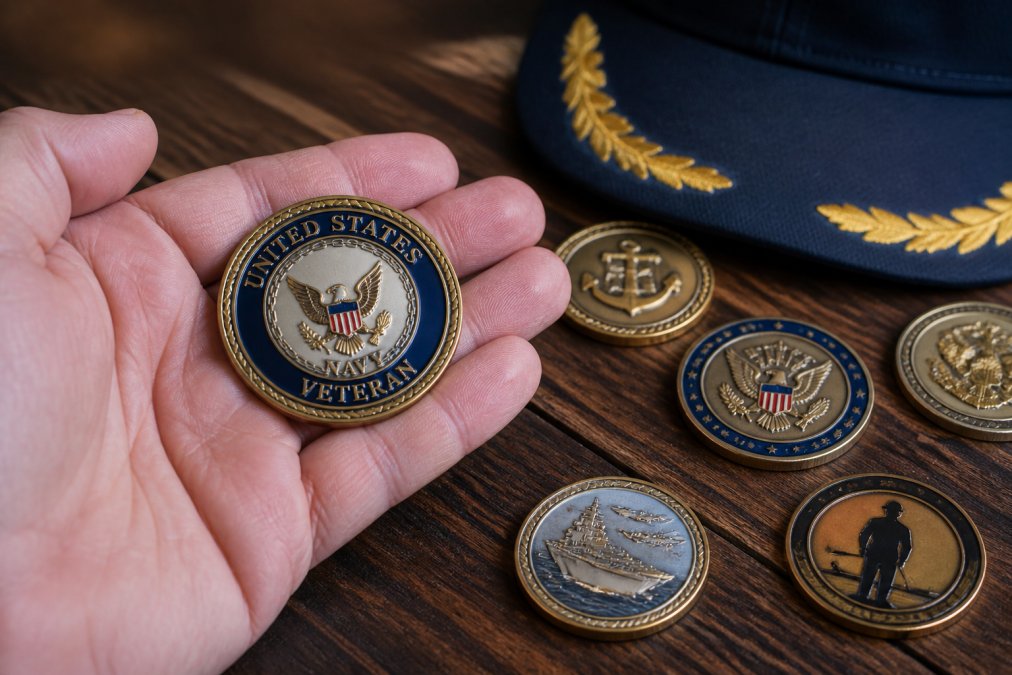
Challenge coins and specialized goods like ship crests and military band items are often available only through online retailers with official licensing. Physical stores rarely stock the full range of branch-specific and commemorative designs.
Frequently Asked Questions
How does buying from veteran-focused brands support the community?
When you buy veteran support items online from licensed sellers, a portion of the proceeds often goes directly to programs like the Navy's Morale, Wellness and Recreation (MWR) fund. Official licensing means royalties are paid back to the branch, so your purchase funds recreation, wellness, and family support services for active-duty personnel and their families. You get durable gear or collectibles, and the military community gets tangible financial support.
What should I look for when verifying a veteran support brand?
Check for official licensing statements, a clear physical address, and specific language about where donations or royalties go. Legitimate sellers name the program they support, such as MWR, and show license numbers when applicable. Avoid brands that use vague phrases like 'supporting veterans' without naming a recipient. You can also search state business registries and the VA's Veteran-Owned Small Business database to confirm ownership claims before you spend.
Can online shopping for military gear help veteran non-profits?
Yes. Many online stores that sell veteran support items operate on a royalty or donation model. For example, officially licensed Navy challenge coins direct royalties to the MWR program. Other retailers donate a percentage of each sale to organizations that provide service dogs, housing assistance, or mental health resources. The key is to buy from sellers that publish exactly which non-profit receives the money and how much is contributed per item.
Are there tax benefits to donating to veteran charities online?
Donations made directly to a qualified 501(c)(3) veteran charity are tax-deductible if you itemize. However, buying a product from a veteran-owned business is a purchase, not a donation, so it generally does not qualify as a charitable deduction even if the seller contributes part of the proceeds. If the tax deduction matters to you, donate directly to the charity and buy your gear separately.
The challenge with buying veteran support items online is sorting legitimate, licensed sources from businesses that just use patriotic imagery. US Troop Gear, Inc. addresses that directly with officially licensed challenge coins, embroidered branch-specific apparel, and a documented charitable tie to the MWR program. Every purchase supports military heritage while giving you durable gear built to serve. Continue shopping with US Troop Gear, Inc. and wear your pride with purpose.