

Best Fabrics for Durable Military Caps: 2026 Guide
Table of Contents
- Military Grade Fabric Specifications: What the Label Really Means
- Cotton Twill: The Standard for Embroidered Military Caps
- Polyester Blends and Synthetic Fibers for Field Performance
- The Benefits of Ripstop Nylon for Tactical Gear
- Fabric Weight, GSM, and Breathability Trade-offs
- How to Care for Military-Themed Embroidered Caps
- Choosing the Best Fabrics for Durable Military Caps: A Comparison
- Frequently Asked Questions
Last Updated: September 18, 2026
Military Grade Fabric Specifications: What the Label Really Means
Military grade fabric specifications describe the measurable performance standards a textile must meet, covering abrasion resistance, tensile strength, colorfastness, and weight per square yard. A label claiming "military grade" means little on its own; what matters is the fiber composition and construction behind it.
At US Troop Gear, Inc., we build every embroidered cap around fabrics chosen for long-term wear rather than a single season of use. Cotton twill and polyester blends each solve a different problem, and picking the wrong one is the most common reason a cap loses its shape within months.

Below, we break down how each fabric performs in the field and which one fits your branch gear.
Cotton Twill: The Standard for Embroidered Military Caps
Cotton twill is the best fabric for embroidered military caps when stitch definition matters most. Its diagonal weave creates a dense, stable surface that holds high-definition embroidery without puckering, which is why so many veteran caps are built on it.
The Cotton Incorporated technical guide to twill weaves explains how the diagonal structure adds surface durability compared to a plain weave of equal weight. A padded sweatband and reinforced vent holes complete the package, and triple stitching on the bill prevents the fraying that kills cheaper caps.
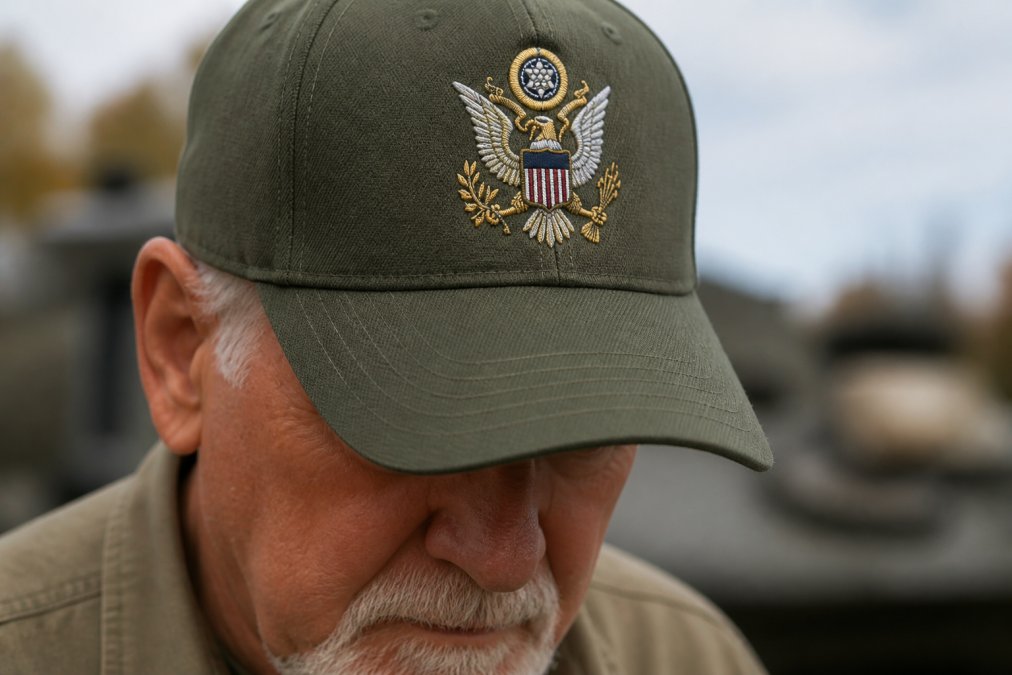
The trade-off is moisture. Cotton absorbs sweat and dries slowly, so it suits ceremonial and everyday wear better than sustained field use.
Polyester Blends and Synthetic Fibers for Field Performance
Polyester blends outperform cotton in moisture-wicking and colorfastness, making them the better choice for hot climates and daily rotation. Synthetic fibers move sweat away from the skin instead of holding it, and they resist the fading that UV exposure causes in natural fibers.
That durability shows up across our Navy-licensed line. The Military Sealift Command Pacific Cap and the USS Cleveland LCS-31 Cap both use a poly build with an adjustable strap and a choice of 5-panel high profile or 6-panel low profile styles, priced at $31.25.


One honest limitation: polyester holds embroidery with slightly less crispness than cotton twill.
The Benefits of Ripstop Nylon for Tactical Gear
The benefits of ripstop nylon for tactical gear come down to three properties: high tensile strength relative to weight, hydrophobic behavior that sheds light rain, and quick-dry performance after saturation. For a cap worn under a helmet or in brush, that combination matters more than softness.
What the Grid Actually Does
Denier (the weight of the yarn per fixed length) is the number that matters most on a spec sheet. Lower denier means finer, lighter yarn; higher denier means a coarser, more abrasion-tolerant shell. Most practitioners find that a mid-range denier balances packability against field durability, while very low denier trades tear resistance for weight savings.
Mil-Spec Durability and NIR Compliance
- Colorfastness, tested for resistance to light, laundering, perspiration, and crocking (rubbing transfer). A cap that fades to pink after one summer fails this test even if the fiber itself is intact.
Matching Fabric to Tactical Environment
| Environment | Primary Stress | Fabric Priority |
|---|---|---|
| Desert / arid | UV, sand abrasion, heat | High colorfastness, breathable weave, light color |
| Woodland / brush | Snagging, tearing, moisture | Ripstop grid, quick-dry finish, muted NIR-compliant dye |
| Urban / vehicle | Abrasion against gear, low IR signature | High-tenacity nylon, structured brim, NIR compliance |
| Cold / mountain | Wind, precipitation, heat retention | Tight weave, hydrophobic finish, layered under helmet |
Where Ripstop Falls Short
Breathability is the honest limitation. The tight weave that gives ripstop its tear resistance also traps heat and vapor, so it suits cooler conditions and structured brims better than humid summer wear. For sustained hot-weather use, a polyester blend with an open knit or eyelet ventilation will move moisture more effectively, even though it sacrifices some tear strength.
Fabric Weight, GSM, and Breathability Trade-offs
Fabric weight, measured in GSM (grams per square meter), determines how a cap balances structure retention against heat dissipation. Heavier fabric holds a stiff brim and resists sagging; lighter fabric breathes better but softens faster with sweat and washing.
| GSM Range | Typical Feel | Best For | Trade-off |
|---|---|---|---|
| Roughly 150-200 | Thin, flexible, drapey | Humid climates, running, packable caps | Brim softens quickly; embroidery can pucker |
| Roughly 200-280 | Balanced, structured | Everyday wear, embroidered crests | Moderate heat retention |
| Roughly 280-350 | Dense, stiff, substantial | Structured brims, cold weather, uniform wear | Traps heat; slower to dry |
| Above roughly 350 | Rigid, heavy, canvas-like | Extreme structure, heavy-duty work caps | Poor breathability; long dry time |
How Breathability Actually Works
Breathability is not a single property, it is the combination of air permeability and moisture vapor transmission. Air permeability is how easily air passes through the weave; moisture vapor transmission is how readily sweat vapor escapes rather than condensing inside the crown. A fabric can be good at one and poor at the other.
Three construction choices drive both:
- Weave density, a tighter weave blocks air and vapor; a looser weave moves both. This is the core trade-off against durability.
- Eyelets and vent panels, physical openings at the crown let hot air escape. They add breathability without lowering the fabric's GSM, which is why a midweight cap with good venting can outperform a lightweight cap with none.
- Sweatband material, a padded, moisture-managing sweatband keeps sweat off the shell and out of the eyes. It is one of the most overlooked components in cap durability.
Moisture-Wicking: What the Fiber Does
Moisture-wicking is a fiber-level property, not a coating. Hydrophobic synthetics like polyester move liquid sweat along the fiber surface to where it can evaporate, rather than absorbing it into the fiber the way cotton does. That is why a polyester blend dries faster and feels cooler during sustained activity, while cotton holds moisture against the skin and dries slowly.
Colorfastness and UV Protection
UV exposure degrades both dye and fiber. Natural fibers like cotton fade and lose tensile strength under prolonged sun; solution-dyed synthetics hold color far longer because the pigment is incorporated into the fiber rather than applied to the surface. For caps worn outdoors daily, colorfastness is a durability specification, not a cosmetic one, a faded cap is often a structurally weakened cap.
How to Care for Military-Themed Embroidered Caps
How to care for military-themed embroidered caps comes down to three habits: hand wash in cold water, air dry, and never machine dry. Heat is what shrinks the crown and warps the brim, not the washing itself.
- Spot clean embroidery with a soft brush and mild soap
- Hand wash in cold water, never hot
- Reshape the crown by hand while damp
- Air dry away from direct sunlight
- Store on a hook or form, not folded
Choosing the Best Fabrics for Durable Military Caps: A Comparison
Choosing the best fabrics for durable military caps means matching fiber to use: cotton twill for embroidery and ceremony, polyester blends for daily field wear. There is no single winner, only the right fabric for the job.
| Fabric | Abrasion Resistance | Breathability | Best For |
|---|---|---|---|
| Cotton twill | High | Moderate | Embroidered veteran caps |
| Polyester blend | High | High | Daily wear, hot climates |
| Ripstop nylon | Very high | Low | Tactical, weather resistance |
Frequently Asked Questions
Which fabric is best for caps that need to withstand daily wear?
Cotton twill and polyester blends hold up best for daily wear. Cotton twill offers breathability and takes embroidery well, while polyester adds abrasion resistance and colorfastness. A 60/40 cotton-poly blend balances comfort with long-term structure retention. The right choice depends on whether you prioritize breathability, moisture-wicking, or tensile strength.
What makes a fabric military grade for headwear?
Military grade fabric specifications typically include high abrasion resistance, colorfastness under UV exposure, and structure retention after repeated washing. For caps, look for tight weave density and reinforced stitching at stress points. Not every tactical cap carries formal Mil-Spec certification, but the best ones meet similar performance benchmarks.
Are cotton-polyester blends better than 100% cotton for tactical caps?
Cotton-polyester blends usually outperform 100% cotton for tactical use. The polyester adds durability, resists shrinking, and speeds drying, while cotton keeps the cap breathable and comfortable. Blends also hold embroidery better over time because synthetic fibers resist stretching. For embroidered military caps worn daily, a blend often delivers the best balance of comfort and long-term wear.
How does fabric choice affect the durability of embroidered military caps?
Fabric choice directly impacts how well embroidery holds up. Tight-weave cotton twill keeps stitches secure and prevent distortion. Loosely woven or stretchy fabrics allow embroidery to pucker or pull. Polyester blends resist fading, keeping thread colors sharp. Reinforced vent holes, padded sweatbands, and triple-stitched bills also extend cap life. Choosing the right fabric is the first step toward a cap that lasts.
Durability in a military cap is a fabric decision before it is a brand decision, and most buyers only learn that after a cheap cap fails. US Troop Gear, Inc. builds branch-specific caps with the fiber composition, stitch quality, and sweatband construction that hold up to real wear, from Navy-licensed poly builds to cotton twill veteran caps inspired by real service. Explore the full collection and wear your pride with purpose.