

Collecting Rare Vietnam Era Service Caps: A Buyer's Guide
Table of Contents
- What Makes a Vietnam Era Service Cap Collectible
- Military Cap Insignia Identification: Reading Branch and Unit
- Vintage Army Vietnam Cap Styles and Construction
- Distinguishing Authentic Period Caps from Modern Commemorative Versions
- Collecting Vintage Military Hats: Valuation and Price Factors
- Vietnam Veteran Hat Provenance and Ethical Collecting
- Preservation, Storage, and Safe Cleaning for Your Collection
- Frequently Asked Questions
Last Updated: October 17, 2026
What Makes a Vietnam Era Service Cap Collectible
A collectible Vietnam era service cap combines historical significance, authentic military provenance, and condition factors that distinguish genuine period pieces from modern reproductions. These caps represent a tangible connection to one of America's most pivotal military eras, spanning 1959-1975, and their value to collectors hinges on several interconnected elements.
The most sought-after Vietnam era service caps carry documented service history. A cap worn by an actual Vietnam veteran, particularly one with unit insignia, branch markings, or campaign medals stitched into the fabric, commands collector attention because it tells a specific soldier's story. The difference between a generic military cap and one with provenance is substantial, authenticated caps from specific units or service branches appreciate in collector circles.

Condition matters significantly. Original fabric integrity, the quality of embroidery work, and signs of authentic wear all factor into collectibility. A cap that shows genuine use, fading in specific patterns, thread wear consistent with field service, sweat stains from actual wear, often appeals more to serious collectors than a pristine reproduction. Conversely, caps in museum-quality condition with minimal handling are equally prized for preservation purposes.
Military Cap Insignia Identification: Reading Branch and Unit
Military insignia on a service cap functions as a visual identifier of the wearer's branch affiliation and often their specific unit or specialty. Understanding how to read these emblems transforms a generic cap into a documented piece of military history.
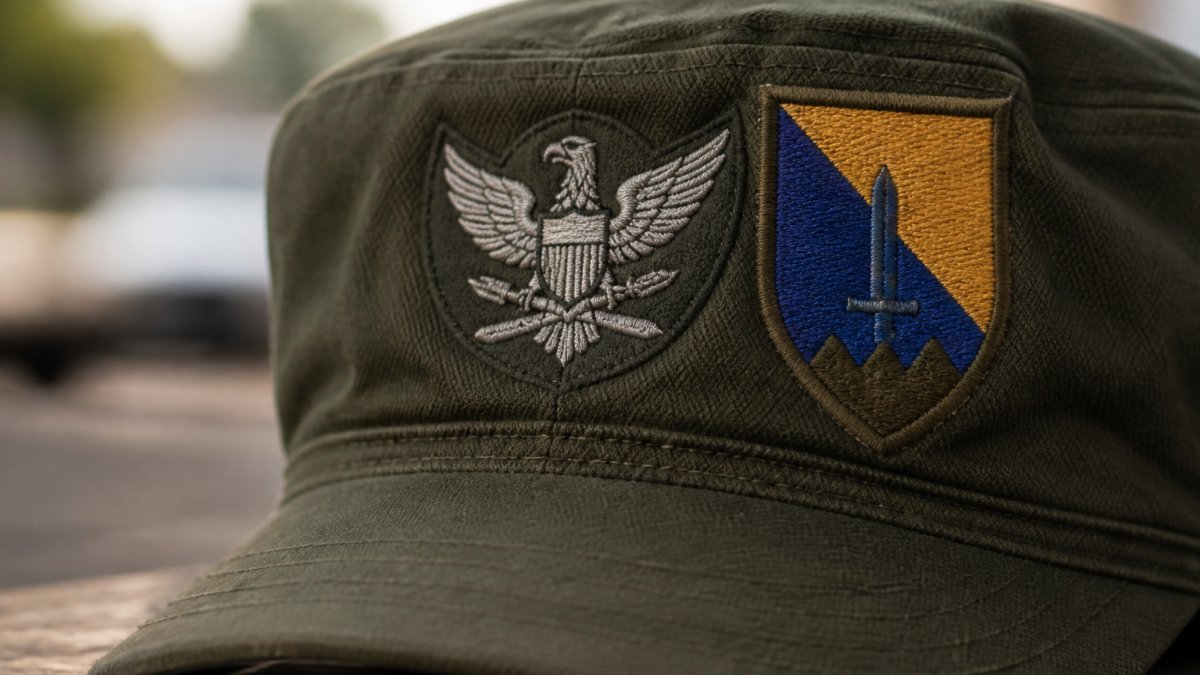
Army caps typically display the Army branch insignia, crossed rifles or other regimental marks, often accompanied by unit crests or division patches. Navy caps feature the Navy anchor, sometimes with ship names or fleet designations embroidered below. The 1st Cavalry Division, for example, uses a distinctive horse head insignia that appears on many Vietnam-era caps from that unit.

Unit identification comes from smaller patches or embroidered text beneath the main branch insignia. A cap marked "1st Special Forces" carries different historical weight than a standard Army cap because special operations units saw concentrated combat deployment. Similarly, Navy caps identifying specific ships, USS carriers, destroyers, or support vessels, appeal to naval history collectors and former crew members.
The placement and style of insignia changed throughout the war. Early Vietnam-era caps often featured sewn patches, while later versions shifted to direct embroidery. This evolution helps collectors date caps more precisely.
Vintage Army Vietnam Cap Styles and Construction
Vietnam-era Army caps came in several distinct styles, each with specific construction methods that reveal authenticity and era. Understanding these variations helps collectors distinguish genuine period pieces from contemporary reproductions.
The service cap, also called a campaign cap or drill sergeant hat, features a distinctive peaked bill and structured crown. Army service caps from the Vietnam era typically used cotton twill fabric in OD (Olive Drab) green, a color standard across Army branches.
Baseball-style caps became increasingly common as the war progressed. These featured a simpler construction with an adjustable rear closure, either a snapback mechanism or hook-and-loop fastening, rather than the structured sizing of traditional service caps.
The ball cap construction typically included a one-size-fits-most approach with an adjustable rear strap, making them practical for field distribution. Direct embroidery on cotton twill was the standard application method, with designs ranging from simple branch insignia to complex unit crests and campaign information.
| Cap Style | Fabric | Closure | Era | Construction Notes |
|---|---|---|---|---|
| Service/Campaign Cap | Cotton Twill OD | Fixed Sizing | Early-Mid War | Triple-stitched, padded band |
| Baseball/Ball Cap | Cotton Twill OD/Khaki | Adjustable Strap | Mid-Late War | Hook-and-loop or snapback |
| Flat Top | Cotton Twill | Adjustable Strap | Late War | Minimal crown structure |
Collectors should examine stitching quality closely. Authentic Vietnam-era Army caps feature consistent, tight stitching with thread colors matching the fabric.
US Troop Gear, Inc. offers Vietnam-era reproductions that honor original construction standards, including the Vietnam Veteran Flat Top Embroidered Cap and Vietnam Map Veteran Embroidered Cap, both at $27.25, featuring direct embroidery on cotton twill with padded sweatbands and triple-stitched bills that replicate authentic period construction.

Distinguishing Authentic Period Caps from Modern Commemorative Versions
The collector market faces a significant challenge: distinguishing genuine Vietnam-era service caps worn during the conflict from modern commemorative caps produced for the veteran and patriotic markets. This distinction directly impacts both authenticity and value.
Authentic period caps show specific wear patterns consistent with field use. Fabric fading occurs unevenly, heavier on the bill and crown where sun exposure was greatest, lighter in protected areas. Thread colors fade differently than fabric, creating a distinctive patina.
Embroidery on authentic caps displays thread wear that reflects decades of use. Colors fade progressively, with older reds and blues becoming muted. The embroidery edges show fraying patterns consistent with age rather than the clean edges of new work. Stitching holes sometimes enlarge slightly from repeated handling and movement.
Modern commemorative caps, while respectful in design and often high-quality, lack these authentic wear signatures. New embroidery appears too vibrant. Fabric colors remain uniform. The sweatband shows no staining. Thread tension and stitching precision appear too consistent, authentic field caps show variations from repair work and wear.
Documentation provides another authentication layer. Genuine service caps often come with provenance, a veteran's name, unit assignment, or service record. Many Vietnam veterans kept their service caps and can verify authenticity through personal history. Modern commemorative caps, regardless of quality, lack this personal military connection.
Collecting Vintage Military Hats: Valuation and Price Factors
Valuation of Vietnam-era service caps depends on multiple interconnected factors that collectors and sellers must understand to establish fair market value.
Rarity drives significant price variation. Common designs, generic "Vietnam Veteran" text without specific unit insignia, command lower prices than caps from specific, documented units.
Condition significantly affects valuation. Caps in excellent condition with minimal wear command higher prices than heavily used examples. However, authentic field wear sometimes increases value for serious collectors who prioritize provenance over pristine appearance. A cap showing genuine combat-era wear often appeals more than a cap that appears unused.
Vietnam Veteran Flat Top Embroidered Cap →
Documented provenance substantially increases value. A cap with attached documentation, a veteran's discharge papers, unit assignment records, or family history, commands premium pricing. Anonymous caps, regardless of condition, sell for less because their historical significance cannot be verified.
Material quality and construction methods influence value. Caps made with cotton twill and direct embroidery command higher prices than those using cheaper synthetic fabrics or screen printing. Triple-stitched bills and padded sweatbands indicate quality construction that justifies higher valuation.
Supply and demand fluctuate based on historical anniversaries and veteran demographics. As Vietnam veterans age, their families sometimes seek meaningful memorabilia, temporarily increasing demand for specific unit caps.
Vietnam Veteran Hat Provenance and Ethical Collecting
Ethical collecting of Vietnam-era service caps requires understanding provenance, the documented history of an item, and respecting the veterans and families whose military service these caps represent.
Provenance establishes authenticity and honors the wearer's service. A cap with documented history, the veteran's name, unit assignment, service dates, and family connection, tells a complete story. Collectors who prioritize provenance often develop relationships with veteran families, creating meaningful exchanges rather than simple transactions.
Ethical concerns arise when caps are presented with false or exaggerated provenance. A cap marketed as belonging to a specific Medal of Honor recipient when no documentation supports this claim misrepresents history and disrespects genuine service. Collectors should demand documentation and verify claims before purchase.
Sourcing matters ethically. Caps obtained directly from veterans or their families carry clear provenance and represent respectful transactions. Caps purchased from estate sales or auctions require verification that the sale was authorized and respectful. Caps sourced from questionable origins, those with unclear ownership history or suspicious documentation, should raise ethical flags.
The veteran community expects respectful treatment of service memorabilia. Wearing a Vietnam-era cap as casual fashion differs significantly from wearing one as a veteran or family member honoring service. Collectors should understand this distinction and respect the caps as historical documents rather than novelty items.
Preservation, Storage, and Safe Cleaning for Your Collection
Proper preservation extends the life of Vietnam-era service caps and maintains their historical and monetary value. Storage conditions, cleaning methods, and handling practices directly impact long-term condition.
Temperature and humidity stability matter significantly. Caps should be stored in environments between 60-70 degrees Fahrenheit with humidity levels between 40-50%.
Storage location requires careful consideration. Caps should be kept away from direct sunlight, which fades colors and degrades fabric fibers.
Hat boxes designed for storage protect caps from dust and physical damage. Acid-free tissue paper inside the box prevents color transfer and acid deterioration.
Cleaning requires extreme caution. Surface dust can be removed with a soft-bristled brush, brushing gently in the direction of the fabric weave. Water-based cleaning risks shrinking fabric and running dyes.
Handling practices prevent deterioration. Caps should be held by the bill and crown, never squeezed or folded. Wearing vintage caps regularly accelerates aging, sweat, oils, and friction degrade fabric and embroidery.
Documentation of condition should be recorded photographically. Taking dated photos of caps from multiple angles creates a preservation record. If deterioration occurs, comparison photos help identify the cause and guide conservation decisions.
Collecting rare Vietnam era service caps connects us to a defining period in military history.
At US Troop Gear, Inc., we understand this responsibility deeply.
Frequently Asked Questions
How can you tell if a military cap is from the Vietnam era?
Look for construction details that mark authentic Vietnam-era caps. Period caps typically feature cotton twill or wool fabric, direct embroidery or metal insignia applied to the crown, adjustable back straps (often embroidered), padded sweat bands, and triple-stitched bills. Check for fading and wear patterns consistent with age. Modern commemorative caps often use synthetic poly materials, screen printing instead of embroidery, and newer closure styles. Examine stitching quality, material texture, and insignia application method, authentic period pieces show hand-applied embroidery or pinned insignia, not modern printing techniques.
What details make a Vietnam-era service cap rare and valuable?
Rarity factors include specific military branch or unit insignia (especially rare divisions or special forces), campaign or service medal ribbons, named veteran wording, direct embroidery quality, condition and wear patterns, provenance documentation, and historical significance. Caps from elite units like 1st Special Forces or 1st Cavalry Division command higher prices. Caps with multiple insignia, service medals, or documented veteran history are more sought after. Condition matters significantly, caps with minimal wear and crisp embroidery fetch higher prices than heavily worn examples. Original materials and construction also increase value compared to modern reproductions.
Where should I buy authentic Vietnam-era service caps safely?
Purchase from reputable dealers who specialize in military collectibles and can verify authenticity and provenance. Look for sellers offering detailed descriptions of construction materials, insignia application methods, condition, and documented history. Verify that embroidery is direct (not screen-printed) and that insignia match authentic military specifications. Ask about the cap's origin, documented veteran ownership or military exchange sourcing adds credibility. Avoid sellers with vague descriptions or suspiciously low prices. US Troop Gear offers Vietnam-era caps starting at $27.25 for embroidered styles and $31.25 for insignia-applied caps, all made with quality cotton twill and authentic construction details.
How should you store and preserve a vintage military cap?
Store caps in a cool, dry environment away from direct sunlight to prevent fading and material degradation. Use acid-free tissue paper or hat boxes to maintain shape and protect embroidery from dust and damage. Avoid plastic bags, which trap moisture and encourage mold. Keep caps away from extreme heat, humidity, and pest exposure. For cleaning, gently brush away dust with a soft brush and spot-clean stains with mild soap and cool water only, never machine wash. Allow air drying completely before storage. Handle embroidery and insignia carefully to avoid snagging threads or loosening metal pins. Periodic inspection for insect damage or deterioration helps catch problems early.