

Custom Navy Ship Crest Challenge Coins: Design & Order
Table of Contents
- What Makes Navy Ship Crest Challenge Coins Special
- Military Challenge Coin Design Ideas for Your Ship or Unit
- Understanding the Custom Coin Manufacturing Process
- Custom Challenge Coin Pricing and Bulk Options
- Military Unit Coin Etiquette and Protocol
- Production Turnaround and Ordering Timeline
- Display and Storage Solutions for Your Coins
- Conclusion
Last Updated: August 11, 2026
What Makes Navy Ship Crest Challenge Coins Special
Navy ship crest challenge coins represent far more than metal and enamel. They're tangible connections to service, unit pride, and the traditions that bind sailors together across generations. When you hold a custom navy ship crest challenge coin, you're holding a piece of your ship's identity, a symbol that says you were there, you served, and you belonged to something larger than yourself.
The tradition of challenge coins runs deep in military culture. These coins commemorate deployments, mark milestones, and serve as physical proof of membership in an elite group. For Navy personnel, ship crests elevate this tradition further. Unlike generic military coins, custom navy ship crest challenge coins integrate your vessel's official insignia, battle history, and unique identity into a single keepsake. The level of detail matters. A poorly executed design cheapens the symbol. A well-crafted coin, with sharp 3D relief, accurate colors, and proper proportions, becomes something sailors keep for life.
At US Troop Gear, Inc., we understand what makes these coins meaningful. We've worked with sailors, commanding officers, and unit leaders to create challenge coins that honor both the craftsmanship and the history they represent. The difference between a generic coin and one that truly captures your ship's essence comes down to design precision, material quality, and the manufacturer's understanding of naval tradition.
Military Challenge Coin Design Ideas for Your Ship or Unit
The best military challenge coin designs start with a clear vision of what your ship or unit represents. Your design should tell the story of your vessel, its mission, its history, its place in the fleet. This means going beyond simply stamping a crest onto a coin. Instead, think about how to translate the complexity of your ship's insignia into a format that works at coin scale.
Ship crests typically contain multiple elements: the vessel's name, hull number, symbolic imagery, and sometimes historical references. The challenge is fitting these details into a circular or shaped canvas while maintaining readability. This is where professional design assistance becomes essential. A skilled designer understands how to simplify complex insignia without losing meaning, adjust line weights so details don't disappear, and ensure that when the coin is struck, every element remains crisp and visible.
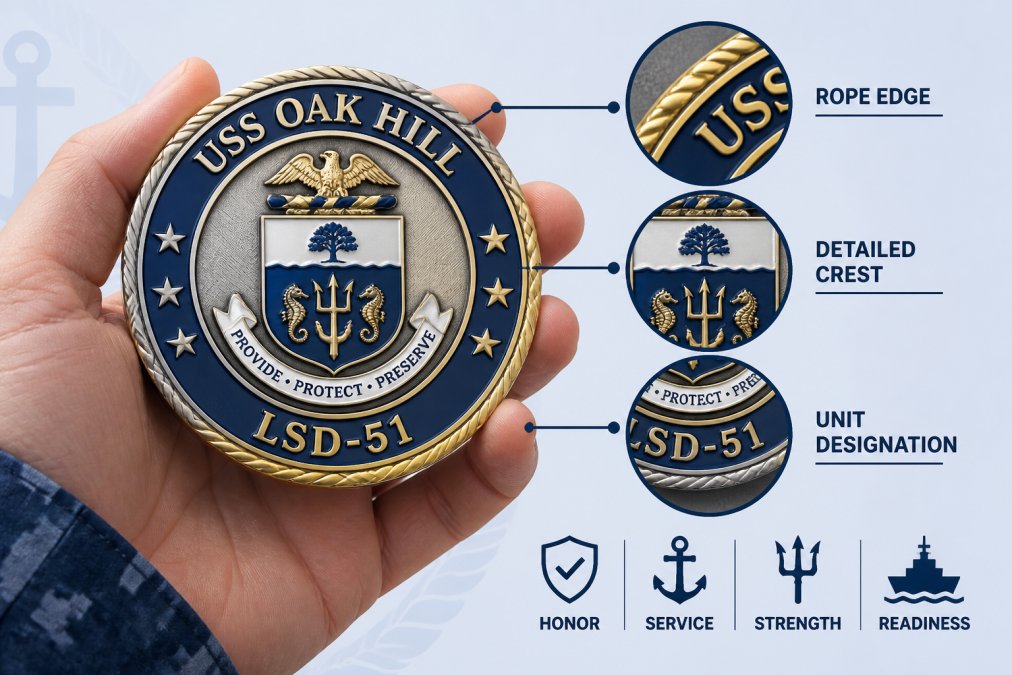
Incorporating Ship's Crest and Official Insignia
Your ship's crest is the centerpiece. The official seal, whether it's a destroyer's crossed swords, a submarine's hull number, or an aircraft carrier's air wing emblem, must be rendered with absolute accuracy. Any deviation from the official insignia undermines the coin's authority as a commemorative piece.
When incorporating the ship's crest, consider the composition carefully. Will the crest occupy the entire obverse (front)? Will you frame it with additional elements like the ship's name, commissioning date, or deployment years? Many units choose to place the crest front-and-center with supporting text around the perimeter. Others use the obverse for the crest and reserve the reverse for unit-specific information or a secondary emblem.
The unit emblem, whether it's a squadron patch, command insignia, or special warfare badge, works well as a complementary design element. Placing it on the reverse creates balance and gives collectors a complete visual story. Some commands even incorporate multiple insignia if the coin honors a joint operation or multi-unit deployment.
Hard Enamel vs. Soft Enamel Finishes
The finish you choose affects both the coin's appearance and its durability. Hard enamel and soft enamel represent two distinct manufacturing approaches, each with specific advantages.
Hard enamel coins feature raised metal lines that divide colored sections. The enamel is baked at high temperatures and then polished flush with the metal edges. This creates a smooth, finished surface that feels premium to the touch. Hard enamel coins are more durable, the enamel won't chip or peel under normal handling. They're ideal for coins that will be carried, displayed, and handled frequently. The trade-off is cost and production time. Hard enamel requires additional polishing steps and takes longer to manufacture.
Soft enamel coins have recessed areas filled with enamel that sits slightly below the metal edges. The surface is textured rather than smooth. Soft enamel is faster and less expensive to produce, making it the budget-conscious choice. However, the enamel can wear or chip if the coin is handled roughly or carried in a pocket for extended periods. For coins intended as display pieces or given as formal presentations, soft enamel works fine. For coins that sailors will actually carry and use in the challenge coin tradition, hard enamel offers better longevity.
Understanding the Custom Coin Manufacturing Process
The journey from design concept to finished coin involves precision metalwork and quality control at multiple stages. Understanding this process helps you appreciate the craftsmanship involved and set realistic expectations for turnaround times and costs.
Die-Struck Minting and 3D Relief
Die-struck minting is the traditional method for creating challenge coins with dimensional detail. A custom steel die is engraved with your design in reverse. This die is then pressed into metal blanks under enormous pressure, creating a raised (or recessed) image that matches your artwork.
The 3D relief, the depth and dimensionality of the struck image, depends on die design. Shallow relief produces a flatter appearance but is easier to manufacture. Deep relief creates dramatic shadows and highlights that make details pop, but requires more precise engineering to ensure the die doesn't wear prematurely. Most military coins use moderate to deep relief to capture the complexity of ship crests and insignia.
The die itself is a one-time investment. Once created, that die can strike thousands of coins before requiring replacement. This is why manufacturers offer better per-coin pricing on larger orders, the die cost is amortized across more units.
Metal Plating and Antique Finishes
After striking, the coin's metal composition and finish determine its final appearance. Most military coins use zinc alloy, brass, or bronze as the base metal. These materials are durable, affordable, and work well with plating processes.
Metal plating adds a protective and aesthetic layer. Common options include gold plating, silver plating, and nickel plating. Two-tone plating, combining gold and silver accents, is popular for military coins because it adds visual interest and allows you to highlight specific design elements. Antique finishes darken or age the metal to give coins a distinguished, heritage appearance. An antique gold finish, for example, creates a warm, aged look that suggests historical significance.
The plating thickness matters for durability. Thicker plating resists wear better, but costs more. Standard plating (typically 0.5-1 micron) is sufficient for display coins. If your coins will be handled frequently, specify heavier plating.
Custom Challenge Coin Pricing and Bulk Options
Pricing for custom navy ship crest challenge coins depends on several variables: coin size, quantity ordered, design complexity, metal type, plating options, and production timeline. There's no single "standard price" because each coin is custom-manufactured to your specifications.
Bulk pricing creates meaningful savings. A small order of 50 coins costs substantially more per unit than an order of 500. This is because the die-striking setup, quality control, and overhead are spread across more units. Many units order coins in quantities of 100 to 500 to balance per-coin cost with practical inventory needs.
For current pricing on custom navy ship crest challenge coins, visit US Troop Gear, Inc.'s website or contact their team directly for a detailed quote based on your specific design and quantity needs. They can provide transparent pricing that reflects your exact requirements rather than generic estimates.
Military Unit Coin Etiquette and Protocol
Challenge coin tradition carries unwritten rules that sailors understand implicitly. Respecting this protocol shows that you understand what the coin represents and honors those who've earned theirs.
The most common protocol involves the "challenge." One person produces their challenge coin and places it on a table or bar. Others must respond by producing their own coin within a specified time. Those who fail to produce a coin owe the challenger a drink or a small favor. This tradition reinforces camaraderie and ensures that challenge coins remain active keepsakes rather than forgotten mementos.
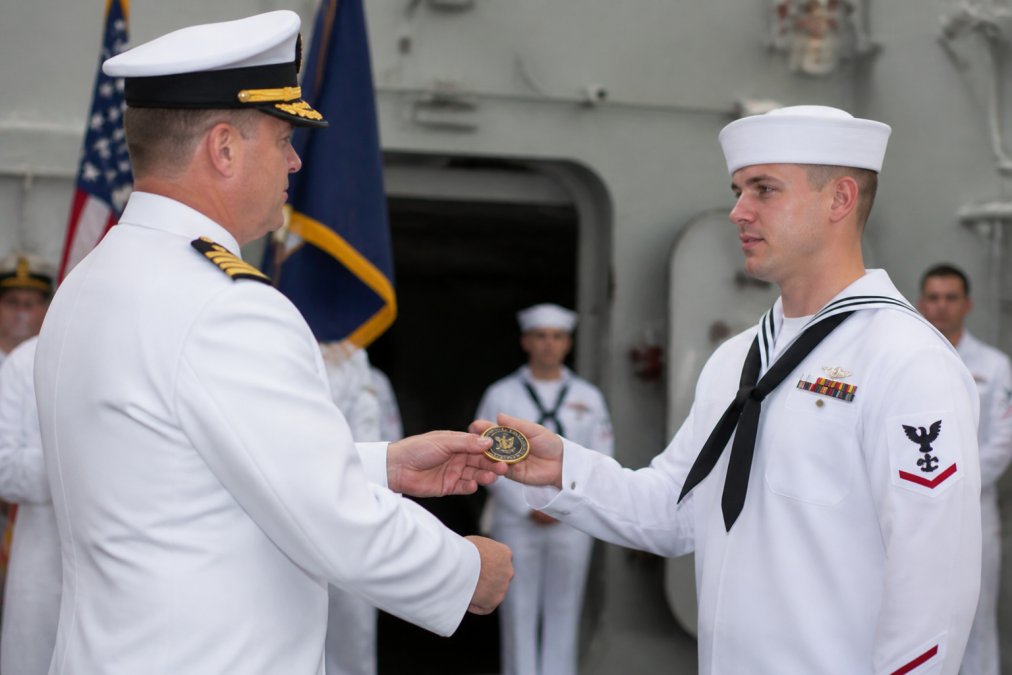
Receiving a challenge coin from a commanding officer, senior enlisted sailor, or dignitary carries special weight. These coins are earned, not purchased. They mark significant achievements, deployments, or transitions. When you receive such a coin, the expectation is that you'll carry it with pride and understand its significance.
The reverse side of many military coins includes space for engraving unit information, dates, or recipient names. Some commands present coins during formal ceremonies, commissioning ceremonies, change-of-command events, or retirement celebrations. The presentation context adds meaning to the physical object.
Displaying your coins properly shows respect for the tradition. Many sailors use challenge coin display cases with slots or stands, keeping coins visible and protected. Some prefer to carry their most meaningful coins in a pocket or bag, making them available for challenges and ready to show when the story comes up in conversation.
Production Turnaround and Ordering Timeline
Custom coin manufacturing isn't instantaneous. Understanding typical timelines helps you plan ahead, especially if you're ordering coins for a specific event like a deployment send-off or change-of-command ceremony.
Design and approval phase typically takes 1-2 weeks. You'll submit your artwork or description, the manufacturer creates digital proofs, you review and request revisions, and the final design is approved.
Die creation takes another 1-2 weeks for standard orders. The manufacturer engraves your custom die, which is a precision manufacturing process.
Coin production and plating depends on quantity and current workload. A standard order of 100-250 coins typically takes 2-3 weeks for striking, plating, and quality inspection. Larger orders (500+) may take 3-4 weeks.
Total timeline for a standard custom order is typically 4-6 weeks from initial design submission to receiving finished coins. If you need coins faster, expect to pay a rush fee. If you have flexibility, ordering well in advance allows manufacturers to optimize production and offer better pricing.
Display and Storage Solutions for Your Coins
How you store and display your challenge coins affects their longevity and how they're perceived. A coin kept in a desk drawer and a coin displayed prominently in a case tell different stories about what the coin means to its owner.
Challenge coin display cases come in various styles. Acrylic cases with foam inserts hold coins securely while keeping them visible. Wooden display boxes with velvet-lined slots offer a more formal presentation. Wall-mounted display cases work well for larger collections. The key is keeping coins protected from dust and handling while making them accessible for challenges or showing.
Storage for inactive coins should protect them from moisture, which can tarnish metal and damage enamel. Airtight containers with silica gel packets work well. Keep coins away from extreme temperature swings, which can cause metal to expand and contract.
Organization matters if you're collecting coins from multiple deployments or units. Some collectors organize by ship, by year, or by coin type. This organization makes it easier to tell the story of your service when showing coins to others.
For coins you intend to carry, a dedicated coin pouch or small container prevents damage and keeps the coin from getting lost. Some sailors use old challenge coin cases or small leather pouches designed for this purpose.
Custom navy ship crest challenge coins preserve the essence of your service in a form you can hold in your hand. The craftsmanship matters, a well-designed, properly manufactured coin becomes a keepsake that lasts decades. When you're ready to commission coins for your unit, command, or personal collection, work with a manufacturer who understands naval tradition and delivers the precision your design deserves. US Troop Gear, Inc. specializes in military-grade commemorative coins that honor both the technical requirements of custom manufacturing and the cultural significance of naval heritage. Explore their full range of custom coin options and get started on your order today.
Frequently Asked Questions
How do I design a custom Navy ship crest challenge coin?
Start by gathering your ship's official crest, insignia, and any text or dates you want included. Work with a design team to create vector artwork that captures fine details like rope edges and 3D relief. Most manufacturers provide free design services and unlimited revisions, allowing you to review digital proofs before production. Submit your approved design, and the manufacturer will create a custom die or mold for your specific coin.
What's the difference between hard enamel and soft enamel challenge coins?
Hard enamel coins have color fill that's baked into the surface, creating a smooth, polished finish that's more durable and premium-looking. Soft enamel coins have recessed color areas with raised metal edges, giving them a textured appearance. Hard enamel costs more but lasts longer and resists wear better, making it ideal for coins you plan to carry or display for years. Soft enamel is more affordable and still looks striking for commemorative purposes.
What are typical production turnaround times for custom Navy challenge coins?
Standard production typically takes 2-4 weeks from approved design to shipment. Some manufacturers offer fast turnaround options of 14 days or fewer for rush orders. The timeline depends on design complexity, quantity ordered, and whether you need custom artwork or can use existing templates. Bulk orders may take slightly longer due to manufacturing volume, but most established manufacturers can accommodate deployment timelines with advance planning.
How much do custom Navy challenge coins cost, and are there bulk discounts?
Pricing depends on coin size, quantity, material, plating options, and design complexity. Per-coin costs typically range from $1.50 to $10 or more, with significant discounts for larger quantities. Many manufacturers charge a one-time die or setup fee ($50-$300) that's offset by lower per-unit costs on bulk orders. Contact manufacturers directly for current quotes based on your specific requirements, as pricing varies by design and finish options.
What military traditions should I follow when presenting or exchanging challenge coins?
Challenge coins are traditionally presented by commanding officers or senior personnel as recognition of service, achievement, or unit membership. The coin holder is expected to carry it as a symbol of pride and unit affiliation. In informal settings, coins may be displayed in a collection or worn on a chain. Respect the coin's significance, it represents your unit's history and your service. Never damage, lose, or disrespect a coin you've been given, as it carries the honor of the command that issued it.
This article was written using GrandRanker