

Eagle, Globe, and Anchor: Marine Corps Emblem Meaning
Table of Contents
- What the Eagle, Globe, and Anchor Represents
- Eagle, Globe, and Anchor History and Adoption
- Marine Corps Emblem Meaning in Official Context
- Marine Corps Symbols and Traditions Connected to the Emblem
- The Emblem's Role in Marine Identity and Service
- Frequently Asked Questions
Last Updated: October 14, 2026
What the Eagle, Globe, and Anchor Represents
The Eagle, Globe, and Anchor is the official emblem of the United States Marine Corps, encapsulating the branch's identity, mission, and values.

At US Troop Gear, Inc., we recognize the emblem as far more than a decorative badge, it represents centuries of service, sacrifice, and excellence.
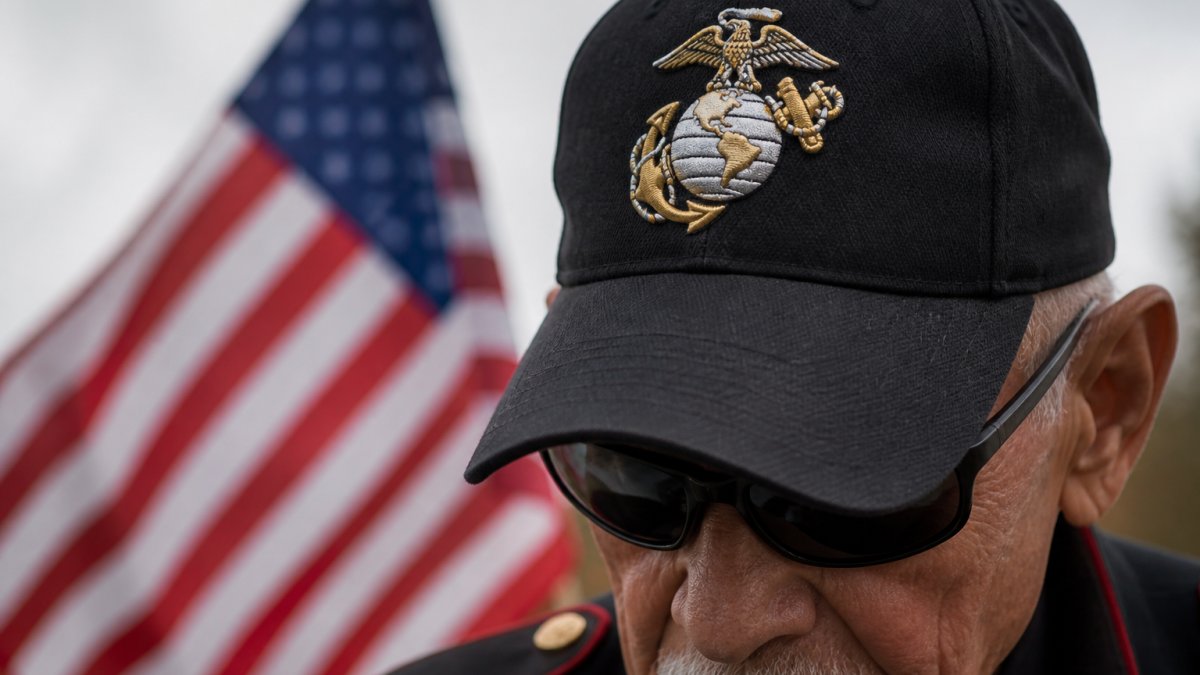
The Eagle: Strength and Protection
The eagle perched atop the emblem symbolizes strength, courage, and protection. In heraldic tradition, eagles represent power and authority, and its position at the apex signals the Marine Corps' role as a guardian force defending the nation against threats foreign and domestic.
The bird reflects characteristics Marines embody: keen vision, decisive striking power, and the ability to rise above challenges. This imagery communicates that the Marine Corps represents a formidable defensive capability.
The Globe: Worldwide Responsibility
The globe beneath the eagle represents the Marine Corps' worldwide responsibility and global reach. Marines operate across every continent and ocean, projecting American power and protecting national interests wherever needed through amphibious and expeditionary missions.
It acknowledges the Marines' amphibious nature and capacity to deploy rapidly to any theater, reminding them of their duty to serve wherever the nation calls and their commitment to global security.
The Anchor: Naval Heritage and Stability
The anchor grounds the emblem literally and symbolically, representing the Marine Corps' naval heritage and connection to the United States Navy. Historically, Marines served aboard naval vessels as shipboard security and assault forces, a relationship central to Marine identity.
Its position at the base suggests a foundation of reliability: Marines anchor themselves to duty, honor, and the Constitution, remaining grounded in their core mission and values despite the chaos of combat.
Eagle, Globe, and Anchor History and Adoption
The emblem did not appear fully formed but developed in stages. The timeline below reflects the sequence most commonly described in official and institutional histories; where exact dates are debated, that is noted.
A Step-by-Step Timeline of the Emblem's Development
| Period | Development | Why It Mattered |
|---|---|---|
| 1775 | The Continental Marines are established by resolution of the Second Continental Congress on November 10. Early insignia are improvised and inconsistent. | Establishes the service before any standardized emblem exists. |
| Early 1800s | Variations of an eagle appear on Marine buttons, hat devices, and accoutrements, often alongside naval motifs. | The eagle becomes the dominant heraldic element, but the globe and anchor are not yet fixed together with it. |
| 1820s-1830s | A device combining an eagle, a globe (sometimes shown with the Western Hemisphere), and an anchor begins to appear on uniform items and documents. | The three elements first converge, though the arrangement and proportions vary by maker. |
| 1868 | A widely cited order standardizes a version of the emblem in which the eagle, globe, and anchor are formally combined as a single device. | This is the date most often treated as the emblem's official starting point, even though earlier variants existed. |
| Late 1800s-early 1900s | Refinements to the eagle's posture, the globe's orientation, and the anchor's style. | The emblem becomes recognizable in roughly its modern form. |
| 1955 | A formal standardization fixes the emblem's proportions and the direction the eagle faces, with the globe oriented to show the Western Hemisphere. | Ends decades of minor variation and gives the service a single authoritative design. |
What Changed and What Never Changed
Three things have stayed constant across every version: the eagle, the globe, and the anchor. What changed was how they were drawn.

- The eagle's posture and facing direction. Early versions varied; the standardized design fixes the eagle facing to the viewer's left (the eagle's right), wings spread, head turned toward the globe.
- The globe's orientation. The modern emblem shows the Western Hemisphere, which is a deliberate choice tied to the service's hemispheric and global reach rather than a neutral geographic default.
- The anchor's style. The anchor is shown fouled, that is, with a rope or chain wrapped around it, a heraldic convention that signals a working, seagoing anchor rather than a decorative one.
Why the Timeline Matters
A timeline explains why the emblem is treated as earned rather than issued: by the time the design was standardized, generations of Marines had worn earlier versions, and the 1955 standardization honored that continuity as much as it fixed proportions.
Official Marine Corps history and emblem reference material
Marine Corps Emblem Meaning in Official Context
Most articles treat "the emblem," "the seal," and "the insignia" as the same thing. They are not, and the differences matter if you are buying, wearing, or displaying anything that carries the design.
Emblem vs. Seal vs. Insignia: What's Actually Different
| Term | What It Refers To | Where You See It |
|---|---|---|
| Eagle, Globe, and Anchor (emblem) | The core device: eagle, globe, and anchor combined. | Uniform insignia, unit colors, official documents, licensed apparel. |
| Service seal | The emblem set within a circular border that typically includes the service name and "Department of the Navy" wording. | Official letterhead, certificates, plaques, and formal documents. |
| Uniform insignia | The emblem as rendered for wear, embroidered, metal, or printed, sized and placed per uniform regulations. | Dress uniforms, service uniforms, and utility uniforms, each with its own placement rules. |
A practical rule: if the design has a ring of text around it, you are looking at the seal, not the bare emblem. If it is sized and placed to be worn on a uniform, it is insignia. The symbolism is the same; the difference is function and formality.
What Official Sources Actually Say the Elements Mean
It is worth separating documented meaning from popular interpretation, which have drifted apart online.
- Documented: The eagle stands for the nation the service serves. The globe stands for worldwide service and the ability to project force globally. The anchor stands for the service's naval heritage and its ties to the sea services.
- Popular but not official: Claims that the eagle specifically represents "keen vision," that the globe's continents encode a particular doctrine, or that the anchor's rope has a fixed symbolic meaning. These are reasonable readings, but they are interpretations, not codified meanings.
How the Emblem Is Earned and Presented
One of the most-asked questions about the emblem is what happens during training. The short answer: it is not worn until it is earned.
- Recruit training. Recruits at either recruit depot train for roughly 13 weeks. The emblem is presented near the end of the cycle, and the presentation is treated as the moment a recruit becomes a Marine. Before that point, recruits do not wear the emblem on their uniforms.
- Officer training. Officer candidates follow a separate pipeline, but the principle is the same: the emblem is presented upon completion, not issued at the start.
- The "original" emblem question. A common point of confusion is whether the first emblem a Marine receives is the one they keep. In practice, the emblem worn on the uniform is a uniform item that is replaced as needed; the ceremonial or keepsake emblem is a separate item, which is why many Marines own more than one.
Rules for Wearing, Handling, and Displaying the Emblem
If you own or sell anything bearing the emblem, these are the practical boundaries:
- On uniforms. Placement, size, and finish are governed by current uniform regulations. Officers and enlisted Marines wear the emblem differently, and the differences are prescribed, not stylistic.
- On civilian apparel. There is no uniform regulation for a t-shirt or cap, but there is a legal dimension: the emblem is protected, and commercial use generally requires a license. Officially licensed products are the straightforward way to stay on the right side of that.
- On keepsakes and display items. The expectation is respectful presentation, not altered, not combined with unrelated symbols in a way that misrepresents the service, and not used to imply official endorsement.
Current uniform regulations and emblem usage guidance
Marine Corps Symbols and Traditions Connected to the Emblem
The eagle globe and anchor exists within a broader ecosystem of Marine Corps symbols and traditions, and understanding those connections enriches appreciation for its significance.
Earning the Emblem in Recruit Training
New Marines earn the right to wear the eagle globe and anchor through recruit training at either Parris Island or San Diego. It marks the moment a recruit becomes a Marine, culminating weeks of physical conditioning, mental preparation, and character development.
During basic training, recruits learn the emblem's history and meaning alongside Marine Corps values and traditions. By graduation, they understand they are accepting membership in an organization with centuries of heritage, and the moment they are authorized to wear the eagle globe and anchor signals they have met the standards expected of Marines.
Uniform Insignia and Display Standards
The eagle globe and anchor appears on Marine Corps uniforms in various forms, from embroidered dress insignia to printed working uniforms.
Beyond uniforms, the emblem appears on apparel, challenge coins, and commemorative items. Officially licensed products featuring the eagle globe and anchor meet quality standards and respect the symbol's integrity.
Our Marine Corps caps, including the Marines Cap and the Marines Est. 1775 Cap, feature officially licensed embroidered versions of the eagle globe and anchor.

The Emblem's Role in Marine Identity and Service
For Marines and veterans, the eagle globe and anchor represents far more than a logo.
When a Marine looks at the eagle globe and anchor, they see their commitment to duty, honor, and the Constitution.
Veterans carry the emblem's significance throughout their lives, often displaying it on apparel, challenge coins, or memorabilia to maintain connection to their service and honor their Marine Corps family.
| Element | Meaning | Significance |
|---|---|---|
| Eagle | Strength and protection | Symbolizes Marine power and defensive capability |
| Globe | Worldwide responsibility | Represents global reach and amphibious operations |
| Anchor | Naval heritage and stability | Grounds Marines in duty and connection to Navy tradition |
The eagle globe and anchor stands as a powerful symbol of Marine Corps identity, values, and service.
Frequently Asked Questions
What does the Eagle, Globe, and Anchor represent?
The Eagle, Globe, and Anchor emblem is the official insignia of the United States Marine Corps. The eagle symbolizes strength and protection, the globe represents worldwide responsibility and global service, and the anchor reflects the Marine Corps' naval heritage and amphibious mission. Together, these elements embody the Marine Corps' commitment to defend the Constitution and serve the nation across all theaters of operation.
When was the Eagle, Globe, and Anchor adopted by the Marine Corps?
The Eagle, Globe, and Anchor was officially adopted as the Marine Corps emblem in 1868, though the design evolved from earlier military insignia. The emblem was refined over time to represent the values and mission of the United States Marine Corps, becoming the enduring symbol of Marine identity, tradition, and heritage that Marines carry with pride today.
How do Marines earn the Eagle, Globe, and Anchor during training?
Recruits earn the right to wear the Eagle, Globe, and Anchor insignia after successfully completing basic recruit training, including the Crucible, the final test of physical and mental endurance. Officer candidates earn the emblem upon commissioning at Officer Candidates School. This earned insignia represents a Marine's commitment to duty, discipline, and the values of the Marine Corps.
Why is the Eagle, Globe, and Anchor so important to Marine Corps culture?
The emblem is central to Marine Corps identity because it visually represents the service's core mission: to defend the Constitution, serve the nation with worldwide responsibility, and maintain naval and amphibious capability. For current and former Marines, wearing the Eagle, Globe, and Anchor is a statement of pride in service, connection to Marine heritage, and commitment to the values of honor, courage, and commitment that define the Marine Corps.