

Military Insignia on Service Caps: A Complete History
Table of Contents
- Origins of Military Insignia on Service Caps
- U.S. Army Headgear History and Cap Badge Development
- Garrison Cap Insignia: Evolution and Modern Standards
- Officer Cap Insignia and Rank Distinction
- Military Service Cap Badges Across Branches
- Materials, Manufacture, and Authentication of Cap Insignia
- Wearing Your Military Heritage Today
- Frequently Asked Questions
Last Updated: October 20, 2026
Origins of Military Insignia on Service Caps
The history of military insignia service caps traces back to the early development of modern military uniforms in the nineteenth century. Before standardized insignia systems emerged, soldiers relied on colored plumes, cockades, and unit colors to distinguish themselves on the battlefield. The evolution toward formalized cap insignia reflected a broader military need: to identify rank, unit affiliation, and branch of service at a glance.
Military insignia service caps became essential tools for organization and command structure. By the Napoleonic era, European armies had begun experimenting with metal badges and embroidered devices on headgear. These early attempts were crude by modern standards, but they established the principle that a cap could communicate identity. The peaked cap itself emerged during this period as a practical alternative to the tall shakos and bicornes that dominated earlier decades.
The practical function of insignia on military headgear cannot be overstated. Officers needed to identify enlisted personnel and subordinate ranks during combat and maneuvers. Unit insignia allowed commanders to track troop movements and maintain formation discipline. Branch insignia, distinguishing infantry from cavalry, artillery, or support units, became critical to tactical coordination. What began as simple cloth patches and metal pins evolved into a sophisticated system of standardized badges and devices that persisted well into the modern era.
U.S. Army Headgear History and Cap Badge Development
The U.S. Army's adoption of standardized headgear insignia occurred gradually across the nineteenth and early twentieth centuries. Before the Civil War, American military headgear was inconsistent. Officers wore dress uniforms with elaborate insignia, but field conditions demanded simpler, more practical alternatives. The garrison cap, a soft, low-profile headgear, eventually became the standard for service dress and field wear.
The garrison cap insignia system that emerged reflected American military traditions while incorporating lessons from European armies. Early versions featured simple embroidered or stamped brass devices indicating rank or unit. By 1897, the U.S. Army had formalized cap badge standards, establishing consistent placement and design specifications.
Rank insignia on caps evolved significantly between the nineteenth century and World War II. Enlisted personnel wore chevrons or stripes on sleeves, but caps carried smaller, more discrete insignia. Officer insignia, gold leaf for major, silver leaf for captain, became instantly recognizable symbols of authority.
The transition from hand-embroidered insignia to stamped brass and machine-manufactured badges reflected industrial advancement. By the mid-twentieth century, most cap insignia were produced through standardized manufacturing processes, ensuring consistency across all military installations. This shift improved durability and reduced production costs while maintaining the visual clarity that insignia systems required.
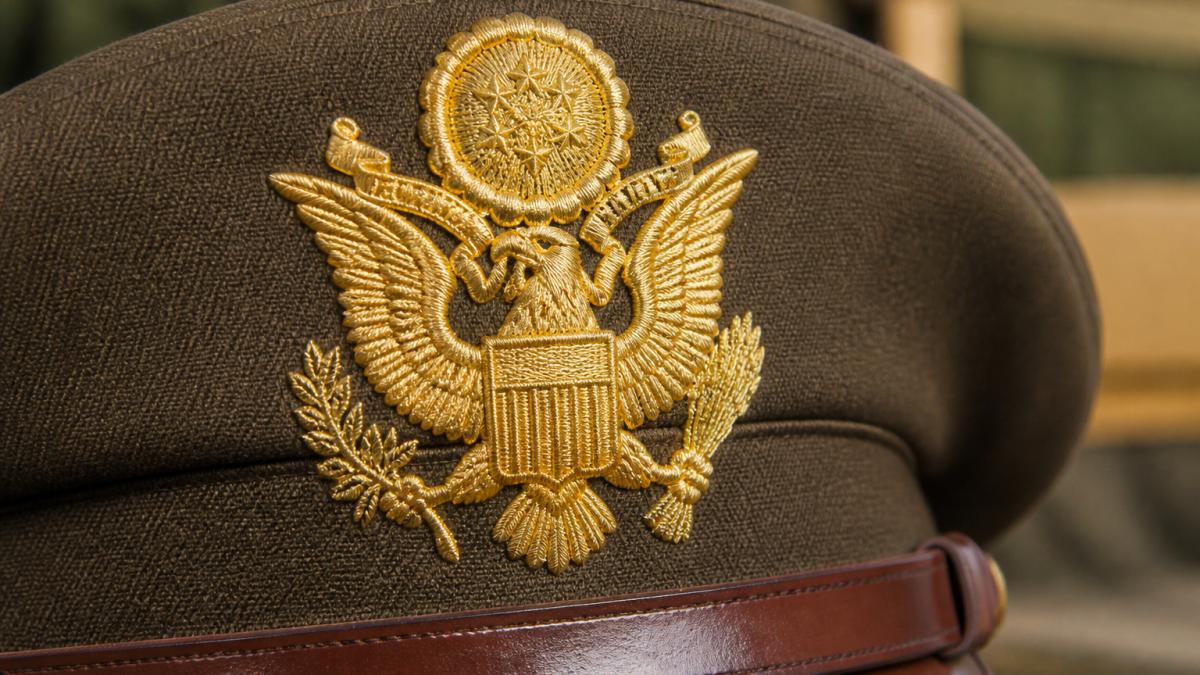
Garrison Cap Insignia: Evolution and Modern Standards
The garrison cap became the dominant headgear for service dress and field wear during the twentieth century. Its design, a soft, collapsible cap with a small visor, proved practical for troops in the field while still accommodating insignia placement. Garrison cap insignia typically featured on the front center, with unit or branch devices displayed prominently.
Modern garrison cap insignia standards establish clear guidelines for placement, size, and material composition. The cap badge sits centered on the front of the cap, usually between one and two inches from the visor. This placement ensures visibility while maintaining a professional appearance. The insignia itself may be embroidered, stamped brass, or combination designs, depending on the branch and the specific insignia type.
Different branches of the military maintain distinct garrison cap insignia traditions. The Air Force developed its own cap badge system reflecting its twentieth-century origins and distinct organizational structure. Coast Guard insignia on service caps reflects maritime traditions while maintaining compatibility with other military standards.
The practical function of garrison cap insignia remains unchanged despite modern modifications. Insignia must be visible at conversational distance, durable enough to withstand field conditions, and distinctive enough to communicate branch and rank instantly. Contemporary manufacturing techniques allow for high-fidelity reproduction of complex designs, preserving historical accuracy while meeting modern durability standards.
Officer Cap Insignia and Rank Distinction
Officer cap insignia systems developed to distinguish commissioned ranks from enlisted personnel and to identify specific officer grades. The use of gold and silver leaf insignia became the standard American military convention for officer rank. Gold leaf indicated major rank, while silver leaf designated captain. These precious-metal finishes provided both visual distinction and symbolic weight reflecting officer authority.
The officer cap badge represented more than rank; it communicated command responsibility and professional standing. Senior officers, colonels and generals, wore eagle devices, often rendered in gilt brass or embroidered gold. These insignia were larger and more elaborate than enlisted rank badges, reflecting the hierarchy inherent in military organization.
Officer insignia on service caps evolved alongside broader military uniform standards. By World War II, the standardized system of rank insignia on caps was well-established and widely understood. Officers transitioning between branches could still be identified by their rank insignia, though branch-specific devices provided additional information. This standardization proved essential during large-scale military operations involving multiple branches and rapid personnel rotation.
The distinction between officer and enlisted cap insignia extended beyond rank badges. Officers often wore more elaborate cap badges featuring unit crests, regimental insignia, or branch emblems in addition to rank insignia. Enlisted personnel typically wore simpler, more standardized badges. These visual distinctions reinforced the organizational hierarchy and made it easy for personnel to identify their chain of command in field conditions.
Military Service Cap Badges Across Branches
Each branch of the U.S. military developed distinctive service cap badge traditions reflecting its unique organizational history and operational requirements. Army service cap insignia emphasizes branch devices, infantry crossed rifles, artillery cannons, or support unit emblems. These branch insignia allow rapid identification of a soldier's primary function and training specialty.
Navy service cap badges traditionally feature the anchor and eagle, often combined with ship crests or command insignia. The naval tradition of personalized ship crests extended to cap insignia, with commanding officers' caps sometimes displaying their vessel's specific crest or emblem. This practice reinforced the Navy's emphasis on ship-based identity and crew cohesion.
Marine Corps cap insignia follows distinct traditions emphasizing the globe and eagle device. This iconic emblem appears on Marine Corps headgear across all ranks and specialties. The simplicity and consistency of Marine Corps cap insignia reflect the branch's emphasis on uniform identity and cohesion.
Air Force service cap insignia reflects the branch's twentieth-century origins and distinct organizational culture. The Air Force developed its own insignia system incorporating the service seal and distinctive branch devices. Pilot wings, command insignia, and specialty badges supplement the core Air Force cap badge.
Coast Guard service caps display maritime insignia traditions adapted to the service's unique operational requirements. The Coast Guard anchor and shield device appears on service caps, often combined with unit or command insignia.
| Branch | Primary Cap Device | Rank Insignia Location | Specialty Insignia |
|---|---|---|---|
| Army | Branch crossed rifles or cannon | Front center | Unit or specialty badges |
| Navy | Anchor and eagle | Front center | Ship crest or command emblem |
| Marine Corps | Globe and eagle | Front center | Pilot wings or specialty badges |
| Air Force | Service seal with wings | Front center | Pilot wings or specialty devices |
| Coast Guard | Anchor and shield | Front center | Unit or command insignia |
Materials, Manufacture, and Authentication of Cap Insignia
Military cap insignia production has evolved from hand-embroidered designs to precision-manufactured stamped brass and modern embroidery techniques. Early insignia were often hand-sewn or hand-painted, resulting in visible variations between individual caps. This inconsistency reflected the limited manufacturing capacity of nineteenth-century military production.
Stamped brass insignia became the dominant production method for military cap badges during the mid-twentieth century. This technique involved pressing brass sheet metal into dies, creating consistent, durable insignia that could withstand field conditions.
Modern cap insignia manufacturing combines embroidery, stamped metal, and combination techniques. Embroidered insignia offer high-fidelity reproduction of complex designs, particularly for unit crests and detailed emblems. Stamped brass remains common for rank insignia and branch devices, valued for durability and traditional appearance.
Authentication of military cap insignia requires understanding historical manufacturing techniques and design standards. Collectors and veterans seeking authentic insignia should examine construction quality, material composition, and design accuracy. Genuine military insignia typically feature consistent stitching patterns, appropriate metal composition, and historically accurate design elements.
The durability of military cap insignia depends on material selection and manufacturing quality. Stamped brass insignia with proper gilt plating can remain readable and functional for decades. Embroidered insignia maintain their appearance longer when constructed with high-quality thread and secure stitching.
Wearing Your Military Heritage Today
Military service caps with authentic insignia represent more than personal achievement; they embody connection to military tradition and service heritage. Veterans and active-duty personnel wear service caps to honor their branch affiliation and the sacrifices of those who served before them. Family members wear military-themed apparel to show pride in their loved ones' service.
Understanding the history behind military insignia on service caps deepens appreciation for what these symbols communicate. Each badge, each rank device, each branch emblem carries meaning rooted in military tradition and operational necessity. Wearing authentic military insignia, whether on a service cap, challenge coin, or apparel, connects the wearer to that historical continuum.
For those seeking authentic military apparel and insignia, quality matters. Genuine military caps featuring properly manufactured insignia provide both aesthetic appeal and authentic representation of service branch and rank. Our US Army (Gold Leaf) Cap and US Army (Silver Leaf) Cap feature insignia applied to military-specification caps made in the USA, available in both high-profile and low-profile styles.


Whether you served in the Army, Navy, Air Force, Marine Corps, or Coast Guard, wearing military insignia on service caps honors your heritage. Our collection includes branch-specific options like the Combat Infantryman Cap and Army Staff Sergeant Cap, each representing specific achievements and service distinctions. For Navy veterans, the Pride - Tradition - Service Retired Navy Cap provides a fully licensed option with authentic naval insignia.

Frequently Asked Questions
When did military personnel begin wearing insignia on service caps?
Military insignia on service caps emerged prominently during the Civil War era and became standardized in the late 19th century. The peaked cap design with emblem placement became widespread by the 1890s as military uniforms evolved. Cap badges and rank insignia grew more formalized after the Spanish-American War, establishing traditions that continue today across all U.S. military branches.
What is the difference between garrison cap insignia and officer cap insignia?
Garrison cap insignia typically features branch devices and unit identification, while officer cap insignia includes rank insignia alongside branch emblems. Officer caps often display gilt devices or brass insignia indicating commissioned rank, whereas enlisted garrison caps focus on unit and service branch identification. The placement and styling reflect the wearer's role within the command structure.
How can you identify the branch shown on a military cap insignia?
Each branch uses distinctive insignia: the Army displays branch-specific devices and the Great Seal, the Navy features naval symbols and ship crests, the Air Force shows the eagle device, the Marine Corps displays the Eagle, Globe, and Anchor, and the Coast Guard features its unique seal. The insignia style, metal finish (gilt, brass, or stamped), and symbolic elements clearly distinguish each service branch on military service cap badges.
What materials are used to make military cap insignia?
Military cap insignia is typically manufactured from stamped brass, gilt metal, or other durable alloys designed to withstand field conditions. Modern insignia is applied to caps made from quality poly material, ensuring longevity and resistance to fading. The emblem sourcing follows military exchange standards, guaranteeing authenticity and durability comparable to insignia issued at military installations worldwide.
Military service caps with authentic insignia connect you to a heritage spanning centuries. The insignia you wear represents real achievements, real service, and real sacrifice. When you choose military gear from US Troop Gear, Inc., you're choosing quality, authenticity, and respect for military tradition. Shop our complete collection of branch-specific caps and insignia to find gear that represents your service with pride and purpose.