

How to Choose Durable Navy Hoodies for Daily Wear
Table of Contents
- What Makes a Navy Hoodie Durable for Daily Wear
- Best Fabric for Durable Hoodies
- Signs of High-Quality Hoodie Construction
- Colorfastness and Navy Dye Quality
- How to Care for Navy Apparel
- Fit and Layering for Long-Term Durability
- What to Avoid When Buying Durable Navy Hoodies
- Frequently Asked Questions
Last Updated: September 24, 2026
What Makes a Navy Hoodie Durable for Daily Wear
A durable navy hoodie is built on three foundations: fabric quality, construction integrity, and proper care. When you're choosing durable navy hoodies for daily wear, you're essentially evaluating how well the garment will withstand repeated washing, stretching, and the general wear that comes with regular use. The difference between a hoodie that lasts six months and one that lasts three years comes down to specific, measurable details in how it's made.
At US Troop Gear, Inc., we understand that military personnel and veterans need apparel that performs under real-world conditions. A quality navy hoodie isn't just about comfort, it's about reliability.
The best approach is to evaluate each component systematically. Look at the fabric weight measured in GSM (grams per square meter), examine the stitching pattern, check the hardware quality, and understand how the dye was applied. These aren't abstract concerns, they directly translate into how many wash cycles your hoodie will survive before it starts to fail.
Best Fabric for Durable Hoodies
The fabric you choose determines almost everything about how your hoodie performs over time. Two primary fabric types dominate the durable hoodie market, and each has distinct advantages for daily wear.
Cotton-Poly Blends and GSM Weight
Cotton-poly blends represent the gold standard for durable navy hoodies because they combine the breathability of cotton with the durability and shape retention of synthetic fibers. A quality blend typically runs 60% cotton and 40% polyester, though some premium options shift toward 70% cotton for added softness.
GSM weight is the critical metric here. GSM measures how many grams of fabric exist in one square meter of material. A lightweight hoodie sits around 250-280 GSM, fine for layering, but it won't withstand heavy use. Midweight hoodies range from 300-350 GSM, which is the sweet spot for daily wear. Heavyweight options exceed 400 GSM and are better suited for cold-weather use or someone who wants maximum durability at the cost of breathability.
The cotton-poly blend matters because pure cotton shrinks unpredictably and loses shape quickly. Polyester resists shrinkage and maintains structural integrity through repeated washing. When blended correctly, you get a fabric that breathes like cotton but performs like synthetic material. For durable navy hoodies, this balance is essential.
French Terry and Cross-Knit Construction
French terry construction refers to how the fabric is knitted. In French terry, loops are created on one side of the fabric while the other side remains smooth. This creates a plush interior that's soft against skin while maintaining structural integrity. Cross-knit construction means the yarn is looped both horizontally and vertically, creating a denser, more stable fabric that resists pilling and stretching.
Cross-knit construction is superior for durability because the interlocking pattern prevents individual yarns from pulling free during washing. When you see a hoodie that pills after a few washes, that's usually poor cross-knit construction, the loops aren't tight enough to hold together under agitation.
For durable navy hoodies meant for daily wear, look for garments that specifically mention cross-knit construction. This detail often appears on product tags or descriptions. If it's not mentioned, you can infer better construction from higher GSM weight and a higher thread count.
Signs of High-Quality Hoodie Construction
Construction quality separates hoodies that last from ones that fall apart. Three specific elements reveal whether you're looking at a well-made garment or a throwaway piece.
Reinforced Seams and Stitch Count
Reinforced seams are the single most reliable indicator of quality. Look at the seams on the shoulders, sides, and armholes. Quality construction features double-stitched seams or seams that are stitched, then reinforced with a second pass. Some premium hoodies use a box-stitch pattern at stress points, this creates an X pattern that distributes tension across multiple threads rather than concentrating it on a single seam line.
Stitch count matters directly. Higher stitch count means more thread holding the seam together, which means more stress it can withstand before separating. A quality hoodie typically has 8-12 stitches per inch on main seams. You can count these yourself by examining a seam closely, they're visible as small loops along the line where two pieces of fabric meet.
The most common failure point on cheap hoodies is the side seam. This seam experiences constant tension from arm movement and body flexion. If the side seam uses only a single stitch line with low stitch density, it will separate within a year of regular use. Quality hoodies reinforce this area specifically because manufacturers know it's where failure happens first.
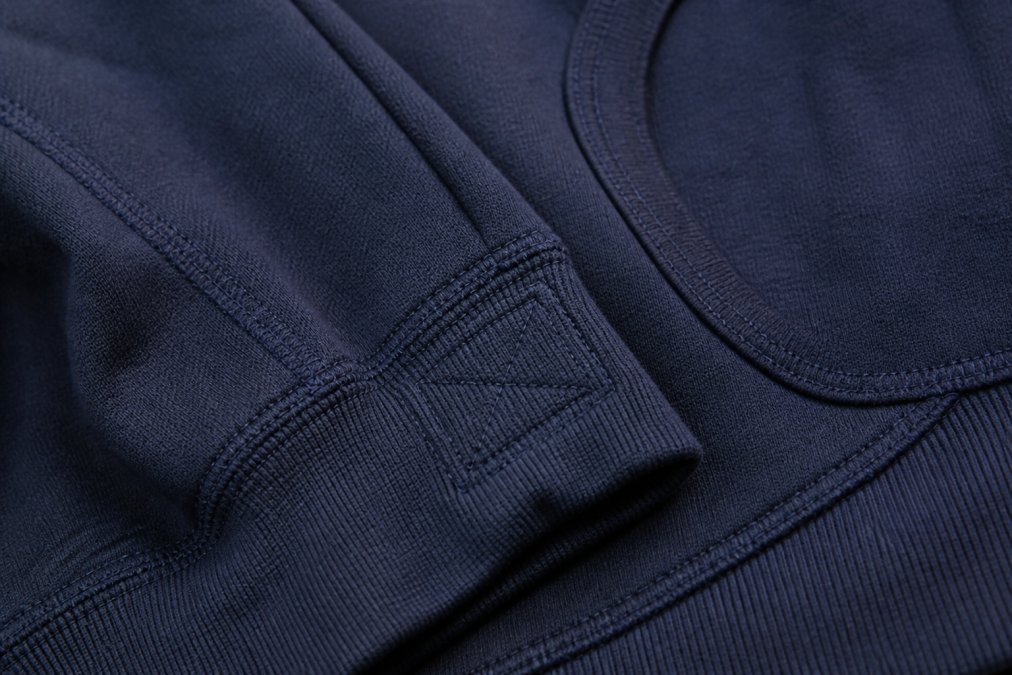
Hardware Quality: Eyelets, Drawstrings, and Ribbed Cuffs
The small metal components matter more than most people realize. Eyelets, the metal rings where drawstrings pass through, should be reinforced with a grommet that's actually set into the fabric, not just glued on. When you examine the hoodie, the eyelet should feel solid and immovable. If it rotates or feels loose, it will eventually tear through the fabric.
Drawstrings on quality hoodies are typically braided nylon or cotton, not thin cord. Thin drawstrings cut into the fabric under tension and eventually wear through. A braided drawstring distributes tension more evenly and lasts significantly longer. The drawstring should also be long enough that you can actually tighten the hood without it pulling away from the fabric.
Ribbed cuffs and hem retention are equally important. The ribbed knit at the wrists and hem should be tight enough that it doesn't stretch out after a few washes, but not so tight that it's uncomfortable. Quality ribbing maintains its elasticity through dozens of wash cycles. Cheap ribbing stretches out within five to ten washes and never recovers. You can test this by gently pulling the ribbing, it should snap back immediately when released.
Colorfastness and Navy Dye Quality
Navy dye quality is where many manufacturers cut corners, and it's where you'll notice the difference most obviously over time. Colorfastness refers to how well the dye stays locked in the fabric rather than bleeding out during washing or fading under sunlight.
Quality navy hoodies use fiber-reactive dyes that bond chemically with the fabric. This process is more expensive but results in color that doesn't fade noticeably for years. Lower-quality hoodies use surface dyes that sit on top of the fabric, these fade quickly and often bleed onto other clothes in the wash.
A practical test is to check how the manufacturer describes their dyeing process. Look for terms like "garment dyed" or "piece dyed," which indicate the fabric was dyed after construction. This method typically produces better colorfastness than "yarn dyed" alternatives. Also check whether the product description mentions color retention or fade resistance, manufacturers of quality products tend to highlight this because they know it matters.
The navy dye used in quality hoodies should be deep and rich, not washed-out or grayish. If the navy looks pale or thin, the dye concentration is likely low, which means it will fade faster. When examining a hoodie in person, the navy should appear consistent across the entire garment with no lighter or darker patches.
How to Care for Navy Apparel
Proper care extends the life of your durable navy hoodies significantly. The right washing routine prevents premature fading, shrinkage, and fabric degradation.
Wash navy hoodies in cold water, warm or hot water accelerates fading and can cause shrinkage even in quality blends. Turn the hoodie inside out before washing to reduce friction on the outer surface, which helps preserve color and prevents pilling. Use a gentle cycle rather than heavy agitation, especially for the first few washes when dye is most likely to bleed.
Detergent choice matters more than people realize. Avoid bleach entirely, even oxygen bleach, as it attacks navy dyes specifically. Use a detergent designed for colors or darks rather than all-purpose formulas.
Fit and Layering for Long-Term Durability
The fit of your hoodie affects how long it will last because improper fit creates stress points that accelerate failure. A hoodie that's too tight stretches the seams constantly, while one that's too loose creates bunching and friction that promotes pilling.
What to Avoid When Buying Durable Navy Hoodies
Several red flags indicate a hoodie won't hold up to daily wear. Understanding what to avoid saves money and frustration.
| Construction Element | What to Look For | What to Avoid |
|---|---|---|
| Fabric Weight | 320+ GSM | Under 300 GSM |
| Seams | Double-stitched, reinforced | Single stitch, loose |
| Drawstring | Braided nylon or cotton | Thin cord |
| Eyelets | Metal, set into fabric | Glued or loose |
| Ribbing | Tight, elastic recovery | Stretched or loose |
| Dye | Deep navy, consistent color | Pale, uneven color |
Frequently Asked Questions
What fabric weight should I look for in a durable navy hoodie?
Higher GSM means the fabric is denser and resists pilling and wear better over time.
How do I know if a navy hoodie has high-quality construction?
Examine the seams for tight, consistent stitching with a high stitch count. Check that drawstring hardware uses metal eyelets rather than plastic, and ribbed cuffs should feel substantial and reinforced. Quality construction prevents hem retention issues and extends the hoodie's lifespan significantly.
How should I wash a navy hoodie to maintain its color?
Wash navy apparel in cold water using a gentle cycle with similar colors to prevent color bleeding. Turn the hoodie inside out before washing to reduce fading and pilling. Avoid bleach and excessive heat when drying. Air-drying preserves colorfastness better than machine drying. Wash less frequently and spot-clean when possible to maintain the navy dye's integrity over time.
Why do some navy hoodies fade faster than others?
Colorfastness depends on how the fabric is garment-dyed and the quality of the dye itself. Hoodies dyed with superior navy dyes resist fading through multiple wash cycles better than those using lower-quality dyes. Synthetic fibers and lighter GSM weights also tend to fade faster.