

How to Identify Durable Military Apparel
Table of Contents
- What Makes Military-Grade Apparel Different
- Understanding Military-Grade Fabric Specifications
- Inspecting Seams, Stitching, and Hardware Integrity
- How to Spot Fake Tactical Gear
- Tactile Testing Methods for Consumers
- Tactical Clothing Maintenance Tips to Preserve Durability
- Conclusion
Last Updated: August 18, 2026
What Makes Military-Grade Apparel Different
Military-grade apparel is engineered to withstand extreme conditions that civilian clothing never encounters. The difference starts with fabric selection and construction methodology. Military specifications demand materials that resist abrasion, maintain integrity under stress, and perform consistently across temperature extremes. A standard cotton t-shirt fails within weeks under field conditions; military-grade alternatives last years.
Counterfeiters exploit consumer confusion about what "military-grade" actually means. Many retailers slap the term on products without meeting formal specifications. Understanding what separates genuine tactical gear from knockoffs protects you against wasted money and disappointment.
This guidance reflects what separates genuine tactical gear from knockoffs, practical inspection methods you can apply before purchasing, whether you're shopping for branch-specific caps, reinforced field jackets, or specialized combat apparel.

Understanding Military-Grade Fabric Specifications
Military fabric specifications aren't arbitrary. They're developed through testing, field experience, and documented performance requirements. The U.S. Department of Defense maintains detailed fabric standards through Military Specifications (MIL-SPEC) documents that define tensile strength, abrasion resistance, colorfastness, and environmental durability.
Tensile strength measures how much force fabric can withstand before tearing. Military-grade materials maintain high tensile strength even when wet or exposed to UV radiation. This matters because field conditions don't pause for optimal weather.
Ripstop and High-Denier Synthetics
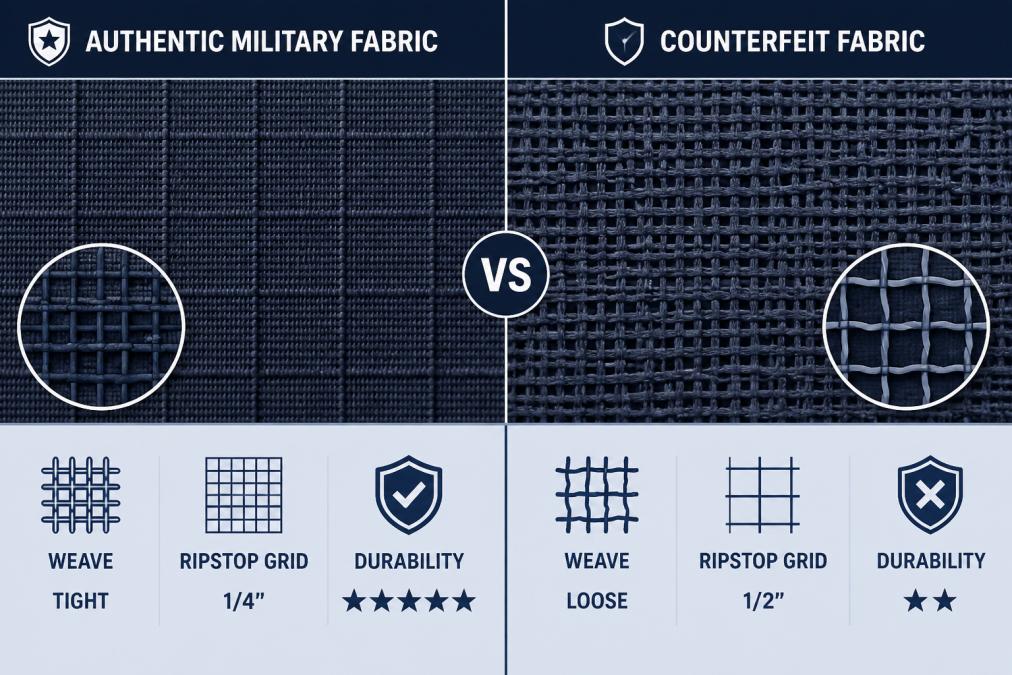
Ripstop fabric's characteristic grid pattern is functional architecture. When a tear begins, reinforced fibers running perpendicular prevent it from spreading. High-denier synthetics like nylon and polyester form the foundation of modern military apparel. Denier measures fiber thickness; higher denier means stronger fibers. Military specifications typically call for 400+ denier materials in high-stress applications.
Synthetic blends outperform pure cotton in field conditions because they resist moisture absorption, dry faster, and maintain structural integrity when wet. Authentic military ripstop shows consistent weave patterns with clearly visible reinforcement threads. Counterfeit ripstop often features irregular patterns or missing reinforcement in critical areas.
Ballistic Resistance and Tensile Strength
Ballistic-rated military apparel meets specific impact and penetration standards. Fabrics rated for ballistic resistance use layered construction with high tensile strength materials that absorb and distribute impact energy. Military-grade combat apparel typically rates at 200+ pounds per square inch, ensuring the fabric won't separate at seams or fail under equipment load.

When you examine military apparel, look for fabric that feels dense and substantial. Lightweight, thin fabric won't meet military performance standards regardless of label claims. Authentic military textiles have noticeable weight and resistance when handled.
Inspecting Seams, Stitching, and Hardware Integrity
Seams are where military apparel fails or succeeds under real-world stress. A perfectly durable fabric becomes worthless if seams separate under load.
Stitch Density and Reinforced Seams
Stitch density measures stitches per inch. Military specifications typically require 5-7 stitches per inch in primary seams. This density creates overlap and redundancy; if one stitch fails, others distribute the load. Run your finger along seams on authentic military apparel and count them over an inch, five or more indicates military-grade construction.
Reinforced seams use multiple rows of stitching, box stitching patterns, or bar-tacked stress points at high-stress areas like pocket corners and armpit seams. Examine the thread quality; military-grade thread is typically polyester or nylon blended for strength and colorfastness. The thread should match the fabric color closely with no loose ends or fraying.
Hardware Quality: Zippers, Buttons, and Buckles
Military-grade zippers use metal teeth, heavy-duty sliders, and reinforced tape construction. The zipper should glide smoothly without catching or skipping teeth. Buttons on authentic military apparel feature shank construction with reinforced stitching and shouldn't rotate or move when tugged.
Buckles and fasteners use quality metals like steel or aluminum that resist corrosion. Plastic buckles crack under stress or temperature extremes. Military-grade hardware is sewn or riveted with reinforcement underneath. Rivets should be clean and properly installed without gaps or misalignment.
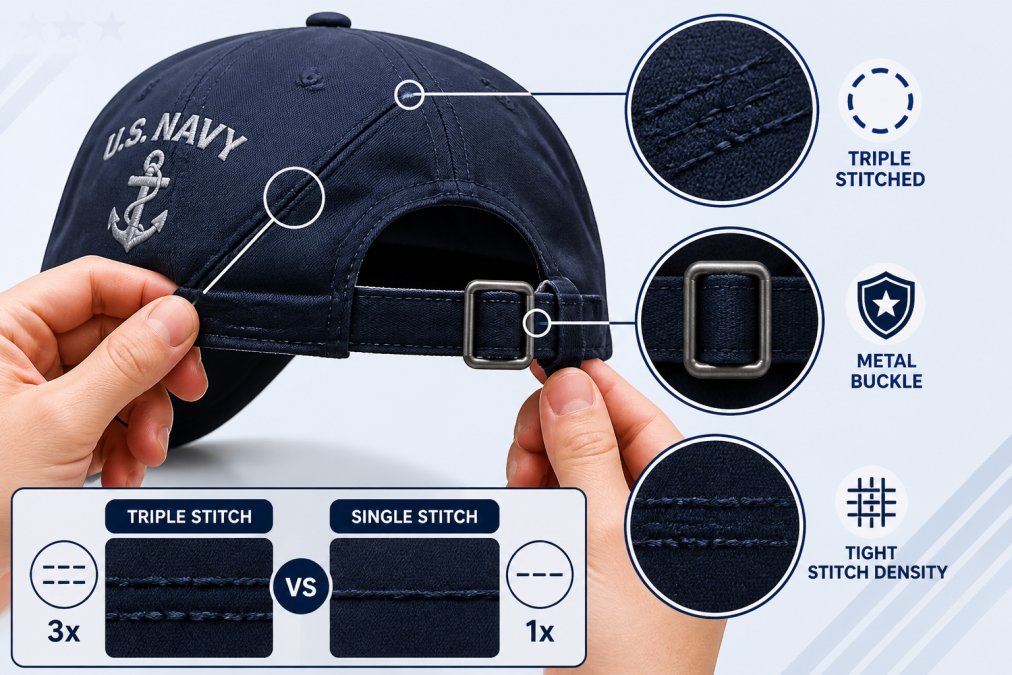
:::pro Military hardware often shows slight surface wear or patina, this actually indicates authenticity. Mass-produced knockoffs use shiny, uniform hardware that looks artificially perfect. :::
How to Spot Fake Tactical Gear
Counterfeit military apparel floods the market because demand is high and authentic pieces command premium prices.
Decoding Military Labels and NSN Numbers
NSN (National Stock Number) identification is your most reliable authentication tool. Every piece of military apparel in official use receives an NSN, a 13-digit code identifying the item, manufacturer, and specifications. NSNs follow a specific format and can be verified through military supply databases.
Authentic NSN labels appear on tags inside military apparel with crisp, clear printing using military-standard formatting. The NSN structure breaks down into specific segments: the first two digits identify the supply class, the next two identify the category, and the remaining nine identify the specific item and manufacturer. Fake NSNs often use random numbers that don't follow this structure.
Verify NSNs through the Defense Logistics Agency (DLA) website or military supply databases. If an NSN doesn't exist in these databases, the apparel is counterfeit. Look for military branch insignia and unit designations that match the apparel type. Counterfeits often mix branches or use generic military imagery.
Counterfeit Detection for Specific Fabric Types
Ripstop counterfeits use thin synthetic fibers with loose weaving and irregular grid patterns. Authentic ripstop shows uniform, tight weaving with clearly visible reinforcement threads. Run your hand across the fabric surface, authentic military ripstop feels dense and substantial; counterfeit feels thin or papery.
Ballistic-rated apparel uses layered construction visible when examining fabric closely. You should see multiple fabric layers bonded together. Counterfeits often use single-layer material labeled as ballistic-rated. Check color consistency; military apparel uses specific dye lots with uniform coloring without fading or streaking.
Smell is an underrated authentication method. Authentic military apparel uses military-grade dyes producing a specific chemical scent. Counterfeits often smell like cheap synthetic materials or plastic.
Tactile Testing Methods for Consumers
You don't need laboratory equipment to evaluate military apparel quality. Your hands and senses provide reliable assessment tools.
Perform a tension test on seams by holding the garment at two points and applying moderate outward pressure. The seam shouldn't separate or show stress. Examine fabric resilience by pinching the material and releasing it, authentic military fabric bounces back immediately. Check zipper function by sliding it smoothly multiple times; it should move freely without catching or jamming. Test button attachment by applying steady outward pressure; the button shouldn't move or rotate. Feel the overall weight and density; military apparel feels substantial and dense. Examine printing and embroidery closely for crisp, clear insignia with tight, even stitching.
| Testing Method | What to Look For | Authentic Result | Counterfeit Result |
|---|---|---|---|
| Seam tension | Outward pressure on seam | Holds firm, no separation | Flexes, shows stress |
| Fabric resilience | Pinch and release | Bounces back immediately | Stays compressed, wrinkles remain |
| Zipper function | Smooth operation | Glides freely, no catching | Sticks, jams, or skips |
| Button attachment | Outward pressure | Completely fixed, no movement | Rotates or flexes |
| Weight and density | Overall feel | Substantial, dense construction | Lightweight, thin feel |
| Hardware examination | Visual and tactile | Solid metal, smooth finish | Loose, plastic-like, or corroded |
Tactical Clothing Maintenance Tips to Preserve Durability
Military apparel durability extends through proper care and maintenance.
Wash military apparel in cold water using gentle cycles. Hot water degrades synthetic fibers and affects dye saturation. Use mild detergent without bleach or fabric softeners. Bleach damages synthetic fibers and compromises water-resistant finishes. Fabric softeners reduce breathability and moisture management.
Air dry tactical gear rather than using high-heat dryers. Hang pieces in a well-ventilated area away from direct sunlight. UV exposure fades colors and weakens fibers. Inspect seams and hardware regularly for signs of wear. Minor stitch separation can be repaired before becoming major damage.
Store military apparel in cool, dry conditions. Moisture promotes mold and mildew growth. Fold apparel loosely or hang on padded hangers to prevent creasing and stress on seams. For embroidered items like the Marine Veteran Cap from US Troop Gear, Inc., avoid excessive washing. Hand wash embroidered areas or use gentle cycles to preserve design integrity. The Marine Veteran Cap features triple-stitched construction and reinforced vent holes that benefit from minimal agitation.
Apply fabric protectant treatments to ripstop and ballistic-rated materials to enhance water resistance without compromising breathability. Reapply annually or after heavy use.
Conclusion
Identifying durable military apparel requires understanding fabric specifications, construction standards, and authentication methods. You now have the tools to evaluate authenticity, assess quality, and distinguish genuine tactical gear from counterfeits.
The investment in authentic military-grade apparel pays dividends through years of reliable performance. Whether selecting branch-specific caps, reinforced field jackets, or commemorative challenge coins, quality construction and genuine materials matter. US Troop Gear, Inc. offers branch-specific military apparel built to military standards, from embroidered caps with triple-stitched construction and reinforced vent holes to durable tactical gear designed for those who understand what authentic means.
Frequently Asked Questions
How can I identify authentic military-grade stitching?
Authentic military apparel features stitch density of at least 8-10 stitches per inch with reinforced seams at stress points like shoulders and pocket corners. Run your finger along the seams, they should feel smooth and tight, with no loose threads or gaps. Count stitches visually or feel the seam density by hand. Counterfeit gear often has loose, uneven stitching at 4-6 stitches per inch. Check that seams are double or triple-stitched, especially on load-bearing areas.
What should I look for when inspecting military-grade fabric specifications?
Military-grade fabrics typically use ripstop weave or high-denier synthetic blends (1000+ denier nylon or polyester). Check the label for fiber content, authentic military apparel lists specific denier counts and weave types. Feel the fabric: it should resist tearing when pulled and show slight crinkle texture (ripstop pattern). Look for UV degradation resistance markers and antimicrobial treatments listed on tags. Genuine military specs include tensile strength ratings and abrasion resistance certifications, often referenced by NSN (National Stock Number).
How do I spot fake tactical gear?
Counterfeit tactical gear has blurry or misaligned NSN numbers, inconsistent font sizes on labels, and poor color matching in camouflage patterns. Authentic military apparel features crisp, uniform printing with correct military branch insignia and proper embroidery. Check hardware, real military gear uses mil-spec zippers and buttons that feel substantial and move smoothly. Inspect seams for loose threads and uneven stitching. Compare the item against official military specifications; counterfeits often skip reinforced seams and use cheaper synthetic fibers that feel thin or slippery.
What is the best way to maintain durable military apparel?
Wash military apparel in cold water with mild detergent and avoid bleach, which degrades antimicrobial and flame-resistant treatments. Air dry to preserve fabric integrity, high heat damages synthetic fibers and weakens seams. Store in a cool, dry place away from direct sunlight to prevent UV degradation. For tactical clothing with specialized coatings, hand wash when possible. Inspect seams and hardware regularly for wear, and repair small tears immediately before they spread. Proper maintenance extends the life of ripstop and ballistic-resistant fabrics significantly.
This article was written using GrandRanker