

How to Spot High-Quality Military Apparel
Table of Contents
- What Makes High-Quality Military Apparel Different
- How to Identify Genuine USGI Gear
- Military Clothing Material Specifications You Should Know
- Examining Seam Reinforcement and Stitching Quality
- Hardware Quality: Zippers, Buttons, and Buckles
- How to Spot Fake Tactical Gear
- Functional Fit and Ergonomic Design
- Conclusion
Last Updated: August 15, 2026
What Makes High-Quality Military Apparel Different
High-quality military apparel is engineered for field performance. Every element, from fabric construction to hardware, serves a specific purpose rooted in actual combat conditions. The distinction comes down to MIL-SPEC compliance and genuine Department of Defense construction standards that govern seam reinforcement, fabric weight, and durability.
Many service members quickly learn that military-looking gear isn't always built to military standards. Visual appearance can mask inferior construction underneath. This guide walks you through each element so you can make informed decisions whether you're outfitting yourself, honoring a service member's branch, or building a collection of authentic military heritage pieces.
How to Identify Genuine USGI Gear
Identifying genuine USGI (United States Government Issue) gear requires understanding the supply chain and the markings that authenticate official military issue. Authentic USGI gear carries specific labels, manufacturing standards, and construction details that counterfeiters struggle to replicate accurately.

Start by checking the label. Genuine issue gear displays clear Department of Defense contract numbers, manufacturing dates, and NSN (National Stock Number) designations. The label should be sewn securely, not glued or printed. Counterfeit labels often have spelling errors, misaligned text, or poor stitching.
The NSN is your verification tool. This 13-digit number uniquely identifies the item within the military supply system. You can cross-reference NSNs through official military surplus databases to confirm the item's specifications, manufacturing date, and authorized suppliers. Fake gear either lacks an NSN entirely or displays a number that doesn't match the item's actual specifications.
Genuine USGI apparel shows specific construction choices that reflect field use. Stitching is typically double-stitched or bar-tacked at stress points like shoulders, underarms, and pocket corners. The fabric has a particular hand and weight consistent with military standards, not the limp feel of cheap commercial cotton.
Surplus gear versus commercial tactical gear represents an important distinction. Genuine surplus shows authentic wear patterns from actual military use, while new surplus displays precise construction standards without wear.
Military Clothing Material Specifications You Should Know
Military apparel specifications exist for practical reasons, they determine how fabric performs under extreme conditions. Understanding these specifications helps you evaluate whether gear will actually serve its intended purpose.
Ripstop Fabric and Denier Weight
Ripstop fabric is engineered for durability. The characteristic grid pattern woven throughout the material is a structural reinforcement system. Heavier nylon or polyester yarns run perpendicular to the main weave, creating a grid that stops tears from spreading.
Denier weight measures fiber thickness. Military-grade ripstop typically runs 500-1000 denier, with combat uniforms often at the higher end. This weight provides abrasion resistance without excessive bulk. Lightweight ripstop (200-300 denier) used in commercial tactical wear tears more easily and degrades faster.
Military specifications call for specific grid spacing, typically 0.5 to 1 inch between reinforcement yarns. Tighter grids provide better tear prevention but add weight. Authentic military ripstop balances these factors according to the garment's intended use.
Genuine military ripstop has a distinctive crisp feel and controlled drape. Run your fingers across the fabric, you should feel the reinforcement grid distinctly. Low-quality ripstop feels limp or overly soft, indicating thinner fibers and weaker reinforcement yarns.
Moisture-Wicking and Breathability Standards
Moisture management in military apparel serves a critical function. Sweat-soaked clothing reduces core temperature regulation and increases fatigue. Military specifications require fabrics that move moisture away from skin toward outer layers where it can evaporate.
Genuine moisture-wicking is built into the fiber structure. Polyester and nylon naturally wick moisture better than cotton. Military apparel blends these synthetics with cotton for durability and comfort. A typical military-spec blend runs 50-65% polyester with 35-50% cotton, providing moisture management without sacrificing durability.
Breathability standards measure air permeability. Military specs typically require 50-100 cubic feet per minute (CFM) of air flow. This prevents the clammy feeling of non-breathable synthetic gear while maintaining moisture management. Commercial tactical wear often falls short here, using heavier, less breathable fabrics that trap heat.
Examining Seam Reinforcement and Stitching Quality
Seams are where military apparel fails most often, or proves its durability. The stitching pattern, thread quality, and reinforcement techniques separate gear built for field use from gear built for retail shelves.
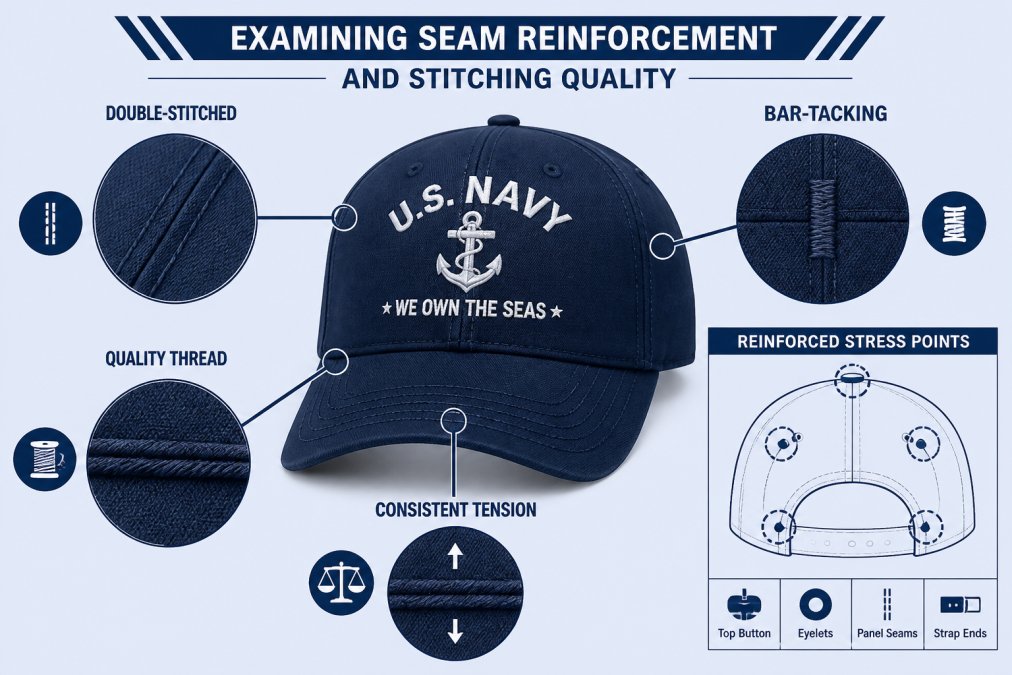
Authentic military apparel uses double-stitching or bar-tacking at stress points. Bar-tacking is a dense pattern of stitches, typically 8-12 rows, that locks threads together where seams experience maximum stress. Look for bar-tacking at pocket corners, armhole seams, and where sleeves attach to the body. Single-stitched seams indicate commercial-grade construction, not military-spec.
Thread quality directly impacts seam longevity. Military specifications require high-tenacity polyester thread, which resists breaking under stress and maintains strength after repeated washing. Run your fingers along seams, genuine military seams feel locked and secure. Cheap seams feel loose or slightly separated.
Seam type matters for specific garment functions. Flat-felled seams (where one seam allowance is folded and stitched flat) appear on tactical trousers and shirts, distributing stress across a wider area. Overlocked seams (where raw edges are bound with thread) appear on moisture-wicking garments. Straight seams with single stitching indicate lower-quality construction.
Military seams typically use 8-10 stitches per inch. This standard balances strength with durability. Inspect seams for consistency, genuine military apparel shows uniform stitch length, consistent tension, and straight lines even around curves. Wonky stitching indicates rushed manufacturing or lower-grade equipment.
Hardware Quality: Zippers, Buttons, and Buckles
Hardware components seem minor until they fail in the field. Military-spec hardware is engineered for reliability under stress, repeated use, and harsh conditions.
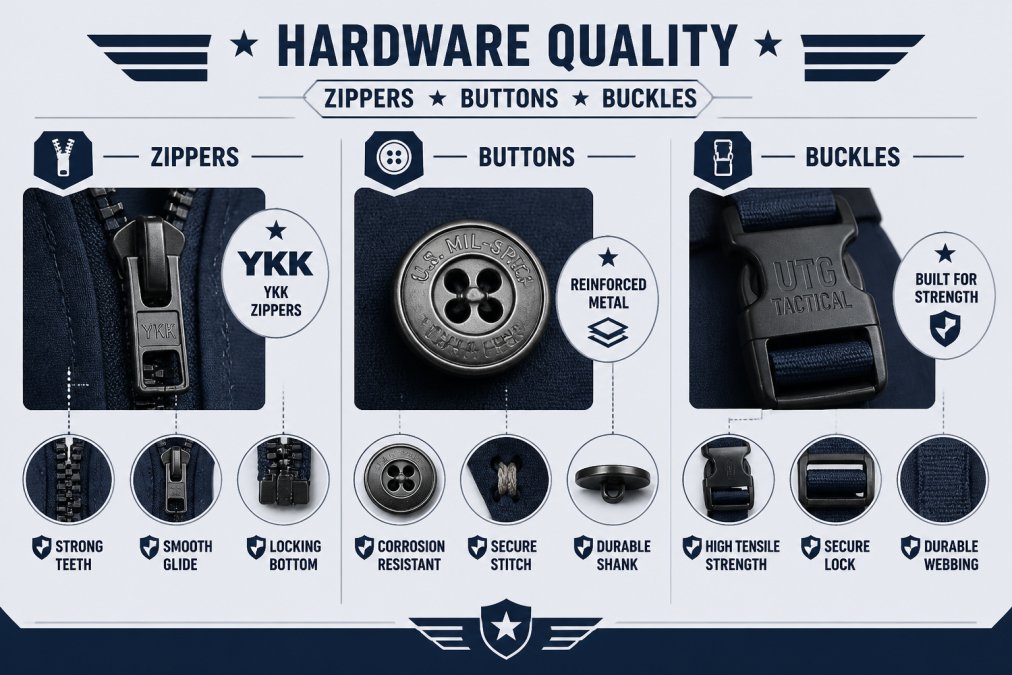
YKK zippers dominate military apparel for good reason. YKK manufactures zippers to extremely tight tolerances. Military-grade YKK zippers feature metal sliders, metal teeth, and reinforced coil construction. Look for the "YKK" marking on the slider itself. Counterfeit zippers either lack this marking or display it poorly.
A genuine YKK military slider feels smooth and precise, moving without grinding or catching. The metal (usually brass or aluminum) is thick enough to resist bending. Counterfeit sliders feel rough, catch frequently, or bend easily under pressure.
Buttons on military apparel are typically metal, not plastic. Metal buttons resist breaking under load-bearing use and maintain structural integrity through repeated washing. The button attachment should use strong thread, usually doubled or tripled, with reinforcement stitching on the inside of the garment.
Buckles and fasteners on tactical gear require specific strength ratings. Military-spec buckles withstand minimum tensile loads (typically 500-1000 pounds depending on application). Plastic buckles or weak metal fasteners indicate commercial-grade gear, not military-spec.
Hook and loop fasteners on military gear use specific specifications. Genuine military-grade hook and loop maintains grip strength through multiple wash cycles and field use. Test by pressing pieces together, genuine military-spec hook and loop creates an audible ripping sound when separated, indicating strong adhesion.
How to Spot Fake Tactical Gear
Counterfeit military apparel has become increasingly sophisticated, but certain markers consistently reveal fakes. Learning to identify these signs protects you from wasting money on gear that won't perform.
The label is your first verification point. Counterfeit labels often display misspellings, grammatical errors, or inconsistent formatting. Genuine military labels use precise, standardized text. Check for proper alignment, authentic labels are sewn straight and centered.
NSN verification is your strongest defense. Counterfeiters often use fake NSNs or NSNs that don't match the item's actual specifications. Cross-reference the NSN against official military supply databases. If the number doesn't exist or doesn't match the item description, you're looking at a fake.
Fabric quality reveals counterfeits immediately. Genuine military ripstop has a crisp, controlled feel. Counterfeit ripstop feels limp, overly soft, or plasticky. The reinforcement grid should be distinctly visible and evenly spaced.
Stitching consistency exposes fakes. Look for uneven stitch length, inconsistent tension, or crooked seams. Genuine military apparel displays uniform stitching throughout, even around curves and corners.
Weight and construction details matter. Counterfeit gear often uses lighter fabric to reduce costs. Lift the garment, it should feel substantial and well-constructed. Cheap fabric feels thin or flimsy.
Hardware comparison is straightforward. Examine zippers, buttons, and buckles under good lighting. Genuine YKK zippers display clear markings and smooth operation. Counterfeit hardware shows poor finishing, rough surfaces, or markings that look stamped rather than properly engraved.
Functional Fit and Ergonomic Design
Military apparel design prioritizes function over fashion. The fit, pocket placement, and garment proportions reflect decades of field testing and soldier feedback.
Authentic military fit accommodates load-bearing equipment. The torso is slightly longer than commercial apparel to account for body armor and load-bearing vests. Shoulder seams sit slightly back from the actual shoulder joint, allowing room for equipment without bunching. Sleeve length provides coverage when arms are raised or extended.
Pocket placement follows functional logic. Large cargo pockets on tactical trousers sit low and wide enough to accommodate magazines, tools, or field equipment. Chest pockets on shirts are positioned for easy access while wearing body armor.
Range of motion engineering is built into the cut. Underarm gussets allow unrestricted arm movement. The torso isn't tapered like commercial apparel, it's cut to allow full mobility while wearing gear.
Counterfeit tactical gear often copies visual appearance without understanding functional design. Pockets might be placed for aesthetics rather than function. Fit might follow commercial patterns rather than military ergonomics.
Test fit by simulating actual use. Can you comfortably raise your arms overhead? Does the garment bunch or restrict movement? Can you access pockets easily? Genuine military apparel answers yes to all these questions.
High-quality military apparel represents a significant investment, but understanding these quality markers ensures you're buying gear built for durability and performance. Whether you're outfitting yourself with authentic tactical wear or honoring a service member's branch with commemorative apparel, these standards guide your evaluation.
US Troop Gear, Inc. offers branch-specific military apparel. Our embroidered caps and tactical gear are designed for those who understand that military heritage demands authentic construction. From the United States Army Cap ($27.95) with high-definition embroidery to the Marine Veteran Cap ($19.95) featuring triple-stitched construction and reinforced vent holes, every piece reflects genuine military standards. When you choose gear that meets these specifications, you're choosing apparel built to serve, just like the people who wear it.

Frequently Asked Questions
How can I tell if military apparel is genuine USGI issue versus commercial knockoff?
Genuine USGI gear carries specific markings: NSN (National Stock Number) labels, Berry Amendment compliance tags, and manufacturer stamps. Check seams for consistent double-stitching and bar-tacking at stress points. YKK zippers and metal hardware are standard on authentic issue items. Commercial tactical apparel may use similar construction but lacks the NSN documentation and military contract specifications that prove authenticity.
What fabric specifications should I look for in high-quality military apparel?
Look for ripstop cotton or nylon blends rated at 500+ denier weight. Quality military clothing uses moisture-wicking materials that meet flame-resistance standards (typically NFPA 2112 for combat uniforms). Check care labels for water-repellent or seam-sealed treatments. Abrasion-resistant fabrics should show minimal pilling after handling. The fabric should feel substantial, not thin or flimsy, and resist tearing when pulled.
How do I spot counterfeit or knockoff military gear?
Counterfeits often have uneven embroidery with loose threads, poor color matching, and misspelled branch insignia. Examine seams for single-stitching or irregular stitch spacing instead of the standard double-stitch pattern. Fake zippers stick or jam easily; authentic YKK hardware slides smoothly. Check for missing NSN labels, faded logos, or hardware that tarnishes quickly. Prices significantly below market rate are a red flag for knockoffs.
What role do stress points play in evaluating military apparel quality?
Stress points, pocket corners, seam intersections, and load-bearing areas, determine how long gear lasts in field use. High-quality military apparel uses bar-tacking (dense stitching in a box pattern) at these points to prevent ripping. Inspect pockets, shoulder seams, and attachment points for reinforced stitching. Poor-quality gear shows single stitches or no reinforcement at stress points, leading to early failure during heavy use or load-bearing activities.
This article was written using GrandRanker