

Military Clothing vs Civilian Outdoor Gear: A Practical Comparison
Table of Contents
- Military Clothing vs Civilian Outdoor Gear: Key Differences
- Materials and Construction Quality
- Military Jackets vs Outdoor Jackets: What Sets Them Apart
- Durability and Expected Service Life
- Military Clothing for Hiking: Performance in the Field
- Military Surplus Clothing for Camping: Cost, Condition, and Practicality
- Fit, Comfort, and Mobility Over Extended Wear
- Cost, Value, and Where Each Option Makes Sense
- Frequently Asked Questions
Last Updated: October 10, 2026
Military Clothing vs Civilian Outdoor Gear: Key Differences
Military clothing vs civilian outdoor gear represents two fundamentally different design philosophies: military gear is engineered for combat and demanding field conditions, while civilian outdoor gear prioritizes comfort and recreational use.
Military gear excels at durability and functionality in extreme conditions, but civilian outdoor gear often wins on comfort for extended wear. Choosing wrong means either overpaying for features you don't need or struggling with gear that fails when conditions get serious.
Military clothing must withstand repeated deployment cycles, harsh climates, and intense physical activity. Civilian outdoor gear optimizes for weight, breathability, and user comfort. Your activity, environment, and budget determine which makes sense.
Materials and Construction Quality
Military clothing uses heavier, tightly woven cotton-polyester blends that balance durability with cost. Many military uniforms employ ripstop nylon for jackets and pants, which resists tearing when snagged on rough terrain.
Civilian outdoor brands use advanced synthetics like Gore-Tex, Polartec, and merino wool blends that manage moisture better and weigh less. Laminated membranes shed water while allowing sweat vapor to escape, a feature less common in military gear.
Military garments use flat-felled seams designed for abuse; civilian gear uses taped seams with strategic reinforcement. Military construction adds weight but extends service life; civilian construction prioritizes packability and comfort.
Military Jackets vs Outdoor Jackets: What Sets Them Apart
Military jackets prioritize protection with integrated features like map pockets and utility loops. The fit accommodates body armor and layering, with larger pockets positioned for gloved hands and a loose cut for heavy equipment.
Civilian outdoor jackets emphasize weather sealing and weight efficiency with tapered cuts, sealed seams, pit zips for ventilation, and pack-compatible cuts. Pockets prioritize quick access to essentials rather than tactical utility.
Military surplus jackets cost less due to massive government production scale; civilian jackets command premium pricing for advanced materials. Military jackets excel when durability matters; civilian jackets win when weight and weather performance drive decisions.
Durability and Expected Service Life
Military Clothing Wear Patterns
Military garments are engineered for 4-6 years of heavy use. Cotton-polyester blends resist abrasion well but absorb moisture and dry slowly, accelerating degradation if stored damp.
Ripstop nylon jackets resist tearing but degrade under UV exposure after 5-8 years. The resin coating breaks down, losing water resistance while the nylon remains intact. Heavy-duty zippers last longer but corrode if exposed to salt water or damp storage.
New-old-stock military gear performs identically to civilian equivalents. Used surplus shows predictable wear: faded dyes, loose buttons, minor seam separation. Hardware and coatings fail first, not fabric.
Civilian Outdoor Gear Wear Patterns
Civilian gear is designed for 10-15 years of recreational use. Laminated membranes maintain water resistance if cared for but can delaminate from heat or sunlight. Merino wool improves with wear; synthetic blends resist UV and don't absorb moisture.
Civilian seams use taped construction, which is lighter and more flexible but requires the tape to remain bonded. Tape can separate from repeated folding or temperature swings.
Civilian gear fails gracefully and is repairable; military gear fails catastrophically with limited repair options because it was designed for disposal, not repair.
Measurable Differences in Practice
Military surplus gear is reliable for 5-8 years of moderate use with minimal maintenance. Civilian outdoor gear requires proper care but delivers 10+ years of performance. Military gear handles neglect better; civilian gear handles time better if maintained.
Military Clothing for Hiking: Performance in the Field
Military clothing works well for hiking because durable fabrics resist brush, reinforced areas prevent premature wear, and the loose fit accommodates layering without restricting movement.
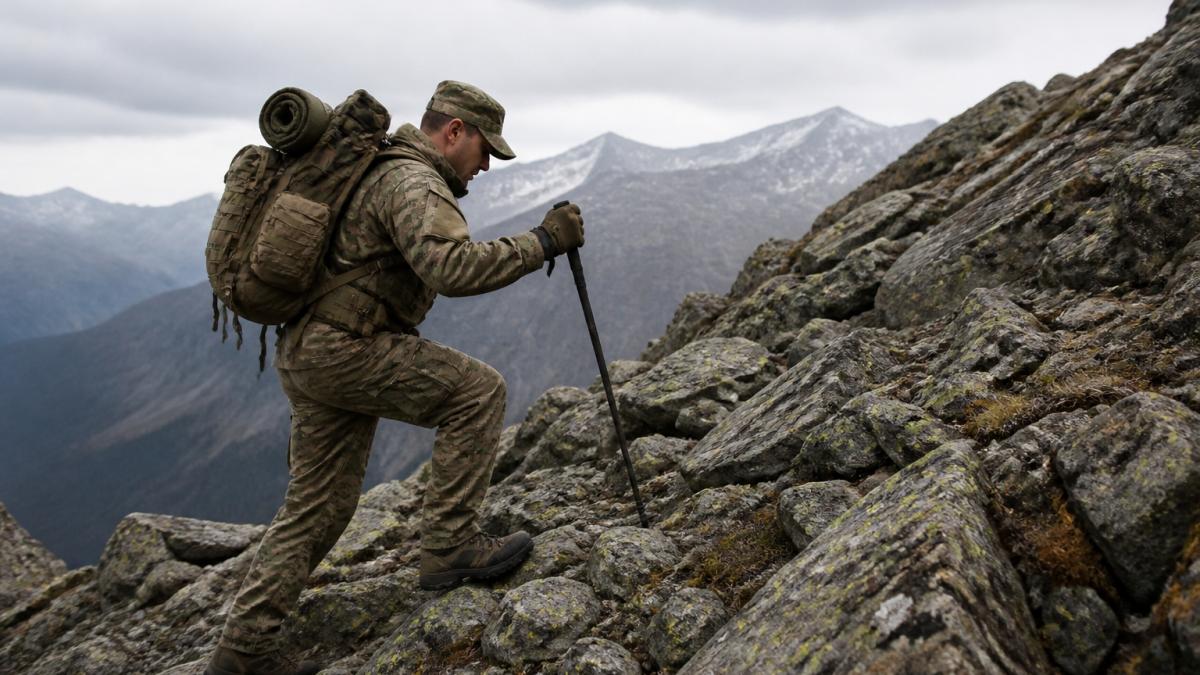
After 4-6 hours of hiking, military cotton-poly blends absorb sweat and dry slowly, adding weight. Civilian merino or technical synthetics manage sweat vapor more effectively.
Military surplus pants weigh 12-16 ounces per leg; civilian pants weigh 6-10 ounces. Military clothing excels for bushwhacking and heavy loads; civilian gear delivers superior comfort on maintained trails.
Military Surplus Clothing for Camping: Cost, Condition, and Practicality
Military surplus represents genuine value because the gear was field-tested at scale. A surplus field jacket costs 60-70% less than a comparable civilian jacket because production and R&D costs aren't passed to you.
Surplus ranges from new-old-stock to heavily used. New surplus is indistinguishable from civilian gear; used surplus shows wear but fabric integrity usually remains solid. Check seams, zippers, and fabric for holes before purchasing.
Surplus purchases involve risk civilian retail eliminates, no returns or warranties. For budget-conscious campers accepting uncertainty, surplus delivers savings. For guaranteed fit and support, civilian retail makes sense despite higher cost.
Fit, Comfort, and Mobility Over Extended Wear
Military and civilian gear fit differently because they're designed for different body positions and equipment loads. Understanding these differences helps you predict comfort over 8+ hours of continuous wear.
Military uniforms use a two-component sizing system (size and length) that accommodates a wider range of body proportions than civilian S-M-L sizing. The cut accommodates body armor and load-bearing equipment: shoulder seams sit further back, sleeves run long, waist sits higher, and armholes are cut large.
Civilian outdoor brands design for the body in motion with sleeves proportioned for hiking arm position, lower waists, and streamlined silhouettes. Sizing is standardized but less flexible for unusual proportions. The cut is optimized for pit zips, tapered sleeves, pack-compatible shoulder seams, and articulated elbows.
Layering Differences
Military clothing layers effectively because the loose fit accommodates multiple insulation layers without restricting movement. You can wear a base layer, fleece, and field jacket without feeling constrained. The high waist keeps layers from riding up.
Civilian outdoor gear requires more careful layering because the closer fit leaves less room for bulk. A merino wool base layer plus a fleece plus a shell jacket can feel restrictive if the sizes aren't carefully matched.
For cold-weather hiking, military clothing wins on layering ease. For weight-conscious backpacking, civilian gear wins because the layers are lighter and compress smaller when not in use.
Comfort Over Extended Wear (8+ Hours)
After 4-6 hours of continuous activity, fit differences become noticeable:
- Chafing points: Military gear's loose fit creates friction at the underarm and inner thigh where excess fabric moves against skin. Civilian gear's closer fit reduces friction but can feel restrictive if the size is too small.
- Moisture management: Military cotton-poly blends absorb sweat and stay damp. After 6 hours of hiking, the fabric is heavy with moisture, adding weight and creating cold spots when you stop moving. Civilian synthetic blends and merino wick moisture away, keeping the fabric dry even after sustained exertion.
- Heat dissipation: Military gear lacks ventilation features. Pit zips are uncommon. After 6 hours of climbing, you're trapped in a damp, heavy garment. Civilian jackets with pit zips allow you to open ventilation without removing the jacket, maintaining weather protection while cooling down.
- Pack compatibility: Military jackets' forward-set shoulders can cause the collar to ride up when wearing a backpack, creating neck chafing. Civilian pack-compatible cuts prevent this.
Practical Recommendations by Activity Duration
- Day hikes under 4 hours: Military surplus works fine; the fit is less critical because you're not wearing it long enough for chafing to develop.
- Day hikes 4-8 hours: Civilian outdoor gear's fit and ventilation features become noticeable advantages, especially in warm weather.
- Multi-day backpacking: Civilian gear's lighter weight, better moisture management, and pack-compatible cut compound over days. Military gear's weight and moisture retention become fatiguing.
- Cold-weather camping: Military gear's loose fit and layering capacity work well; the moisture absorption is less critical because you're not in sustained exertion.
- Bushwhacking or rough terrain: Military gear's durable fabric and loose fit accommodate heavy loads and brush contact; the fit is secondary to durability.
Cost, Value, and Where Each Option Makes Sense
| Scenario | Best Choice | Why |
|---|---|---|
| Budget camping trips | Military surplus | Lower cost, proven durability, acceptable comfort for short trips |
| Multi-day backpacking | Civilian outdoor gear | Superior moisture management, lighter weight, better fit for extended wear |
| Bushwhacking/rough terrain | Military clothing | Durable fabrics resist brush, reinforced wear areas, loose fit accommodates heavy loads |
| Recreational hiking on trails | Civilian outdoor gear | Optimized for comfort, better weather sealing, lighter weight |
| Work in harsh conditions | Military clothing | Built for abuse, feature-dense pockets, proven reliability |
| Cold weather mountaineering | Civilian outdoor gear | Advanced insulation, better moisture management, superior thermal performance |
Military clothing from surplus sources typically costs $20-80 per item depending on condition and type. Civilian outdoor gear ranges from $60-300+ per item. The price gap reflects both production scale and material advancement. Military surplus offers genuine value for specific use cases. Civilian gear justifies premium pricing through performance advantages that matter during extended use.
The best choice depends on your actual activity. If you're camping three weekends per year on established sites, military surplus delivers excellent value. If you're hiking 50+ days annually in variable conditions, civilian outdoor gear's performance advantages justify the cost. Most people benefit from mixing both: military surplus for specific tasks where durability matters, civilian gear for activities where comfort and weight drive decisions.
The right choice isn't about loyalty to one category, it's about matching gear to actual conditions and activities.
Choosing between military clothing and civilian outdoor gear comes down to your specific needs and how you'll use the equipment. Military gear excels at durability and feature density in demanding conditions. Civilian outdoor gear delivers superior comfort and performance for recreational activities. Start with your primary activity, consider your budget, and don't assume one category is universally better. Explore our collection of high-quality, durable military-themed apparel and discover gear built to serve those who have served.
Frequently Asked Questions
What is the main difference between military clothing and civilian outdoor gear?
Military clothing is designed for combat and field operations with emphasis on durability, functionality, and standardization across units. Civilian outdoor gear prioritizes comfort, weight, and specialized performance for specific activities like hiking or camping. Military clothing uses heavier fabrics and simpler designs for longevity; civilian gear often features advanced materials optimized for breathability and packability. The choice depends on your primary use: military clothing excels in rough terrain and harsh conditions, while civilian gear offers better comfort for extended recreational activities.
Is military surplus clothing practical for camping?
Yes, military surplus clothing is practical for camping, especially when durability matters more than weight. Surplus items like field jackets and cargo pants withstand rough handling and harsh weather. However, condition varies significantly, inspect seams, zippers, and fabric for wear before purchasing. Surplus gear tends to be heavier and less breathable than modern civilian camping clothing, which may affect comfort on longer trips. For car camping or rugged backcountry trips where durability is critical, surplus is excellent value. For ultralight backpacking, civilian gear may be the better choice.
Can civilians legally wear military clothing and tactical gear?
Yes, civilians can legally wear military clothing and tactical gear in the United States. Wearing surplus uniforms or tactical apparel is not illegal. However, wearing an active-duty uniform with insignia or rank while impersonating a service member is illegal under federal law. Civilians can wear military-style clothing, surplus field jackets, and tactical apparel without restriction, as long as they do not falsely represent themselves as active military or use the gear to deceive others about military service.
Which is more durable: military clothing or civilian outdoor gear?
Military clothing is generally more durable for heavy use and rough terrain. It uses thicker fabrics, reinforced seams, and simpler construction designed to withstand combat conditions and repeated field deployment. Civilian outdoor gear varies widely, premium brands offer excellent durability with lighter weight, while budget options may fail faster. Military clothing sacrifices comfort and breathability for longevity. Civilian gear balances durability with performance features. For extreme durability in harsh conditions, military clothing wins; for balanced durability with comfort, high-end civilian gear matches or exceeds military gear.