

Navy SEAL Gear vs Standard Tactical Apparel
Table of Contents
- What Sets Navy SEAL Gear Apart from Standard Tactical Apparel
- Military-Spec Tactical Clothing: Standards and Specifications
- Material Science: Ripstop, Moisture-Wicking, and Durability
- Durable Tactical Gear for Civilians: What Actually Holds Up
- Key Differences: Climate-Adaptive Design and Loadout Systems
- Best Military Apparel Brands 2026: What to Actually Buy
- Gear Maintenance and Long-Term Durability
- Which Gear Should You Choose?
- Frequently Asked Questions
Last Updated: September 28, 2026
What Sets Navy SEAL Gear Apart from Standard Tactical Apparel
Navy SEAL gear and standard tactical apparel serve different missions. SEAL-grade equipment is engineered for extreme operational environments where failure isn't an option; standard tactical apparel is designed for civilians, law enforcement, and military personnel in less demanding conditions.
SEAL gear must withstand saltwater immersion, rapid temperature shifts, abrasive terrain, and extended wear in hostile environments. Standard tactical apparel prioritizes versatility, comfort, and cost-effectiveness for everyday wear and training.
US Troop Gear, Inc. honors military heritage while recognizing that most customers need reliable tactical apparel suited to their actual operational context, not necessarily SEAL-level specifications. The question isn't which is "better", it's which matches your mission.

Military-Spec Tactical Clothing: Standards and Specifications
Military-specification tactical clothing follows strict Department of Defense standards for seam strength, flame resistance, moisture management, and color fastness. SEAL-grade gear exceeds these baselines significantly.
Standard military-spec tactical clothing must withstand 50 wash cycles, maintain color consistency, resist tearing, and provide thermal regulation. SEAL gear adds saltwater resistance, accelerated abrasion testing, and extreme-temperature performance with more rigorous protocols and tighter tolerances.
For civilians and non-SEAL military personnel, standard military-spec clothing covers essential performance needs. A tactical shirt rated for 50 wash cycles serves reliably for years of regular use.
Material Science: Ripstop, Moisture-Wicking, and Durability
Ripstop Fabric and Abrasion Resistance
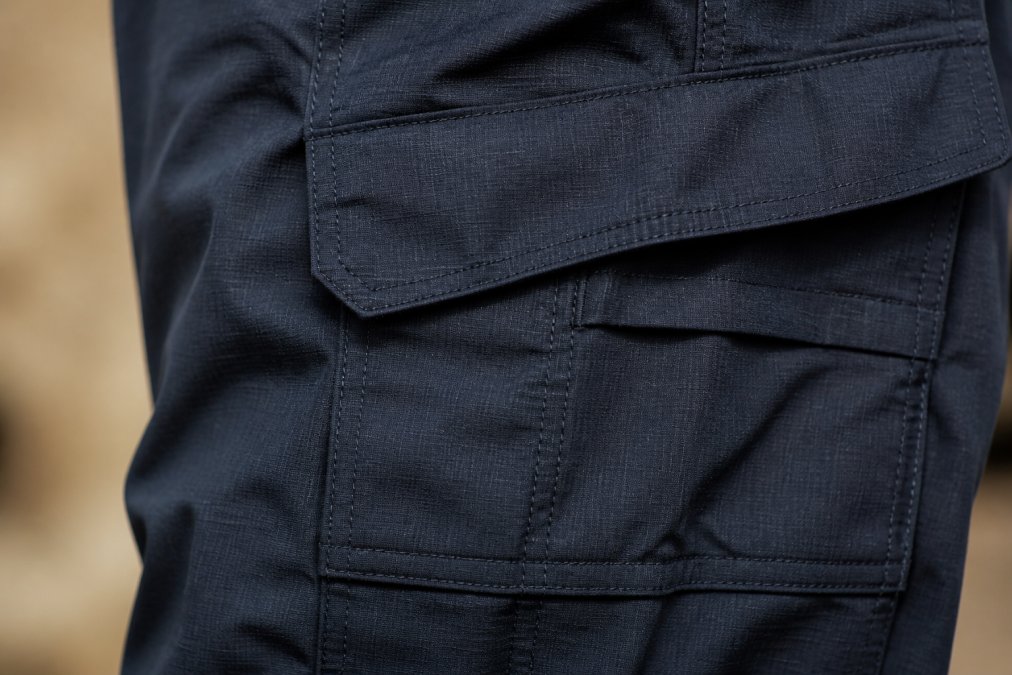
Ripstop fabric's grid of reinforced threads prevents small tears from spreading across the garment.
SEAL-grade ripstop uses heavier denier counts (typically 500D or higher) versus standard tactical ripstop (200D-400D), providing greater abrasion resistance but with ergonomic trade-offs.
A SEAL-grade 500D ripstop shirt weighs 8-10 ounces versus 5-6 ounces for standard 300D ripstop. SEAL operators accept this weight penalty because their missions demand maximum puncture and abrasion resistance in extreme terrain, rocky coastlines, jungles, urban rubble.
Standard 300D ripstop provides excellent abrasion resistance for most field conditions while remaining lightweight. For law enforcement, security, and civilians, weight savings matter more than the marginal durability gain of heavier fabric.
Military-spec tactical gear uses reinforced stitching at stress points. SEAL gear adds redundant stitching with multiple passes, preventing seam failure but creating slightly stiffer panels that reduce shoulder mobility by 2-3 degrees, negligible for armored operators but potentially affecting civilian comfort.
Thermal Regulation and Breathability
Moisture-wicking synthetic fibers are standard across tactical apparel. The difference between SEAL gear and standard tactical apparel lies in fiber selection, weave density, and thermal performance under load.
SEAL gear uses advanced synthetic blends (typically 88% polyester / 12% nylon) with hydrophobic coatings for rapid drying in humid environments. These specialized blends cost 40-60% more but dry 30-40% faster after water immersion and maintain performance when saturated with saltwater.
Standard tactical apparel uses proven moisture-wicking synthetics that work well in most conditions but may retain more moisture in prolonged humidity. The performance gap widens in sustained wet conditions.
SEAL gear achieves breathability through engineered weave patterns (typically 8-12 CFM air permeability) while maintaining structural integrity. Standard tactical apparel prioritizes breathability more heavily (12-16 CFM), accepting slightly lower durability for greater comfort in moderate climates.
SEAL-grade material science optimizes for extreme conditions at the cost of comfort; standard tactical apparel optimizes for sustained comfort in moderate conditions. Choose based on your operational environment and duration of wear.
Durable Tactical Gear for Civilians: What Actually Holds Up
Most civilians don't need SEAL-grade specifications. A quality tactical shirt rated for standard military use will outlast typical civilian clothing by years.
Look for these markers of genuine durability in tactical apparel:
United States Navy Seals Cap →
- Reinforced stress-point stitching at pockets, seams, and collar
- Ripstop fabric in high-wear areas (shoulders, elbows, sides)
- Synthetic fiber content (80% or higher) for wash durability
- Flat-felled seams or double-stitched construction
- Colorfastness ratings of Grade 4 or higher (resists fading after repeated washing)
Many brands claim "tactical durability" without material specifications. If a shirt doesn't specify fabric composition, denier count, or stitching method, it's likely standard apparel marketed as tactical.
US Troop Gear, Inc. Navy SEAL caps and patches are built to last. Our United States Navy Seals Cap features adjustable sizing and is made in the USA with full Navy licensing, honoring the standard that SEAL gear represents while serving those who respect that heritage.
Key Differences: Climate-Adaptive Design and Loadout Systems
Modular Load-Bearing and Field Performance
SEAL gear integrates with modular load-bearing systems, vests, harnesses, and attachment points designed for tactical operations. Pockets are positioned to accommodate specific equipment. Shoulder reinforcement accounts for weapon slings and pack weight. The entire garment is engineered as part of an operational loadout.
Standard tactical apparel prioritizes standalone functionality. Pockets are positioned for accessibility and comfort rather than tactical loadout integration. The gear works well with standard load-bearing vests but isn't optimized for any specific configuration.
For civilians, this distinction rarely matters. Most users wear tactical apparel as everyday clothing, not as part of an integrated combat system. Standard tactical gear handles everyday carry (phone, keys, wallet) more comfortably than SEAL-optimized gear.
Climate-Specific Gear Requirements
SEAL teams operate globally, from tropical jungles to arctic waters. Their gear must adapt to extreme temperature ranges and humidity levels. SEAL-grade thermal regulation systems use layering science: base layers that maintain performance when wet, mid-layers that insulate without bulk, outer layers that shed water while remaining breathable.
Standard tactical apparel uses simpler thermal management. A quality tactical shirt works well in moderate climates. For extreme cold or heat, civilians typically layer standard tactical gear with additional insulation or cooling layers rather than relying on the base garment alone.
Climate matters for your selection. If you operate in a single climate or season, standard tactical apparel will serve reliably.
Best Military Apparel Brands 2026: What to Actually Buy
| Brand | Specialization | Best For | Price Point |
|---|---|---|---|
| US Troop Gear, Inc. | Branch-specific gear, licensed caps | Military heritage, civilian pride | Affordable |
| Standard Military Issue | Government-spec compliance | Active duty, field requirements | Variable |
| Civilian Tactical Brands | Everyday tactical wear | Law enforcement, security | Mid-range |
| SEAL-Grade Manufacturers | Extreme environment gear | Special operations, elite units | Premium |
US Troop Gear, Inc. stands out for honoring military heritage with authentic, licensed gear. Our Seal Team VI Special Warfare Cap represents the standard that elite units uphold, available to those who respect that tradition. Made in the USA, fully Navy-licensed, and priced at $31.25, our caps deliver the authenticity and durability that matters.

Gear Maintenance and Long-Term Durability
Tactical apparel lasts only as long as you maintain it properly. SEAL gear and standard tactical gear both require specific care to preserve durability, but field repair capabilities differ significantly between the two categories.
Routine Care and Storage
Wash in cold water. Hot water weakens synthetic fibers and accelerates fading. Use mild detergent; heavy soaps can degrade moisture-wicking properties. Avoid fabric softeners entirely, they coat fibers and reduce breathability.
Field Repair: Where SEAL-Grade Gear Excels
The practical durability advantage of SEAL-grade gear emerges in field repair scenarios. SEAL-grade ripstop fabric's heavier denier and redundant stitching make repairs more reliable and longer-lasting in austere conditions.
Preventive Maintenance: Extending Gear Life
Reinforce stress points before they fail. Apply fabric glue or stitch reinforcement around pocket corners and seam intersections. This preventive maintenance adds years to tactical gear life.
Which Gear Should You Choose?
Choose SEAL-grade tactical apparel if you operate in extreme environments: saltwater immersion, arctic cold, sustained high-intensity activity, or hostile terrain. The premium cost reflects genuine performance advantages in those conditions.
Frequently Asked Questions
What is the main difference between Navy SEAL gear and standard tactical apparel?
Navy SEAL gear meets military-spec standards for ballistic protection, thermal regulation, and modular load-bearing systems designed for high-stress maritime and combat operations. Standard tactical apparel prioritizes durability and utility for general use but lacks specialized mission-critical features like advanced moisture-wicking systems and flame-resistant treatments. SEALs operate in extreme conditions, cold water, desert heat, and rapid environmental changes, so their gear includes climate-adaptive layering systems and ergonomic designs that standard apparel typically doesn't offer.
Is military-spec tactical clothing worth the extra cost for civilians?
Military-spec tactical clothing delivers measurable durability advantages: ripstop fabrics resist tears 40% better than standard cotton blends, and synthetic fibers maintain their integrity after repeated field use. For civilians engaged in tactical training, law enforcement work, or demanding outdoor activities, the investment pays off through longer gear lifespan and better field performance. However, if you need durable tactical gear for civilians primarily for casual wear or light outdoor use, standard tactical apparel at lower price points may suffice. The decision depends on your operational environment and frequency of use.
What materials make Navy SEAL gear more durable than standard tactical apparel?
SEAL gear uses advanced synthetic fibers and ripstop fabric construction that resists abrasion, moisture, and environmental stress. Ripstop weaving creates a grid pattern that stops tears from spreading, critical for field durability. Moisture-wicking treatments pull sweat away from skin, preventing bacterial growth and material degradation. Flame-resistant coatings on base layers meet military standards for thermal protection. Standard tactical apparel often uses basic cotton-polyester blends without these specialized treatments, making them more prone to moisture retention and faster degradation under heavy use.
Do Navy SEALs actually wear off-the-shelf tactical brands, or only custom military gear?
Navy SEALs use a mix of military-issued gear and carefully selected off-the-shelf tactical brands that meet their performance standards. The key difference is that commercial tactical apparel used by SEALs is tested and approved against military specifications for ripstop durability, moisture management, and ergonomic fit under load. Not all commercial tactical brands meet these standards. When evaluating best military apparel brands 2026, look for products that specify ripstop construction, synthetic fiber content, and field-tested durability claims rather than marketing alone.
The gap between SEAL-grade and standard tactical apparel reflects real performance differences in extreme conditions. But most users don't operate in extreme conditions. US Troop Gear, Inc. helps you find gear that honors military excellence while matching your actual needs. Explore our collection of Navy-licensed caps and branch-specific apparel, built to serve those who have served, and those who respect that service.