

5 Top Rated Navy Veteran Hoodies With Eagle Emblem
Table of Contents
- What Makes a Navy Veteran Hoodie Worth Your Money
- 5 Top Rated Navy Veteran Hoodies With Eagle Emblem
- Fabric Weight and GSM: Why It Determines Durability
- Officially Licensed Navy Veteran Apparel: What the Label Means
- Detailed Sizing Guide for Veterans: Getting the Right Fit
- How to Care for Embroidered Veteran Hoodies
- Pair Your Hoodie With Custom Embroidered Military Unit Caps
- Which Navy Eagle Hoodie Should You Pick?
- Frequently Asked Questions
Last Updated: September 7, 2026
What Makes a Navy Veteran Hoodie Worth Your Money
The market for patriotic apparel is crowded, but a navy veteran hoodie with eagle emblem stands apart when it is built to last and designed with genuine respect for service. Most garments fail not on style, but on construction.
Focus on three things: fabric weight, stitching quality, and how the emblem is applied. Below are the five top rated navy veteran hoodies with eagle emblem.
Fabric Weight and GSM: The Technical Baseline
The single most important spec to check is fabric weight, measured in grams per square meter (GSM). Here is how the range breaks down in practice:
- Under 240 GSM (Lightweight): These feel like a thick t-shirt, fine for indoor wear or mild spring days, but they will not hold up to heavy use and tend to pill after a few washes. If a product page does not list GSM, assume it is in this range.
- 240-280 GSM (Midweight): The most common commercial range, offering a balance of comfort and durability. A 10-oz fleece falls here; it works for most climates but may feel thin for a veteran used to military-issue fabric.
- 280-320 GSM (Heavyweight): The sweet spot for a garment meant to last. The fabric drapes well, supports embroidery without puckering, and holds its structure through repeated wear.
- Above 320 GSM (Ultra-Heavy): Rare in commercial hoodies, this weight is closer to a jacket, excellent for cold climates but stiff for everyday wear.
Top-rated hoodies commonly use a 280-300 GSM cotton-polyester blend. A 50/50 blend is most versatile; higher cotton feels softer but wrinkles, while higher polyester resists fading but is less breathable.
Stitching and Construction: What Holds It Together
Fabric weight means little if the garment falls apart at the seams. Look for these details:
- Double-needle stitching on the hem, cuffs, and shoulder seams. This is the industry standard for durability. Single-needle stitching is a cost-cutting measure that will fail first.
- Coverstitched hems that lie flat and do not roll or bunch after washing.
- Reinforced stress points at the corners of the front pocket and where the hood attaches to the body. These areas take the most strain.
- Ribbed cuffs and hem made from a spandex-blend fabric. Pure cotton ribbing loses its elasticity quickly. A blend with 5-10% spandex will snap back for years.
Emblem Application: Screen Print vs. Embroidery
The eagle emblem is the focal point of the garment, and its application method determines how long it will look sharp.
Screen printing uses layers of ink pressed through a mesh stencil. A quality print uses thick, flexible ink that bonds with the fabric; a cheap print feels stiff and cracks within 10-15 washes. Screen printing suits large, detailed graphics too heavy to embroider.
Embroidery uses thread stitched directly into the fabric. A dense emblem uses 5,000-7,000 stitches per square inch; under 4,000 will look loose. A cutaway backing is best on heavyweight hoodies because it does not distort the fabric over time.
A third option, sublimation printing, dyes the fabric itself rather than laying ink on top. It never cracks or peels but is less common for chest emblems.
The Bottom Line
A hoodie worth the price combines 280-320 GSM fabric, double-needle construction, and a thick screen print or dense embroidery. If a product page does not list GSM or stitch count, that is a red flag. The five options below meet these standards but differ in fit, style, and intended use.
5 Top Rated Navy Veteran Hoodies With Eagle Emblem
These five styles represent the best options for veterans, active-duty members, and families buying a meaningful gift.
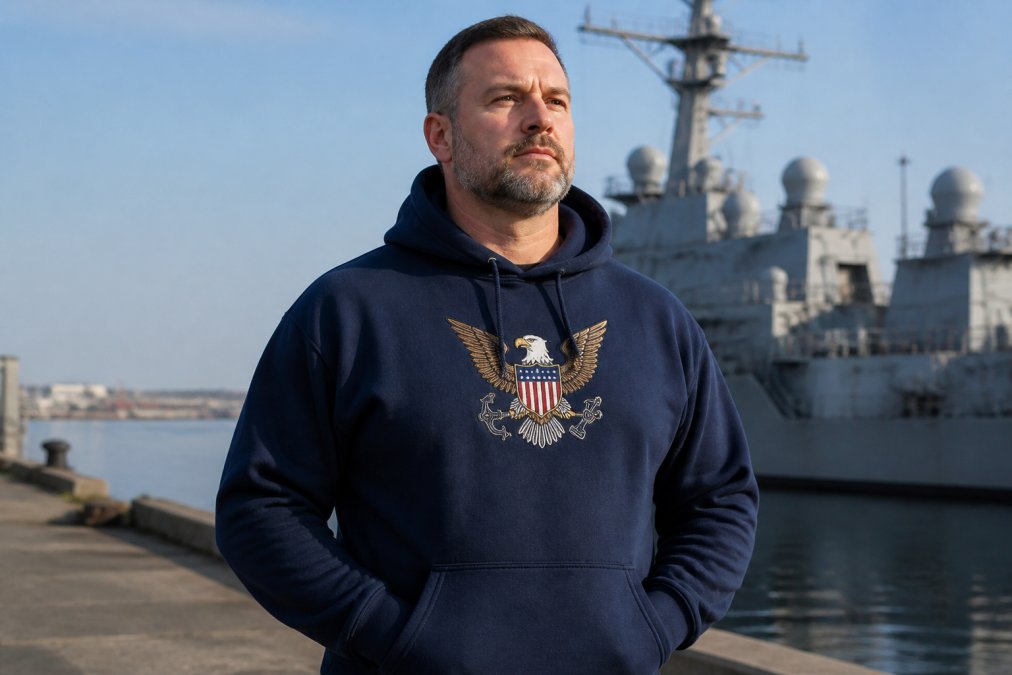
1. Heavyweight Cotton-Polyester Blend With Screen-Printed Eagle
This is the workhorse of the group. A heavyweight cotton-polyester blend gives comfort with durability and color retention. The screen-printed eagle emblem sits centered on the chest using a layered print that resists cracking. Look for a 10-12 oz garment. This style suits veterans who want a casual, everyday hoodie with clear military pride.
2. Quarter-Zip Pullover With Embroidered Navy Insignia
For a more polished look, the quarter-zip pullover delivers. The embroidered Navy insignia on the left chest offers texture and depth that screen printing cannot match. It works well for retirement gifts or veterans who prefer a cleaner silhouette, and the quarter-zip makes layering easier. high quality hoodies.
3. Unisex-Fit Hoodie With Color-Blocking and Graphic Logo
Color-blocking adds visual interest without looking busy. This unisex-fit hoodie pairs a navy body with contrasting sleeves or hood, and the graphic logo anchors the design. Unisex fit runs true to size for both men and women, so check the size chart. The logo often incorporates the eagle, globe, and anchor motif, a strong choice for family members who want to show support with a modern look.
4. Drawstring-Hood Sweatshirt With Detailed Heraldry
Heraldry matters to veterans who know their insignia. This drawstring-hood sweatshirt features a detailed heraldic eagle design, often including shield or banner elements referencing Navy tradition. A well-positioned graphic sits at chest level and does not distort when the hood is up. This appeals to collectors and those who value the historical symbolism of the eagle emblem.
5. Front-Pocket Pullover Featuring the Eagle, Globe, and Anchor
The Eagle, Globe, and Anchor is the core emblem of the United States Marine Corps, but it also appears on Navy veteran apparel as a nod to shared heritage. This front-pocket pullover places the emblem prominently, using a cotton-polyester blend that resists pilling. Veterans who served in roles attached to Marine units often choose this design for its dual-service meaning.
Fabric Weight and GSM: Why It Determines Durability
Fabric weight is the single best predictor of how long a hoodie will last. Hoodies below 240 GSM feel thin and lose shape quickly. The most durable options fall between 280 and 320 GSM.
Don't assume all "heavyweight" labels mean the same thing, check the specifications for GSM or ounce weight. Heavier fabric also supports embroidery better, preventing puckering.
Officially Licensed Navy Veteran Apparel: What the Label Means
Officially licensed Navy veteran apparel carries a specific guarantee: the design has been reviewed and approved by the appropriate military licensing authority, ensuring the insignia, heraldry, and wording meet accuracy standards (defense.gov). Unlicensed gear often uses incorrect proportions, wrong colors, or misaligned elements that veterans notice immediately.
When you see an officially licensed label, it also means a portion of the proceeds may support morale, welfare, and recreation programs for service members. The U.S. Department of Defense licensing guidelines outline how military insignia may be used commercially. Buying licensed apparel is a way to respect the symbols while ensuring your money supports the community rather than an unauthorized operation.
Detailed Sizing Guide for Veterans: Getting the Right Fit
Fit is where many online orders go wrong. Military-issue sizing differs from commercial sizing, so measure your chest at the fullest point and compare it to the brand's size chart.
For layering over a t-shirt, order your true chest size; for a mid-layer, size up once. Unisex-fit hoodies run differently than men's or women's cuts. Veterans with broad shoulders may need to size up in the shoulders even if the chest measurement suggests otherwise.
How to Care for Embroidered Veteran Hoodies
Embroidery requires different care than screen printing. Turn the hoodie inside out, wash in cold water on a gentle cycle, then hang to dry. Heat causes shrinkage and cracking.
Avoid fabric softeners, which leave a residue that dulls the thread's sheen. If the emblem needs cleaning, spot-treat it with a mild detergent rather than scrubbing. Following these steps for how to care for embroidered veteran hoodies will keep the insignia sharp for years. The Federal Trade Commission care label guidelines require accurate washing instructions on apparel, so check the tag for any brand-specific guidance.
Why Embroidered Insignia Fails: The Three Main Causes
Most embroidered eagle emblems on hoodies fail for one of three reasons:
-
Thread Fraying from Friction: The embroidery thread rubs against other garments, zippers, or the dryer drum, breaking threads and creating a fuzzy look. Turning the hoodie inside out before washing is the most effective prevention.
-
Puckering from Heat Shrinkage: Cotton-blend fabrics shrink under high heat. If the thread does not shrink at the same rate, it pulls the fabric into ripples. Cold water and air drying are non-negotiable. Dryer heat can also degrade the backing material.
-
Backing Breakdown: The backing material stabilizes the fabric, but repeated washing can break it down. High-quality hoodies use a soft, cutaway backing that bonds with the fabric. A scratchy material behind the emblem indicates a less durable tearaway backing.
A Care Routine That Extends Emblem Life
For a hoodie with a detailed heraldic eagle or a multi-color Eagle, Globe, and Anchor, follow this routine:
- Pre-treat stains on the emblem immediately. Use a small amount of mild liquid detergent (like Woolite or Tide Free & Gentle) applied directly to the stain. Gently dab with a soft cloth. Do not rub, as this grinds the stain deeper into the threads.
- Wash in cold water (below 80°F) on a gentle or delicate cycle. If your machine has a "hand wash" cycle, use that, the shorter the cycle, the less time the embroidery spends being agitated.
- Use a mesh laundry bag for the hoodie to protect it against zippers and hooks on other garments.
- Air dry flat or on a hanger. Never use a dryer. If you must, use the lowest heat setting ("air fluff" or "no heat") and remove the hoodie while still slightly damp.
- Do not iron directly over the embroidery. The heat will flatten the threads and can melt synthetic blends. If you must iron, turn the hoodie inside out and iron the back of the emblem with a pressing cloth.
Screen-Printed Emblems: Different Rules
If your hoodie has a screen-printed eagle rather than an embroidered one, the care rules change slightly:
- Wash inside out to protect the print from friction against other garments.
- Cold water is still essential. Heat causes the ink to soften and become tacky, leading to cracking or peeling.
- Do not use bleach or harsh detergents. These can break down the ink's binder.
- Air drying is preferred. If you use a dryer, use the lowest heat setting and remove the hoodie while still slightly damp. High heat can make the print brittle and crack.
- Never iron directly on the print. The heat will melt the ink and ruin the design.
The Bottom Line
The difference between a hoodie that looks sharp for five years and one that looks worn after five months is almost entirely in the care routine. Cold water, gentle cycles, and air drying are the three pillars. For embroidered emblems, add the mesh bag and avoid fabric softeners. For screen-printed emblems, turn the garment inside out.
Pair Your Hoodie With Custom Embroidered Military Unit Caps
A navy veteran hoodie pairs naturally with custom embroidered military unit caps. Many veterans prefer to complete the look with a cap bearing their specific ship crest, squadron patch, or unit insignia. Custom embroidery on caps requires a different density than hoodie embroidery because the fabric is thinner and the curve of the crown distorts flat designs.
When ordering a custom cap, provide the exact unit designation and any specific artwork. A reputable provider will adjust the stitch count and backing to suit the cap material. This combination creates a layered expression of service that generic apparel cannot match.
Which Navy Eagle Hoodie Should You Pick?
| Hoodie Style | Best For | Key Feature | Care Level |
|---|---|---|---|
| Heavyweight Cotton-Polyester | Everyday wear | Screen-printed eagle | Machine wash cold |
| Quarter-Zip Pullover | Retirement gifts | Embroidered insignia | Gentle cycle, hang dry |
| Unisex Color-Block | Family supporters | Modern graphic logo | Machine wash cold |
| Drawstring Heraldry | Collectors | Detailed emblem | Spot treat emblem |
| Front-Pocket Pullover | Dual-service pride | Eagle, Globe, and Anchor | Gentle cycle, hang dry |
Your choice comes down to how you plan to wear it. For daily use and maximum durability, the heavyweight cotton-polyester blend is the safest bet. For a gift marking a specific occasion, the quarter-zip with embroidered insignia carries more formality. Veterans who want to represent their specific service history should look for officially licensed designs.
US Troop Gear, Inc. builds its apparel collection around the understanding that military symbols deserve accuracy and respect. Shop the collection to find gear that honors your branch with the quality it deserves, or pair your hoodie with a custom embroidered cap that represents your unit.
Frequently Asked Questions
What features should I look for in a high-quality veteran hoodie?
Focus on fabric weight first. A heavyweight hoodie in the 10-12 oz range or roughly 300-400 GSM holds its shape and provides real warmth. Check the stitching: double-needle stitching on seams and hems prevents fraying. For the eagle emblem, embroidery lasts longer than screen-print through repeated washing. Also confirm the hoodie uses a cotton-polyester blend, which resists shrinking while staying breathable. A front pocket and drawstring hood add practical function. Look for officially licensed Navy veteran apparel to ensure the emblem and insignia are accurate.
Are there officially licensed Navy veteran hoodies available?
Yes. Officially licensed Navy veteran apparel carries approval from the Department of Defense through the trademark licensing program. This means the eagle, anchor, and other insignia meet strict standards for accuracy and respectful representation. When you buy licensed gear, the design uses correct heraldry rather than a generic approximation. The licensing fee also supports morale, welfare, and recreation programs for service members. Check the label or product description for licensing information before purchasing.
What is the significance of the eagle emblem on military apparel?
The eagle on Navy apparel typically refers to the eagle, globe, and anchor emblem, the official insignia of the Navy. The eagle represents the United States and the watchful strength of the nation. The globe shows the worldwide reach of naval operations, and the anchor symbolizes maritime tradition and the Navy's connection to the sea. Wearing this emblem on a hoodie is a way to display pride in that heritage and to connect with others who recognize what the symbolism means.
How do I choose the right size for a military-themed hoodie?
Start by taking your chest measurement at the widest point. Compare that number to the brand's size chart, since unisex-fit garments run differently than tailored civilian cuts. If you are between sizes, size up for a relaxed layering fit, especially if you plan to wear the hoodie over a t-shirt or base layer. Check the fabric content too: cotton-polyester blends resist shrinkage, but pure cotton hoodies can shrink a full size in the first wash. Read customer reviews for notes on whether the fit runs small or large.