

9 Thoughtful Care Package Ideas for Veterans
Last Updated: October 28, 2026
Quick Summary
The best care package ideas for veterans start with who the person is now, then add practical items they will use, such as travel-sized toiletries and shelf-stable snacks, plus a leisure pick like a puzzle book. Choose items that fit their branch, dietary needs and interests, and include a personal note.
- Start by asking about the recipient's branch, era, routine and preferences.
- Shelf-stable snacks like granola bars, nuts and jerky ship well without refrigeration.
- Check for fragrance sensitivity and dietary restrictions before packing toiletries or food.
- Seal liquids in zip-top bags and stand them upright to prevent leaks.
- Confirm the delivery situation and receiving desk rules before shipping.
Table of Contents
- Practical Everyday Supplies That Get Used
- Leisure Picks: Books, Puzzles and Downtime Gear
- Personalized Gifts for Veterans That Show You Know Them
- Branch-Specific Gear for Veterans, Including Challenge Coins and Caps
- Items to Skip and Packing Safety Notes
- How to Ship a Care Package to a Veteran Without Delays
- Build Your Veteran Care Package This Week
- Frequently Asked Questions
Thoughtful care package ideas for veterans begin with one question: who is this person now?
A care package works best when it reflects the person receiving it. Ask a family member, friend or unit contact what the veteran uses, wears and talks about.
Veterans also come from different circumstances: active reservists, retirees, and people living with injuries, dietary restrictions or limited mobility. Keep those factors in mind before filling the box.
Practical Everyday Supplies That Get Used
The most appreciated care packages contain items the recipient would otherwise have to buy. Practical supplies show you have thought about daily life, not just sent a token gift.
Toiletries and Personal Hygiene Basics
Travel-sized toiletries are a practical core: toothbrushes, toothpaste, deodorant, compact shampoo and conditioner, body wash, disposable razors, lip balm and unscented lotion. Baby wipes help when water is limited.
Check for specific needs before packing scented products. Some people are sensitive to fragrance, and some environments restrict aerosols or certain liquids. Choose smaller containers and confirm shipping rules first.
Comfort Items and Shelf-Stable Snacks
Shelf-stable snacks are the most common care-package item, and for good reason. Granola bars, nuts, jerky, gum, hard candy and quick-protein options ship well and need no refrigeration.
Ask about dietary restrictions and allergies before buying food. A veteran managing diabetes, a gluten intolerance or a nut allergy will not benefit from a box of mixed snacks.
The most useful care package items fall into a few practical categories, summarised below.
| Category | Examples from the article | Key note |
|---|---|---|
| Toiletries | Travel-sized toothpaste, deodorant, razors, lip balm | Check for fragrance sensitivity first |
| Shelf-stable snacks | Granola bars, nuts, jerky, gum | No refrigeration needed |
| Comfort items | Favourite cookies, drink mix | Label every item for allergies |
Leisure Picks: Books, Puzzles and Downtime Gear
Downtime is a real part of military life and life after service. Leisure items fill quiet hours, long flights and recovery periods.
Good options include paperback novels in genres the veteran already reads, puzzle books (crosswords, sudoku, word searches), adult coloring books, and magazines on their hobbies.
Choose items that fit the recipient's interests, not your own. An aviation veteran may prefer a flight simulator magazine; another may want a history paperback about a specific war.
Personalized Gifts for Veterans That Show You Know Them
Personalized items signal that the gift was chosen for one person.
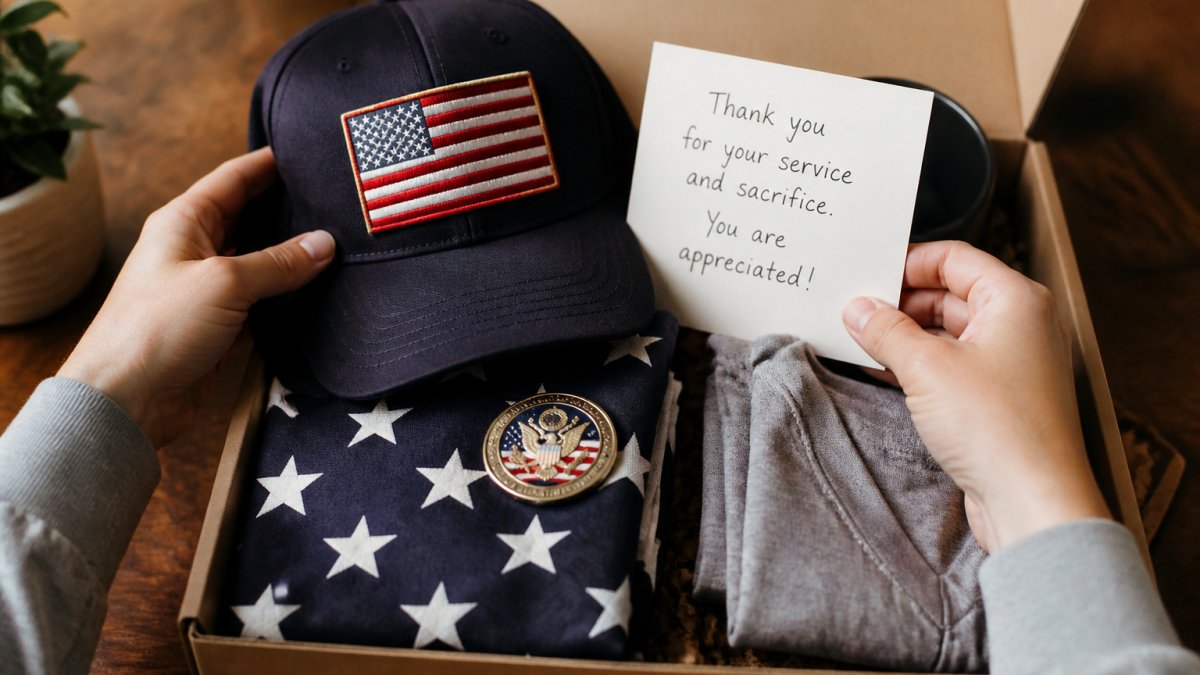
Consider a handwritten letter, a photo of a home or pet, or a small keepsake tied to the veteran's service. If you have picked up challenge coins as a gift, see this guide to organizing and displaying challenge coins. Compare metal-free alternatives to military challenge coins if a different style suits the veteran's taste or budget.
Avoid anything that reads as a joke at the recipient's expense or references combat or injury in a way they have not invited. A kind, specific message usually matters more than an expensive item.
Branch-Specific Gear for Veterans, Including Challenge Coins and Caps
Branch-specific gear lets a veteran show pride in their service every day.
Our current options for veterans include the United States of America Proud Veteran Cap, which is made in the USA with an adjustable strap and is available in 5-panel high profile or 6-panel low profile styles, priced at $31.25. Browse the full range of Vietnam veteran caps in one place.
Challenge coins are another popular option. The Navy Veteran Challenge Coin is officially licensed by the Department of the Navy and priced at $16.45.
Before ordering, confirm the item matches the recipient's branch and service. If unsure which version fits, the product description and listing details should answer your question.
Items to Skip and Packing Safety Notes
Most care-package guides say to skip glass, perishables and leaky liquids. That advice is sound, but the bigger risks for a veteran-focused package are items that are physically inaccessible, medically inappropriate or emotionally unwelcome.
Practical exclusions that protect the whole box
- Glass containers and jars break in transit and can injure the recipient or damage other items.
- Perishable food and anything that melts (chocolate, soft cheeses, some protein bars in warm weather) will not survive a truck or a mail room.
- Large or loosely sealed liquids leak. Decant into smaller containers, seal in a zip-top bag, and stand upright.
Accessibility and medical considerations
A veteran with limited hand strength, arthritis or a mobility impairment may struggle with hard-to-open packaging. Choose easy-open lids, pull-tab cans or resealable pouches, and avoid vacuum-sealed products that require scissors and grip strength.
United States of America Proud Veteran Cap →
Ask a family member or friend: "Are there foods or ingredients I should avoid?"
If the recipient uses a wheelchair or has limited reach, keep the box small and avoid heavy items that are hard to lift from a mail room counter.
Trauma-informed and respectful gifting
Not every veteran wants military imagery, combat references or surprise contact. Some appreciate branch gear and challenge coins; others find those reminders difficult. Let the recipient signal what feels comfortable.
- Avoid surprise visits or unannounced contact. A package that arrives without warning can be unwelcome.
- Skip jokes about combat, injury, or service. Humor that lands among close friends can read very differently from a distant acquaintance.
- Be careful with imagery. Items depicting weapons, combat scenes, or specific conflicts may be distressing. When in doubt, choose neutral, branch-neutral, or hobby-based items.
A quick pre-pack check
Before you seal the box, run through this list:
- No glass, perishables, or melting items
- Liquids sealed in bags and standing upright
- No aerosols or restricted items the carrier or facility will refuse
A thoughtful care package is defined as much by what you leave out as by what you include. The right exclusions show the same attention to the person that the right gifts do.
How to Ship a Care Package to a Veteran Without Delays
Shipping is where many care packages run into trouble, and veterans present delivery scenarios a generic guide never addresses. Confirm not just the address but the situation: transitional housing, a residential care facility, a VA-supported program or a family member's home may need different routing than a private residence. Navigating these logistical complexities remains a vital component of the broader commitment to support wounded warriors as they transition through various stages of recovery and reintegration.
Confirm the delivery situation first
Ask the recipient, or a family member, friend, or caseworker they authorize, three questions before you pack:
- Is this a stable address where the recipient can receive mail directly?
- Is there a front desk, mail room, or staff member who accepts packages?
- Are there restrictions on what can be delivered (food, liquids, aerosols, batteries)?
If a home address is unavailable, coordinate with the organization rather than guessing. Shelters and care facilities often have a receiving procedure and staff contact. Address the box to the recipient in care of the organization, include a phone number for the receiving desk, and confirm the package will be held rather than returned.
Choose the carrier and service that fit the contents
For most domestic packages, major carriers offer tracking and delivery confirmation. Compare transit time against your target date, and build in a buffer around federal holidays and the November-December peak season, when volume slows every carrier.
Match the service to the contents:
- Ground service is usually the most economical for heavy, non-perishable boxes.
- Expedited service makes sense when the package must arrive by a specific date.
- Signature confirmation is worth adding when the box contains higher-value items such as challenge coins or engraved pieces, or when it will sit on a porch otherwise.
Keep the tracking number and share it with the recipient or the receiving contact so someone knows when to expect the box.
Pack for the trip, not just the shelf
Use a sturdy corrugated box sized close to the contents so items do not shift. Wrap items individually, fill void space with crumpled paper or bubble wrap, and seal all seams with packing tape.
Seal any liquid in a zip-top bag and stand it upright. A leaking bottle can ruin every other item in the box, and a soaked box is more likely to be delayed or refused.
Know the common restrictions before you seal the box
Carriers and receiving facilities restrict certain items. Aerosols, flammable liquids and some batteries face limits that vary by carrier and service. Perishable food and anything that melts easily should not go into a box that will sit in a truck or mail room. Check the carrier's restricted-items list and, for facility deliveries, the receiving organization's own rules before you pack.
Time it around the recipient's routine
Veterans in treatment or transitional programs may have activities, appointments or visiting hours that affect when they can receive a package. Ask the receiving contact when deliveries are accepted and whether the recipient prefers to be present.
Ship well before holidays and birthdays, and tell the recipient roughly when to expect the box. A tracked package with a known arrival window is easier to receive than a surprise that arrives while no one is at the desk.
Build Your Veteran Care Package This Week
Start with the recipient in mind, then choose three to five items from different categories. A practical combination might include toiletries, a shelf-stable snack, a puzzle book and a short handwritten note. Add one branch-specific item if the veteran would value it.
Use this simple checklist:
- Confirm the recipient's branch, era and current address
- Ask about allergies, dietary limits and sensitivities
- Choose one practical item and one leisure item
A thoughtful care package does not need to be expensive. It needs to show that you paid attention to the person who served. Start with one recipient, build a box around their needs, and let the rest follow.
Frequently Asked Questions
What to put in a veteran care package?
A strong veteran care package covers three things: everyday supplies, something for downtime, and a personal touch. Pack travel-sized toiletries like toothpaste, deodorant, lip balm and razors, plus shelf-stable snacks such as jerky, granola bars and nuts. Add a book or puzzle book for quiet hours and a handwritten note with family news. Ask the recipient or a close friend what they actually use before you buy, since preferences vary by branch, deployment and personal taste.
What is a nice gift for a veteran?
The best gifts usually connect to the veteran's service or personal life. Branch-specific items such as a U.S. Navy Veteran Challenge Coin ($16.45) or a U.S. Marine Corps Veteran Cap ($27.95) show you recognize their service. For a Navy veteran who collects ship memorabilia, a USS Nimitz CVN-68 Slate Plaque ($39.95) works well as a display piece. A small, meaningful item often lands better than an expensive one.
What not to put in a military care package?
Also avoid unsolicited political messages or anything that could be seen as disrespectful to the recipient's service.
How can I show appreciation to a veteran with a gift?
Mention a detail about their service you know about, or share news from home they will care about. Pair the note with a keepsake they can display, such as a slate coaster from the USS George Washington CVN-73 Slate Coaster set ($9.75 for two).
