

Embroidered Military Cap Design Ideas for Reunions
Table of Contents
- Embroidered Military Cap Design Ideas That Honor Your Service
- Branch and Era Design Ideas for Military Cap Design
- Custom Military Reunion Hats: Design Concepts by Reunion Type
- Personalized Veteran Caps: Names, Initials, and Service Dates
- Custom Unit Reunion Caps: Insignia, Ship Crests, and Patches
- Embroidery Placement and Legibility: What Goes Where
- Group Ordering, Sizing, and Deadline Planning
- Respectful Use of Insignia and What to Avoid
- Frequently Asked Questions
Last Updated: October 6, 2026
Embroidered Military Cap Design Ideas That Honor Your Service
A reunion is often the first time in decades a unit stands together again, so the embroidered military cap design ideas you choose should carry that weight.
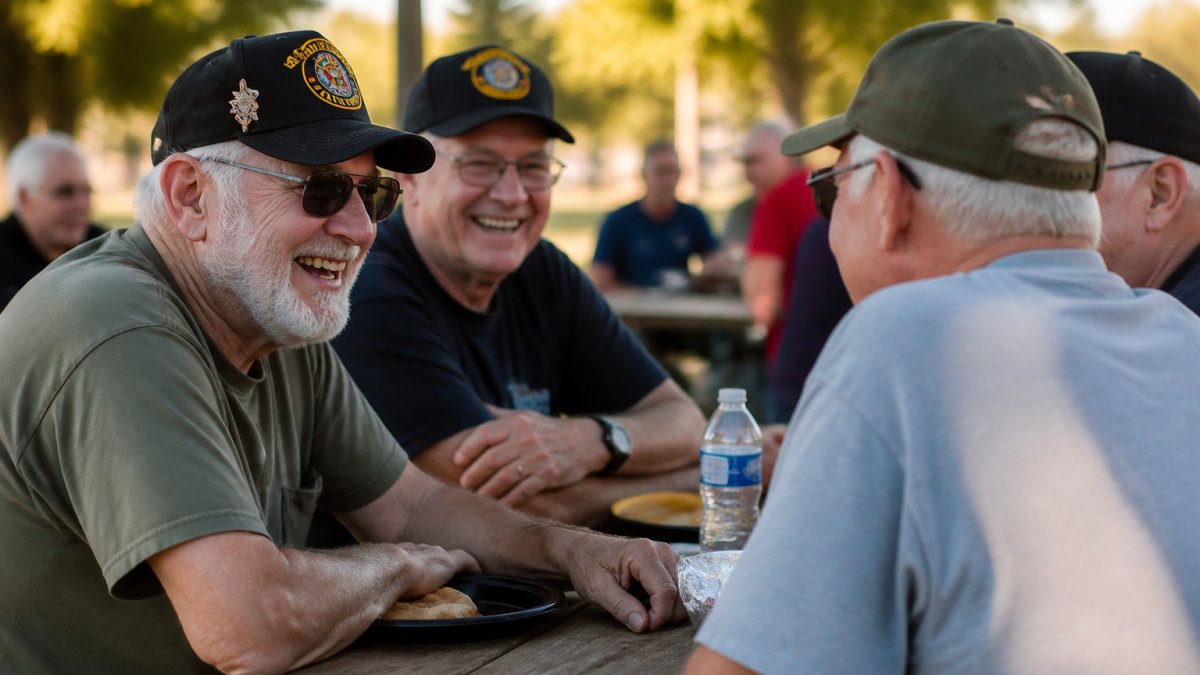
An embroidered military cap is a ball cap with a design stitched directly into the fabric rather than printed on top, so the emblem survives repeated wear, washing, and years of storage between reunions.
Below, we break down concepts by branch, era, and reunion type, plus placement, sizing, and ordering guidance.
Why a Custom Cap Beats a Generic Souvenir
A generic souvenir cap says "I visited." A custom cap says "I served, and I served here." A stock design can't carry your ship's hull number, squadron patch, or deployment years.
Durability matters just as much. Look for direct embroidery, a padded sweat band, and a reinforced bill, those details decide whether a cap survives a decade in a closet and a weekend of wear.
Branch and Era Design Ideas for Military Cap Design
Era is the strongest organizing principle for military cap design. A Vietnam-era reunion and a Middle East reunion call for different colors, ribbons, and emotional registers, but the best reunion caps layer era, branch, and unit identity into one readable front panel.
Start by asking what the group wants the cap to say: a proud announcement of service, a quiet keepsake, or a memorial for members who have passed? The answer narrows your palette fast.
Vietnam-Era Reunion Concepts
Vietnam reunions favor olive drab and khaki, matching the era's field gear. Four concepts that read well on a cap front:
- Service ribbon block. A single Vietnam Service Medal ribbon rendered in thread, with "Vietnam Veteran" set below it in a bold sans-serif. Reads clearly at arm's length.
- Country outline. The map of Vietnam stitched as a solid silhouette, with a small star marking the region where the unit operated.
- Year range. "1968-1969" set large, with a small branch emblem above it. Works especially well for units that deployed on a single tour.
- Unit patch revival. A simplified version of the unit's Vietnam-era patch, redrawn for cap scale rather than reproduced at full detail.
Our Vietnam Veteran 50th Anniversary Embroidered Cap has a high definition design directly embroidered onto a cotton twill cap and includes a fully adjustable embroidered strap, padded sweat band, triple stitched bill and reinforced vent holes. The Vietnam Map Veteran Embroidered Cap has a high definition design directly embroidered onto a cotton twill cap and includes a fully adjustable embroidered strap, padded sweat band, triple stitched bill and reinforced vent holes.


WWII and Middle East Reunion Concepts
WWII reunions are increasingly family-led, often organized by grandchildren for a veteran who may no longer attend. Ribbon-based designs read as period-correct without needing a photo. Concepts that fit:
- Theater ribbon. A Pacific or European campaign ribbon rendered in thread, with the theater name beneath it.
- Service star. A single gold or blue star, with the veteran's name and dates of service on the back panel.
- Victory motif. A simplified "V" with a laurel element, kept to two thread colors so it stays legible.
- Branch plus theater. The branch emblem on the left chest area of the front panel, the theater ribbon on the right.
The World War II Veteran (Pacific Ribbons) Cap and the World War II Veteran (European Ribbons) Cap are acquired from the same supplier that dispenses to exchanges and posts worldwide. This emblem is applied to a 5 panel high profile or 6 panel low profile poly military ball cap made in the USA.

Middle East reunions skew toward modern earth tones. Concepts that work:
- Coyote brown base with a subdued flag. The flag rendered in tan, brown, and olive thread rather than full color.
- Deployment ribbon rack. Two or three ribbons from the era, simplified to their dominant colors.
- Operation name. The named operation set in a stencil-style font, with the year range beneath it.
- Branch emblem in earth tones. The service emblem rendered in a single thread color for a low-profile look.
The Middle East Veteran with Ribbons Embroidered Cap has a high definition design directly embroidered onto a cotton twill cap and includes a fully adjustable embroidered strap, padded sweat band, triple stitched bill and reinforced vent holes.
Branch-Specific Concepts
Branch identity is the fastest way to make a cap feel like it belongs to the group. Concepts that read well across branches:
- Army: Branch emblem on the front, unit crest on the side, service dates on the back. Subdued OD or khaki base.
- Navy: Ship silhouette on the front, hull number on the side, ship name under the bill. Navy blue or OD base.
- Air Force: Wing emblem on the front, squadron patch on the side, years of service on the back. Gray or navy base.
- Marine Corps: Eagle, Globe, and Anchor on the front, unit designation on the side, service dates on the back. OD or coyote base.
- Coast Guard: Shield emblem on the front, cutter name on the side, service dates on the back. Navy or white base.
Unit and Ship Concepts
Unit-level reunions want the most specific identifiers available:
- Hull number front and center. The number set large, with the ship name in a smaller arc beneath it.
- Squadron patch revival. The squadron's patch redrawn for cap scale, with the squadron designation on the side.
- Deployment years. The years the unit deployed, set as a range, with the unit crest above.
- Crest plus motto. The unit crest on the front, the unit motto on the back panel.
Custom Military Reunion Hats: Design Concepts by Reunion Type
Custom military reunion hats should be matched to the gathering, not a single template.
| Reunion Type | Design Focus | Color Direction | Typical Extras |
|---|---|---|---|
| Unit or ship reunion | Hull number, squadron patch, years served | OD green, khaki, navy | Unit crest, deployment dates |
| Branch-wide gathering | Service branch emblem, flag element | OD green, coyote brown | Ribbons, branch name |
| Family or memorial tribute | Veteran's name, rank, dates of service | Subdued earth tones | Service dates, memorial text |
A unit reunion wants the most specific identifiers: hull number, squadron, deployment years. A branch-wide gathering can lean on the service emblem and flag imagery. A family tribute wants the veteran's name and dates of service, kept restrained.
Personalized Veteran Caps: Names, Initials, and Service Dates
Personalized veteran caps work best when personalization is limited to one element. Names, initials, and service dates carry the most meaning with the least clutter.
Names go on the back above the adjustable strap or on the side panel. Initials work on a side panel or under the bill. Service dates, written as a range, read cleanly on the back or beside a unit emblem on the front.
Vietnam Veteran 50th AnniversaryEmbroidered Cap →
- Front panel: Branch emblem, unit crest, or era identifier. One element only.
- Side panel: Initials, a small patch, or a ship silhouette.
- Back panel: Full name and service dates, or a short memorial line.
- Under the bill: A quiet detail only the wearer sees, often a ship name or a date.
A cap with a name on the back and a unit crest on the front tells the whole story without crowding either panel.
Custom Unit Reunion Caps: Insignia, Ship Crests, and Patches
Custom unit reunion caps live or die on insignia accuracy.
Ship crests deserve particular care.
Legibility beats detail every time. A simplified crest that reads clearly from six feet away honors the unit better than a faithful reproduction nobody can make out.
Embroidery Placement and Legibility: What Goes Where
Embroidery placement decides whether a design reads or blurs. The rule: the more detailed the artwork, the larger the panel it needs.
Front-panel designs should use bold shapes and thick lines. Side panels can carry smaller, simpler marks. Back panels handle text well because the curve is gentler. Under-bill details should be minimal.
Thread color matters as much as placement. White on dark blue or OD green gives the highest contrast. Metallic threads look sharp but fray faster and cost more, so save them for a single accent.
- Can you read the main text from six feet away on screen at cap scale?
- Does the design still make sense in a single thread color?
- Are any letters thinner than the surrounding stitch density can hold?
- Does the design survive being shrunk to the panel size you chose?
Group Ordering, Sizing, and Deadline Planning
Group ordering goes wrong in predictable ways, and almost all of them trace back to the calendar. Build the timeline backward from the reunion date, not forward from the day the committee gets organized.
Collecting Sizes
Adjustable straps solve most sizing problems. A fully adjustable embroidered strap fits the vast majority of adult head sizes.
Approving Proofs
- Spelling and punctuation. Names, unit designations, and dates are the most common places for errors. Read them out loud.
- Scale. Ask the vendor to show the design at the actual size it will appear on the cap, not enlarged. A crest that looks sharp at twelve inches may turn to mush at three.
Setting Order Quantities
Order one extra cap per ten veterans. Reunions always turn up a late RSVP, a widow who wants her husband's cap, or a member who lost his on the flight in.
Deadline Planning
| Step | What Happens | When to Start |
|---|---|---|
| Collect headcount and sizes | Committee gathers RSVPs and preferences | 10-12 weeks out |
| Approve artwork proof | Committee signs off on the final design | 8-10 weeks out |
| Place the group order | Order goes in with final quantities | 6-8 weeks out |
| Receive and distribute | Caps arrive and get handed out | 2 weeks out |
Two weeks of buffer before the reunion is not optional. Shipping delays happen, and a cap that arrives the day after the event is a cap nobody wears.
Distributing the Caps
Hand caps out at check-in, not the banquet. People want to wear them the moment they arrive, and a cap handed out at the door becomes part of the reunion photos from the first hour.
Respectful Use of Insignia and What to Avoid
Respectful use of insignia comes down to one principle: don't wear what you didn't earn. Unit crests, rank insignia, and qualification badges carry specific meaning, and using them loosely undercuts the tribute. Guidelines we follow:
Planning a reunion means getting a lot of details right, and the cap is the one everyone takes home. US Troop Gear, Inc. proudly offers a comprehensive collection of high-quality, durable military-themed apparel, embroidered caps, and challenge coins, allowing patriots to wear their pride with purpose. Start with our US Flag Veteran Embroidered Cap if your group spans services, or browse the full collection to match your unit's era.
Frequently Asked Questions
What should you put on a military reunion cap?
Most reunion caps combine a branch or unit emblem on the front with the reunion year or service dates on the side. Common additions include the veteran's name or initials, a ship crest for Navy reunions, and a short phrase tied to the unit's nickname. Keep the front panel to one clear focal image so it reads from a distance, and save smaller text like dates and names for the side or back.
How do you personalize embroidered caps for a military reunion?
Start by choosing a cap style, then decide which elements vary per person and which stay the same for the whole group. Unit insignia, branch colors, and reunion year usually stay fixed; names, initials, and service dates change per veteran.
How far in advance should you order custom embroidered reunion caps?
Order at least six to eight weeks before your reunion date, and add a buffer if your group is large or the design needs artwork cleanup. That window covers proofing, any revisions to the unit emblem, production, and shipping. If your reunion falls near a holiday or a busy summer weekend, start earlier. Collecting sizes and confirming the final headcount before you order prevents a second run later.
Can you add a unit name, ship crest, or service dates to a reunion cap?
Yes. Custom unit reunion caps commonly carry a unit name or number, a ship crest for Navy groups, and service dates stitched on the side or back.