

How to Maintain Color Guard Equipment and Uniforms
Quick Summary
Maintain color guard equipment by checking flags, poles, rifles, sabres and uniforms before and after each performance, cleaning them on a set schedule, and storing them dry and loosely folded. Small repairs caught early prevent failures mid-routine and cost less than replacing gear.
- Check flags, poles, rifles, sabres and uniforms before and after each performance.
- Dry flags flat on a clean towel in shade, away from direct sun.
- Wipe poles after use and apply paste wax to wooden poles.
- Never machine dry wool or heavily trimmed uniforms; heat causes shrinkage and trim damage.
- Store gear completely dry and fold flags loosely to avoid permanent creases.
Table of Contents
- Why Regular Color Guard Equipment Maintenance Matters
- Color Guard Equipment Checklist: What to Inspect and When
- Color Guard Flag Care: Cleaning, Drying and Storage
- Color Guard Flag Pole Maintenance Step by Step
- How to Wash Marching Band Uniforms Without Damaging Them
- Fabric Care for Color Guard Uniforms: Stains, Wrinkles and Storage
- Common Maintenance Mistakes and How to Avoid Them
- Building Your Equipment Care Routine for the Season Ahead
- Frequently Asked Questions
Why Regular Color Guard Equipment Maintenance Matters
Last Updated: November 21, 2026
Color guard equipment and uniforms take a beating. Flags get tugged in wind, rifles get dropped on hard gym floors, and sabres pick up scuffs with every rehearsal. Regular care keeps gear looking sharp, safe to use, and ready for the next performance. A clean, well-kept uniform helps a unit look its best on the field.
Maintenance is also about safety. A cracked pole or a frayed flag edge can fail mid-routine. Catching small problems early is far easier than replacing gear in the middle of a season.
- Looks: Clean, pressed uniforms make the whole unit look unified.
- Safety: Checked equipment is less likely to break during a performance.
- Cost: Small repairs now mean fewer replacements later.
- Lifespan: Proper storage keeps fabrics and finishes from wearing out early.
A simple routine works well for most units. Check gear after every rehearsal, clean it on a set schedule, and store it the same way every time.
Color Guard Equipment Checklist: What to Inspect and When
A regular checklist keeps inspections from being skipped. Check each item before and after each performance, and do a deeper review at the start and end of the season.
- Flags: Look for tears, loose hems, fraying edges, and stains.
- Poles: Check for dents, cracks, loose tips, and rough joints.
- Rifles: Inspect the stock, grip, and sling attachments for wear.
- Sabres: Check blades for nicks and make sure the handles are secure.
- Uniforms: Look for loose buttons, torn seams, and worn trim.
- Footwear: Check soles and heels for damage that could cause slips.
Before each performance, a quick check takes only minutes. After each season, a full inspection helps you plan repairs for the next year.
Color Guard Flag Care: Cleaning, Drying and Storage
Flags are often the most delicate piece of color guard equipment. Silk and nylon need gentle handling. Follow the manufacturer's care label first, since fabric type determines the right method.
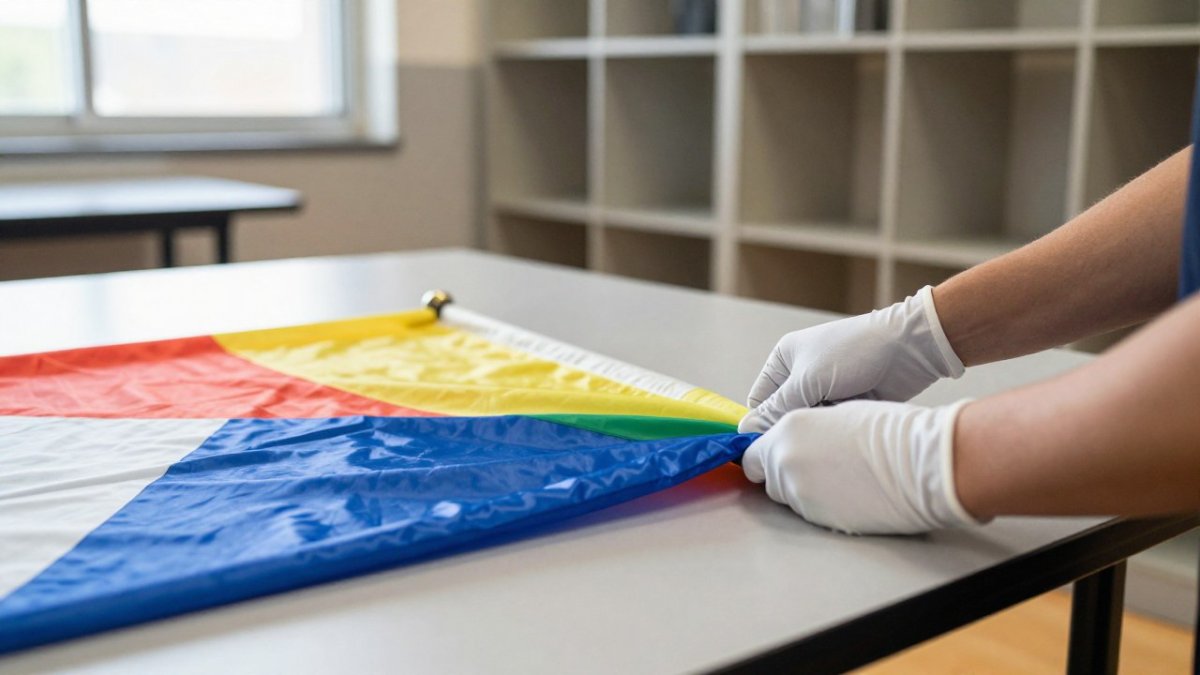
Start with a light brush or soft cloth to remove dust and dirt. For spots, use a mild detergent and cool water, and test a small hidden area first. Avoid wringing the fabric, which can stretch or damage the threads.
Drying matters just as much. Lay the flag flat on a clean towel in a shaded spot with good airflow. Direct sun can fade colors over time, so keep flags out of strong light.
Storage should keep the flag flat and dry. Fold it loosely, store it in a breathable bag, and keep it away from damp areas. Tight folds can leave permanent creases.
Color Guard Flag Pole Maintenance Step by Step
Poles take a lot of stress, so a simple routine helps them last. Follow these steps after each use:
- Wipe the pole with a dry cloth to remove dirt and sweat.
- Check the tip and ferrule for looseness or cracks.
- Look at each joint and make sure sections fit tightly.
- Apply a light coat of paste wax to wooden poles to protect the finish.
- Store poles upright or flat on a rack so they do not warp.
If a pole develops a crack or a loose joint, stop using it until it is repaired. A failed pole can cause injury, so safety comes first.
How to Wash Marching Band Uniforms Without Damaging Them
Marching band uniforms are the highest-value garments in most color guard inventories, and washing them incorrectly is the fastest way to shrink wool, melt trim, or set a stain permanently. The care label always wins, but most uniforms fall into a few fabric families that behave predictably.
Identify the fabric family first. Check the label for fiber content. Wool blends, polyester gabardine, and heavily trimmed satin each need a different approach. If the label says dry clean only, do not hand wash it as a shortcut; the lining and trim often shrink at different rates than the shell.
Wool and wool-blend jackets and trousers. Spot cleaning is generally safer than full immersion. For a full wash, use cool water and a wool-safe detergent with no bleach or enzymes. Gently press the water through the fabric rather than agitating.
Polyester gabardine and blended marching trousers. These tolerate hand washing better. Use cool water and a gentle detergent, pre-treating stains first. Agitate minimally, rinse thoroughly, and hang to dry. Polyester holds wrinkles, so steam or press on low heat with a pressing cloth once dry.
Satin, sequined, and heavily trimmed uniforms. Treat these as dry-clean or spot-clean only unless the label explicitly allows hand washing. Sequins, braid, and metallic trim can snag, tarnish, or melt. If you must hand wash, turn the garment inside out, use cool water, and never wring or twist.
Pre-treat stains by type. Blot, do not rub. For grease, apply a small amount of mild dish soap and let it sit for a few minutes before rinsing. For protein stains such as sweat or food, use a cool-water enzyme detergent. For ink, test isopropyl alcohol on a hidden seam first.
Watch out: Never machine dry wool or heavily trimmed uniforms. Heat can shrink the fabric and flatten trim beyond repair, and the dryer is the single most common cause of uniform replacement mid-season.
Drying and pressing. Hang uniforms on padded hangers to dry away from direct sun. Press with a low heat setting and a pressing cloth between the iron and the fabric. Steam relaxes fibers better than a hot iron on most uniform fabrics.
Record what works. Keep a simple log of which garment was washed how and whether it came out well. A repeatable wash routine across the ensemble prevents one student's uniform from shrinking while another's stays true to size.
The right wash method depends on the fabric family, so match the garment before you start.
| Fabric | Recommended method | Key caution |
|---|---|---|
| Wool and wool blends | Cool water, wool-safe detergent, spot clean preferred | Heat and agitation can felt the wool |
| Polyester gabardine and blends | Cool water, gentle detergent, hand wash | Steam or press on low heat once dry |
| Satin, sequins and heavy trim | Dry clean or spot clean only | Trim can snag, tarnish or melt |
| Any uniform | Never machine dry wool or trimmed uniforms | Dryer heat is a common cause of replacement |
Fabric Care for Color Guard Uniforms: Stains, Wrinkles and Storage
Color guard uniforms often use satin, polyester, and blended fabrics, and each one reacts differently to stains, heat, and storage. The bigger risk, though, is fit: a uniform that was measured carelessly or stored badly will not sit right on the performer no matter how clean it is.
Stain care by fabric. Act fast and blot rather than rub. On satin, use a clean white cloth and cool water first; satin shows water rings, so work from the outside of the stain inward. On polyester, a mild detergent and cool water handle most marks.
Wrinkles. Steam works better than a hot iron on most uniform fabrics. Hang uniforms on padded hangers and let steam relax the fibers. If you use an iron, place a pressing cloth between the iron and the fabric and keep the setting low. Never press directly over sequins, braid, or metallic trim.
Storage. Store uniforms in a cool, dry closet in garment bags to block dust, away from direct sunlight. Do not store uniforms damp; moisture leads to mildew and odors. Keeping flags clean and dry helps preserve their color and fabric, and Harry West Flags offers more on caring for them.
Measure once, fit the whole ensemble. The most common cause of a uniform that never looks right is inconsistent measurement. Build a repeatable measuring station: a private area with a mirror, a flexible measuring tape, a clipboard, and a recording sheet.
Garment-by-garment measurement checklist. Map each measurement to the garment it controls so nothing is missed:
- Jacket: chest or bust, shoulder width, sleeve length from shoulder seam to wrist, and back length from nape to waist.
- Trousers: waist, hip, inseam, and outseam.
- Bibbers: waist, hip, inseam, and rise; confirm the bib top sits at the intended height.
- Headwear: head circumference at the widest point, plus hat height if the style requires it.
Measure snugly, without ease. Color guard uniforms are fitted, so measure snug against the body without pulling the tape tight. Keep the tape level and parallel to the floor for chest, waist, and hip.
What to do between sizes. When a measurement falls between two sizes, size up for jackets and bibbers that need layering room, and size down only when the garment has adjustable closures. Record the measurement, the size chosen, and the reason so the next fitting is consistent.
Watch out: Measuring over bulky clothing or with a tilted tape is the most common source of sizing errors. A tape that slips off level at the waist can shift a trouser size by an entire step.
Privacy and data handling.
Fit for movement. Have students move in the uniform before it is approved: raise arms overhead, march in place, and do a full flag spin. Check that sleeves do not bind, trousers do not pull at the seat, and headwear stays secure.
Common Maintenance Mistakes and How to Avoid Them
Many equipment problems come from small habits. Watch for these common mistakes:
- Storing gear damp: Moisture leads to mildew and odors. Always dry items completely first.
- Ignoring small damage: A loose thread becomes a tear. Fix minor issues right away.
- Using harsh chemicals: Strong cleaners can strip finishes and weaken fabric.
- Folding flags tightly: Creases can become permanent. Fold loosely and rotate storage.
- Skipping inspections: Problems hide until a performance. Check gear on a set schedule.
Building Your Equipment Care Routine for the Season Ahead
A good routine keeps care simple and consistent. Plan your schedule before the season starts, then stick to it.
- Before the season: Do a full inspection and order any repairs.
- After each rehearsal: Wipe down poles, rifles, and sabres.
- After each performance: Check flags and uniforms for damage.
- Monthly: Deep clean uniforms and review your checklist.
- End of season: Clean, dry, and store all gear properly.
Consistent care protects your investment and keeps your unit looking its best. For more information on the apparel and gear we offer, visit the US Troop Gear, Inc. website.
Frequently Asked Questions
How should color guard uniforms be washed?
Check the care label first, then hand wash or use a gentle machine cycle with cold water and mild detergent. Avoid bleach and high heat, which fade dye and weaken embellishments. Lay pieces flat or hang them to air dry out of direct sunlight. Wash after every few performances or sooner if they show sweat or dirt, since buildup can set stains and break down fabric fibers over time.
How do you remove stains from a color guard uniform?
Treat stains as soon as possible, before the uniform goes through a full wash. Blot rather than rub, then apply a small amount of enzyme-based stain remover or mild liquid detergent to the spot. Let it sit for about 15 minutes, rinse with cold water, and check the stain before drying. Heat from a dryer can set stains, so air dry until the mark is fully gone.
How should color guard flags be stored between performances?
Store flags fully dry, clean and loosely folded or rolled in a breathable bag or box. Keep them away from direct sunlight, heat sources and damp areas such as basements, which can cause mildew. Avoid tight creases that stress the fabric and the stitching. Check the flag for loose threads or fraying before putting it away so small problems do not grow during storage.
How often should color guard equipment be inspected?
Inspect equipment before and after each rehearsal block and performance season, and do a full check at least once a month during active use. Look at flag seams, grommets, pole joints, rifle or sabre grips and uniform hardware for wear or looseness. Replace damaged parts promptly, since a failed pole joint or torn flag can cause injuries or ruin a performance.
