

Military Fashion Influence on Streetwear: A History
Table of Contents
- How Military Fashion Shaped Modern Streetwear
- Military Uniforms and Their Civilian Adoption
- Military Surplus Streetwear: From Surplus Markets to Runways
- Iconic Garments: Trench Coats, Cargo Pants, and Combat Boots
- Camouflage Fashion History: From Battlefield to Street
- Military Style in Streetwear Subcultures and Designer Collections
- Wearing Military-Inspired Fashion With Purpose and Respect
- Frequently Asked Questions
Last Updated: October 12, 2026
How Military Fashion Shaped Modern Streetwear
The connection between military uniforms and modern streetwear runs deeper than casual borrowing of aesthetics. Military fashion streetwear translates functional design principles, durability, practicality, purposeful construction, from the battlefield into civilian life. At US Troop Gear, Inc., we recognize that understanding this history means appreciating both the garments and the cultural forces that transformed them into style statement.
The journey began centuries ago. Soldiers needed clothing that could withstand harsh conditions, creating design innovations: reinforced seams, multiple pockets, weather-resistant fabrics, and adjustable fits. When personnel returned home, they kept wearing what worked, and these garments crossed from surplus stores into mainstream fashion.
Designers recognized something genuine in military design, an honesty of form following function that resonated in an era skeptical of ornamentation. The military fashion streetwear trend accelerated because it offered authenticity in a market saturated with trend-chasing.
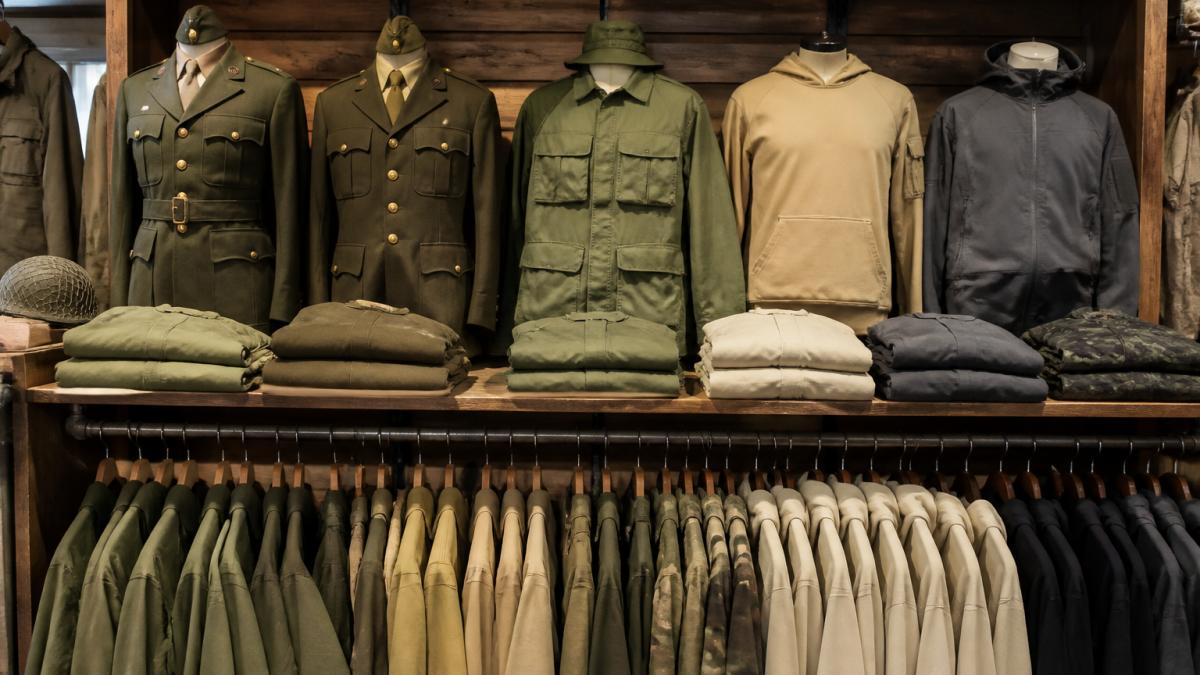
Military Uniforms and Their Civilian Adoption
Military uniforms were engineered for visibility, identification, protection, and functionality. Silhouettes, color palettes, and embellishments served tactical needs; rank insignia and unit patches communicated hierarchy and affiliation. These elements weren't chosen for aesthetics, they worked.
This is where military fashion streetwear gained legitimacy. Civilians adopting military pieces inherited both the visual language and the philosophy of purposeful design. A field jacket represented decades of engineering refined through combat, authenticity that appealed to people tired of fashion prioritizing appearance over performance.
Adoption accelerated after major conflicts. Following World War II and Korea, returning soldiers wore their service gear while transitioning to civilian life. Vietnam-era surplus flooded civilian markets in the 1960s and 1970s, creating an accessible entry point for young people.
By the 1980s and 1990s, this wasn't accidental. Designers intentionally referenced military uniforms, understanding the aesthetic carried cultural weight. A bomber jacket referenced aviation heritage; cargo pants carried the authority of field-tested military design.
Military Surplus Streetwear: From Surplus Markets to Runways
Military surplus streetwear emerged as its own category in the post-war period. Governments sold excess inventory, surplus stores opened in urban centers, and young people with limited budgets discovered authentic, durable clothing at a fraction of retail prices, making military-inspired pieces accessible to people who had never served.
The surplus market created a direct line from military production to civilian consumption. A field jacket sold at surplus carried its original insignia, construction quality, and authentic wear patterns, increasingly valuable as fashion moved away from decorative design.
The transition from surplus to runway happened gradually. Designers studied military construction techniques and deconstructed authentic surplus pieces to understand their engineering. By the 1990s, high-fashion houses released military-inspired collections, and brands like Maharishi and Carhartt WIP built identities around military surplus aesthetics.
What elevated military surplus streetwear from thrift-store discovery to fashion statement was the recognition that military design solved real problems. Pockets were positioned for functionality, seams reinforced because failure meant equipment loss, fabrics chosen for durability. This problem-solving approach created garments that outperformed fashion-first alternatives.
| Transition Phase | Time Period | Key Development | Cultural Impact |
|---|---|---|---|
| Post-war surplus | 1945-1960s | Military inventory sold to civilians | Affordable access to authentic military gear |
| Youth subculture adoption | 1960s-1980s | Surplus becomes counterculture statement | Military wear gains rebellious association |
| Designer recognition | 1980s-1990s | High fashion references military construction | Military aesthetics enter luxury market |
| Mainstream integration | 2000s-present | Military fashion streetwear becomes standard | Military-inspired pieces are everyday wear |
Iconic Garments: Trench Coats, Cargo Pants, and Combat Boots
Military fashion streetwear is built on specific garments, each with documented origins. These pieces became iconic because they solved problems better than alternatives.
The trench coat originated in World War I for soldiers in muddy trenches. Its long length protected from mud and shrapnel, the belted waist allowed adjustment over heavy layers, pockets gave quick access to equipment, and waterproofing made it functional in sustained rain. By the 1920s trench coats had crossed into civilian fashion, where they remain a staple.
Cargo pants emerged from military utility uniforms, designed with multiple pockets for field equipment. The loose fit accommodated movement and gear, reinforced seams handled rough terrain, and the fabric weight provided durability. When surplus flooded markets in the 1960s and 1970s, cargo pants became accessible to civilians; by the 1990s they were mainstream streetwear.
Combat boots represent perhaps the most direct translation of military fashion streetwear into civilian use. Designed for marching, climbing, and standing for extended periods, they feature reinforced soles, ankle support, weather-resistant construction, and precise lacing adjustment. The break-in period became part of the appeal, worn combat boots carried visible history.
The History of Cargo Pants in Fashion
Cargo pants entered military service as field trousers, with pockets engineered for specific equipment. The history of cargo pants in fashion begins with this functional origin. Soldiers needed places to carry ammunition, maps, tools, and supplies while maintaining mobility. Multiple pockets solved this problem.
The transition to civilian fashion happened through the surplus market. Young people in the 1970s and 1980s discovered cargo pants offered more practical storage than jeans, and the aesthetic, visible pockets, utility webbing, multiple compartments, signaled functionality and authenticity. By the 1990s they had become youth fashion.
The history of cargo pants in fashion reflects a larger pattern: military design solves genuine problems, and once civilians recognize those solutions, the garments become permanent fixtures. Contemporary cargo pants keep the essential elements, multiple pockets, durable fabric, reinforced construction, with updated fit.
Bomber Jacket Streetwear History
The bomber jacket originated with military aviators in World War II. Pilots needed lightweight insulation for high-altitude flight, water resistance, and freedom of movement in cramped cockpits. The design solved these problems: short length to avoid catching in equipment, elastic cuffs and waistband, durable nylon exterior, and insulated lining.
The bomber jacket streetwear history accelerated after the war. Returning pilots wore their service jackets, and the design's clean lines appealed to civilians. By the 1950s bomber jackets appeared in films; in the 1980s and 1990s they became a cornerstone of hip-hop fashion, a symbol of cultural authenticity and style.
Contemporary bomber jackets maintain the essential silhouette while updating materials and proportions. The streetwear versions often reference the original military construction, visible stitching, authentic fabric weights, period-accurate details, while adapting to modern fit expectations.
Camouflage Fashion History: From Battlefield to Street
Camouflage patterns originated as military necessity, designed to help soldiers blend into specific environments: green and brown for forests, white for snow, tan and brown for deserts. The patterns evolved as forces moved through different theaters.
The camouflage fashion history represents a fascinating paradox: a pattern designed for invisibility became a statement of visibility. Military personnel wore camouflage in civilian life because it was what they had, and the pattern became associated with military service itself rather than its original function.
By the 1960s and 1970s, camouflage had become a political and cultural symbol. Anti-war protesters wore it to make statements about militarism; military enthusiasts wore it to express support. The pattern transcended its function and became a symbol of ideology and identity.
US Air Force Vietnam Veteran Cap →
Contemporary camouflage fashion history shows the pattern as purely aesthetic. Most people wearing it today aren't concerned with concealment; the pattern represents toughness, military association, and streetwear credibility. High-fashion designers have created luxury camouflage pieces using premium materials.
The evolution of camouflage demonstrates how military fashion streetwear transforms functional design into cultural language, the pattern becomes a text communicating identity and aesthetic preference.
Military Style in Streetwear Subcultures and Designer Collections
Military fashion streetwear didn't adopt uniformly across all subcultures. Different communities engaged with military aesthetics for different reasons, creating distinct interpretations of military style.
Punk culture adopted military fashion in the 1970s for visual rebellion. Safety pins, studs, and ripped military pieces communicated anti-establishment sentiment; the clothing was repurposed, its original function irrelevant. What mattered was the visual language of toughness and defiance.
Hip-hop culture engaged with military fashion differently. Beginning in the 1980s and accelerating through the 1990s, hip-hop adopted military-inspired pieces as symbols of strength, survival, and street credibility. Oversized military jackets, cargo pants, and combat boots became central.
Skate culture adopted military fashion for practical reasons. Durable construction, multiple pockets, and functional design aligned with skateboarding's demands, and surplus pieces offered performance benefits standard fashion couldn't match.
Designer collections began explicitly engaging with military fashion streetwear in the 1990s. Maharishi built collections around military surplus aesthetics; Carhartt WIP translated workwear and military-inspired design into contemporary streetwear; Stone Island and CP Company referenced military technical fabrics and construction methods.
Contemporary designer engagement with military fashion streetwear continues to reference authenticity. Brands study military construction, source surplus pieces for inspiration, and maintain technical rigor. The military-inspired aesthetic has become permanent in fashion.
US Troop Gear, Inc. honors this heritage through branch-specific apparel and embroidered designs that maintain respect for military tradition.
Wearing Military-Inspired Fashion With Purpose and Respect
Military fashion streetwear carries cultural weight that casual fashion doesn't. The garments have real history. The designs solved genuine problems. The patterns and insignia represent service and sacrifice.
For veterans and active-duty service members, wearing military-inspired fashion often means wearing pieces connected to actual service. A Vietnam-era field jacket carries the weight of that conflict. A bomber jacket references aviation heritage.
For civilians without military service, wearing military fashion streetwear carries different meaning.
The military fashion streetwear movement has sometimes been criticized for divorcing military pieces from their original context.
Branch-specific apparel and unit-connected pieces carry particular significance.
US Troop Gear, Inc. creates branch-specific apparel and embroidered designs that honor this distinction. Our US Air Force Cap and US Army Infantry Cap represent specific service branches with authentic, detailed embroidery.


Similarly, our US Army Aircorps WW II Flyboy Cap honors a specific historical period and specific service heritage. Wearing historically-specific military fashion connects the wearer to that actual history.

Military fashion streetwear represents more than aesthetic borrowing. It's the recognition that functional design carries cultural weight and historical significance.
The military fashion streetwear movement has transformed how civilians think about clothing.
This history matters because it reminds us that the best design solves real problems.
When you wear military-inspired fashion, you're participating in a conversation about authenticity, functionality, and heritage. Choose pieces intentionally, understand their history, and respect their meaning.
Frequently Asked Questions
How did military clothing influence streetwear?
Military uniforms introduced functional design principles, durable fabrics, multiple pockets, and practical construction, that civilians adopted for everyday wear. After major conflicts, surplus military gear flooded civilian markets, making authentic military apparel accessible and affordable. Designers recognized the aesthetic appeal of rugged, utilitarian styling and incorporated military elements into high fashion, creating a bridge between combat utility and streetwear aesthetics that persists today.
What is military surplus streetwear and how did it become fashionable?
Military surplus streetwear refers to authentic military-issue clothing and equipment sold to civilians after military use. Beginning in the postwar period, surplus markets thrived as servicemen and civilians discovered durable, well-made garments at low prices. By the 1960s and 1970s, youth subcultures embraced surplus gear as a symbol of authenticity and rebellion. Today, military surplus pieces, from fatigue pants to field jackets, remain highly sought after for their genuine construction and historical provenance.
Which military garments became most popular in civilian fashion?
Trench coats, cargo pants, chinos, bomber jackets, combat boots, and camouflage patterns dominate military-inspired fashion. Trench coats gained civilian prestige through wartime practicality and postwar haute couture adoption. Cargo pants and chinos transitioned from utility wear to everyday staples. Bomber jackets evolved from flight gear into iconic outerwear. Combat boots symbolize durability and toughness. Camouflage patterns shifted from battlefield concealment to bold fashion statements, appearing on runways and streetwear collections worldwide.
How can I wear military-inspired apparel while respecting military heritage?
Choose pieces with authentic military origins and understand their history, whether from a specific conflict, branch, or era. Wear branch-specific gear like caps or embroidered apparel from US Troop Gear, Inc. if you have personal military connection or genuine respect for that service. Avoid mixing military symbols carelessly or treating them as pure aesthetic. Pair military pieces thoughtfully rather than creating a costume effect. Supporting retailers committed to honoring military heritage, like those offering detailed ship crests and branch-specific designs, ensures your purchase respects rather than exploits military culture.