

Where to Find Rare Ship Crests: A Complete Guide
Table of Contents
- Understanding Rare Ship Crests and Their Value
- Primary Methods to Acquire Rare Ship Crests
- High Quality Veteran Gift Ideas: Ship Crests as Meaningful Presents
- Military Challenge Coin Collecting: Building a Crest Collection
- Verifying Authenticity and Quality Before Purchase
- Displaying and Maintaining Your Rare Ship Crests
- Conclusion
Last Updated: August 29, 2026
Understanding Rare Ship Crests and Their Value
Rare ship crests represent tangible connections to naval heritage and military service. At US Troop Gear, Inc., we recognize that finding authentic, high-quality ship crests requires understanding what makes them valuable and where serious collectors source them. A rare ship crest embodies the identity of a specific vessel, capturing the insignia, colors, and symbolic meaning that define a ship's legacy within the U.S. Navy and other maritime branches.
The value of rare ship crests stems from historical significance, production rarity, condition, and authenticity. Crests from decommissioned vessels, limited production runs, or ships with notable service records command higher prices. Some crests become scarce because fewer were produced or distributed during their time in service; others gain value through age and the difficulty of locating them decades after production.
A common mistake among new collectors is treating all ship crests as equally rare or valuable. A crest from a ship decommissioned in the 1970s carries different weight than one from a recently retired vessel. The older the ship, the harder the crest is to find, and the more you'll pay for a genuine example.
This guide covers the most effective methods for acquiring rare ship crests, from direct purchases to secondary markets and estate sales. We'll walk you through verification techniques, display best practices, and the specific channels where collectors actually find these pieces.
Primary Methods to Acquire Rare Ship Crests
Finding rare ship crests requires knowing where to look and understanding the distinct advantages each channel offers.
Direct Purchase from Specialty Retailers
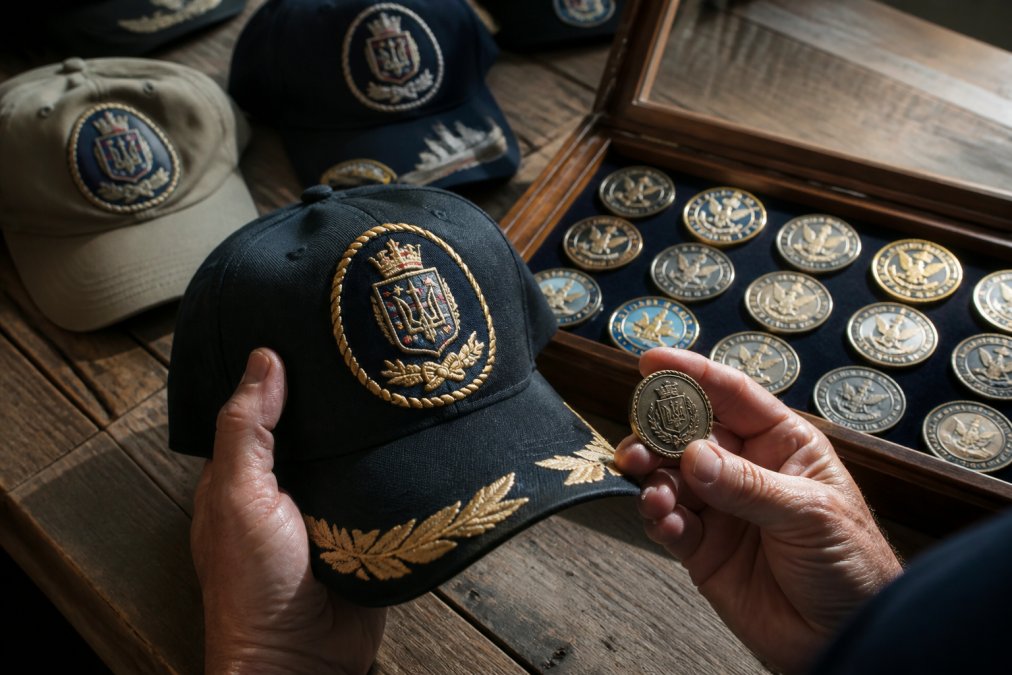
Specialty retailers focused on military gear and commemorative items remain the most straightforward source for rare ship crests. These businesses maintain inventory specifically curated for collectors and service members seeking authentic, verified pieces. Retailers like US Troop Gear, Inc. stock ship crests as embroidered caps and challenge coins with verified insignia and production quality.
The advantage of direct purchase is certainty. When you buy from an established retailer, you're acquiring a product with documented provenance and quality standards. Many specialty retailers source directly from military suppliers or maintain relationships with authorized distributors, ensuring the crests meet authentic specifications. The USS John C. Stennis CVN 74 Crest Cap, for example, features over 8,500 stitches of high-definition embroidery on a Navy blue cap, signaling authentic production quality.

Pricing through specialty retailers typically ranges predictably. You'll pay more than secondary markets, but you're paying for verification and quality assurance. Direct retailers also offer consistency, allowing you to compare multiple ship crests and understand how production quality varies across different vessels and eras.
Secondary Market and Collector Networks
The secondary market for rare ship crests includes online auction platforms, collector forums, and peer-to-peer sales networks. These channels often yield older or more obscure crests that specialty retailers don't stock. The USS Theodore Roosevelt CVN 71 Crest Cap or USS Harry S. Truman CVN 75 Crest Cap might appear on secondary markets at different price points than retail, depending on availability and collector demand.
Secondary markets require more discernment. You're purchasing from individual sellers who may not provide the same verification standards as established retailers. However, this channel often surfaces rare ship crests from decommissioned vessels or limited production runs that never made it into mainstream retail inventory.
Collector networks, both online communities and local military memorabilia groups, function as informal marketplaces where trust and reputation matter. Experienced collectors often know where specific ship crests circulate and can point you toward sellers with proven track records.
Military Surplus and Estate Sales
Military surplus channels and estate sales represent the most unpredictable but potentially rewarding acquisition path. Surplus auctions occasionally include ship crests from decommissioned vessels or military facilities. Estate sales, particularly those from retired officers or long-serving enlisted personnel, frequently contain ship crests accumulated over decades of service.
The challenge with surplus and estate sources is inconsistency. You won't find these crests listed in catalogs you can browse systematically. Instead, monitor auction listings, estate sale announcements, and military memorabilia networks. When you find the right piece, estate crests often carry lower price tags than retail or secondary market equivalents and frequently arrive with documented service history.
High Quality Veteran Gift Ideas: Ship Crests as Meaningful Presents
Ship crests make exceptional gifts for veterans, active-duty service members, and military families. Unlike generic military apparel, a ship crest connects directly to a specific person's service experience. A veteran who served aboard the USS Ronald Reagan CVN 76, for instance, will recognize and appreciate a crest from that vessel in a way they wouldn't recognize generic Navy merchandise.
The key to selecting ship crests as gifts lies in matching the crest to the recipient's actual service history. Quality matters significantly in this context. A poorly made crest sends an unintended message; a high-quality embroidered ship crest cap or challenge coin demonstrates that you've recognized and honored their service with a meaningful, durable piece.

US Troop Gear, Inc. specializes in ship crests that work as veteran gifts. Each cap features over 8,500 stitches of embroidery, Navy blue construction, and Made in the USA production. These details matter to recipients who understand military standards and recognize quality craftsmanship.
Consider also the recipient's lifestyle. Some veterans wear caps daily; others prefer challenge coins or desk displays. Ship crest caps work best for active wearers. Challenge coins appeal to collectors and those who prefer portable memorabilia.
Military Challenge Coin Collecting: Building a Crest Collection
Challenge coin collecting represents a specialized subset of military memorabilia collecting, and ship crests occupy an important place within that ecosystem. Building a meaningful collection requires strategy, patience, and access to reliable sources.
Most collectors begin with vessels connected to their own service history or family military background. A former Navy sailor might begin collecting crests from ships they served on, then expand to related vessels from the same era or fleet. This approach builds a coherent narrative within the collection.
Serious collectors develop acquisition strategies based on rarity tiers. Some focus on crests from decommissioned vessels, recognizing that production ceased when ships were retired. Others pursue crests from specific eras or particular fleet deployments. These thematic approaches make collecting more manageable and meaningful.
Building relationships with other collectors accelerates your collection's growth. Experienced collectors know which crests are genuinely rare versus simply hard to find. They can alert you to upcoming estate sales or secondary market opportunities.
Documentation matters as your collection grows. Record where each crest came from, when you acquired it, what condition it was in, and any relevant service history. This information becomes valuable if you ever decide to sell or pass your collection to someone else. rare military history books.
Verifying Authenticity and Quality Before Purchase
Authenticity verification separates serious collectors from casual buyers. Before committing money to any rare ship crest purchase, you need confidence that you're acquiring a genuine piece, not a reproduction or counterfeit.
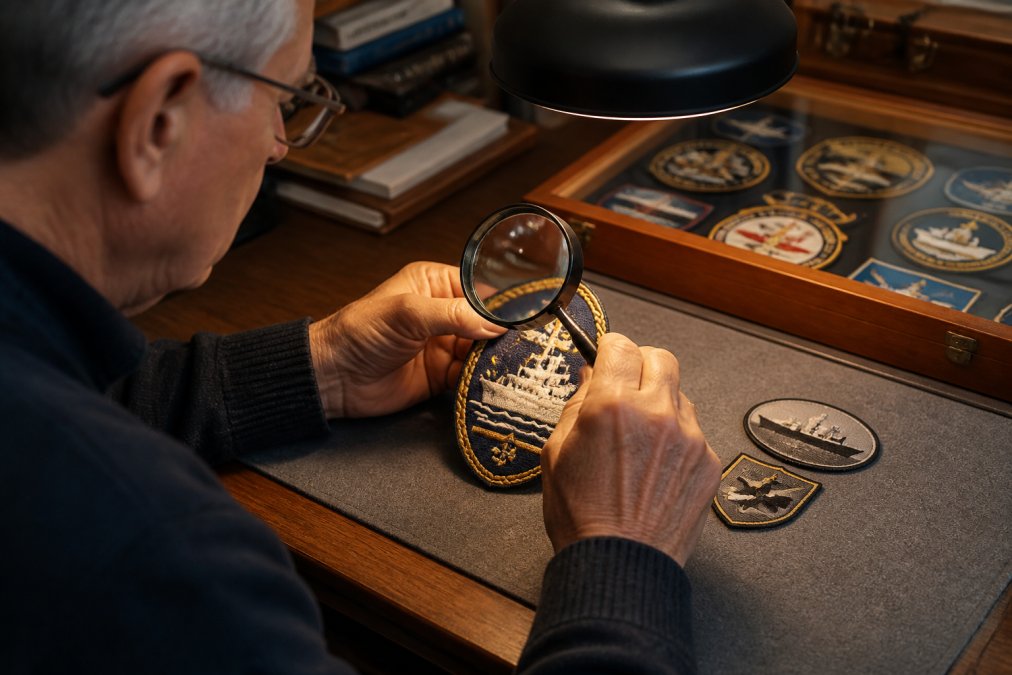
Start with visual inspection. Authentic ship crests embroidered by military suppliers display consistent stitch quality, accurate color matching to official insignia specifications, and precise detail in the insignia itself. Reproductions often show uneven stitching, color variations, or simplified insignia details.
The thread count matters. Authentic embroidered ship crests typically feature 8,000-10,000 stitches for detailed insignia. This density creates durable embroidery that withstands years of wear. Cheaper reproductions cut corners with fewer stitches, resulting in visible gaps or loose embroidery that deteriorates quickly.
Material quality provides another verification marker. Authentic military crests use Navy blue caps or challenge coins constructed from durable materials. The base material should feel substantial. Seams should be reinforced. The overall construction should signal durability.
Provenance documentation strengthens confidence in authenticity. If a crest comes from an estate sale or collector, ask for any documentation of its origin. Documentation doesn't guarantee authenticity, but it provides context that reproduction crests lack.
When purchasing from retailers, verify their sourcing practices. Reputable suppliers like US Troop Gear, Inc. maintain transparent production standards and can explain how crests are manufactured and sourced. They're willing to answer specific questions about insignia accuracy, stitch counts, and material specifications.
For secondary market purchases, request detailed photographs before committing. Ask for close-ups of the embroidery, seams, and insignia under good lighting. Legitimate sellers provide this information readily.
Compare questionable crests against verified examples. If you own an authentic crest from the same vessel, compare it directly to the piece you're considering. Look for stitch pattern consistency, color matching, and insignia detail alignment.
Trust your instincts about pricing. If a rare ship crest is priced significantly below market rates, ask why. Unusual pricing warrants investigation before purchase.
Displaying and Maintaining Your Rare Ship Crests
Once you've acquired rare ship crests, proper display and maintenance preserve their condition and maximize their visual impact.
Display options range from wall-mounted shadow boxes for individual crests to rotating display cases for multiple pieces. Shelving with accent lighting creates a gallery-like presentation that draws attention to your collection's detail and craftsmanship.
Environmental conditions matter significantly. Keep crests away from direct sunlight, which fades embroidery colors over time. Maintain moderate humidity; excessive moisture encourages mold and deterioration, while dry conditions can make embroidery brittle. Room temperature storage is ideal.
Dust accumulation damages embroidery detail. Use a soft brush or compressed air to gently remove dust from crests. Never use water or cleaning solutions on embroidered pieces unless absolutely necessary.
Handle crests with clean hands. Oils from skin transfer to embroidery and materials, potentially causing staining or deterioration. When moving or adjusting crests, support the base material rather than grabbing embroidery directly.
Rotation in display cases extends the visual life of your collection. Keeping the same crest displayed under lights for years causes gradual fading. Rotating pieces every few months ensures even aging across your collection.
Document your collection photographically. Take clear photos of each crest under good lighting. Store these images digitally and in print. If a piece is ever lost, damaged, or stolen, documentation helps with insurance claims and replacement sourcing.
Insurance becomes relevant as collections grow in value. Rare ship crests, particularly those from decommissioned vessels or with documented service history, appreciate over time. Consult your insurance agent about adding collection coverage to your homeowner's policy.
Collecting rare ship crests connects you to naval heritage and honors military service in tangible form. Whether you're seeking a single meaningful piece or building a comprehensive collection, the channels and strategies covered here provide a roadmap for success.
US Troop Gear, Inc. supports collectors and service members with authentic, high-quality ship crests including the USS Ronald Reagan CVN 76 Crest Cap and other verified Navy insignia pieces. Our embroidered caps feature over 8,500 stitches of precision detail, Made in the USA construction, and the durability standards that collectors and veterans expect. Explore our full collection of ship crests and military memorabilia to find the pieces that matter to your service story or collecting mission. U.S. Naval History and Heritage Command official resources provides verified historical information about ships and their official insignia specifications. Smithsonian Magazine's guide to military memorabilia authentication offers expert guidance on verifying authenticity in military collectibles. American Legion resources for military heritage preservation connects collectors with communities dedicated to honoring military service through proper curation and display.

Frequently Asked Questions
What are rare ship crests in a military context?
Rare ship crests are embroidered or embossed insignia representing specific naval vessels, typically featured on caps, challenge coins, and commemorative items. These crests display the ship's name, hull number, and unique emblem reflecting its history and mission. They serve as tangible connections to naval heritage and are highly valued by collectors, veterans, and service members. Rarity increases with age, limited production runs, and decommissioned vessel status.
How do I verify the authenticity of a rare ship crest?
Check embroidery stitch count and quality, authentic crests typically feature 8,500+ stitches with crisp, detailed insignia. Examine the backing material and thread color consistency. Compare the design against official Navy records and ship rosters. Purchase from established retailers specializing in military memorabilia who provide provenance documentation. Request high-resolution photos before buying, and verify the seller's reputation through military collector communities and veteran networks.
Are ship crests considered valuable challenge coins?
Ship crests and challenge coins are related but distinct items. Challenge coins are typically smaller, pocket-sized tokens exchanged as tradition among military units, while ship crests are larger emblematic items displayed on apparel or in collections. However, rare ship crests can hold significant monetary and sentimental value, especially for decommissioned vessels or ships with notable service records. Collectors often pursue both as complementary pieces within military memorabilia collections.
Where should I buy rare ship crests to ensure quality and authenticity?
Purchase from specialized military retailers with established reputations, such as US Troop Gear, Inc., which offers high-definition embroidered ship crest caps featuring over 8,500 stitches per design. Verify sellers specialize in military heritage items and provide detailed product descriptions including stitch counts and manufacturing details. Check customer reviews from military communities, confirm Made in the USA production when possible, and avoid sellers offering suspiciously low prices, which often indicate inferior quality or counterfeit items.
This article was written using GrandRanker