

How to Maintain Vintage Marine Corps Gear
Table of Contents
- Understanding Your Vintage Marine Corps Gear Before You Clean
- How to Clean Old Military Uniforms Safely
- Rinsing and Drying Your Military Uniforms
- How to Store Military Uniforms Long-Term
- Preserving Military Patches and Insignia
- Routine Inspection and Maintenance
- Special Considerations for Field Gear and Combat Equipment
- Frequently Asked Questions
Last Updated: October 4, 2026
Understanding Your Vintage Marine Corps Gear Before You Clean
Vintage Marine Corps gear deserves careful handling. These pieces carry history and meaning beyond their fabric. Before you clean anything, you need to understand what you're working with to properly maintain vintage marine corps gear.
Maintaining vintage marine corps gear starts with identification. You must know the material, the era, and the condition of each piece, as this knowledge determines whether cleaning is safe or risky.
Most collectors assume all military uniforms need the same cleaning approach. They don't. A 1950s wool dress uniform needs different care than 1980s field gear.
Identifying Materials and Condition
Identify materials by touch and any remaining labels. Common materials in vintage Marine Corps gear include:
- Wool, Heavy, textured, often used in dress uniforms and field jackets
- Cotton, Lighter weight, used in utility uniforms and work shirts
- Canvas, Thick, durable fabric in field gear and load-bearing equipment
- Leather, Found in boots, belts, and insignia backing
- Metal hardware, Buttons, buckles, rank insignia, and fasteners
Assess condition honestly: visible stains, mold or mildew, corrosion, tears, fading, and pest damage. Document with photos to track changes and decide if cleaning is worth the risk.
When Not to Clean an Artifact
Do not clean if fabric shows extreme fragility, if it tears under gentle pressure, seams separate easily, or dye runs when barely dampened. The risk outweighs any benefit.
Surface mold can sometimes be brushed away outdoors in a well-ventilated area. Deep mold penetration means the piece is compromised and cleaning won't save it.
Rare or historically significant pieces deserve professional conservation. Consult a textile conservator before cleaning. Professional cost is less than destroying irreplaceable history.
How to Clean Old Military Uniforms Safely
Cleaning vintage marine corps gear requires restraint and the right materials. The goal is gentle removal of surface dirt without stressing the material.
Choosing Appropriate Cleaning Materials
Never use standard laundry detergent, it contains harsh chemicals and enzymes too strong for vintage fabric.
Instead, use pH-neutral soap (labeled "conservation grade" or "museum quality"), mild dish soap in cool water (test on a hidden seam first), distilled water, and soft cloths or brushes only.
Avoid:
- Bleach or any whitening agents
- Fabric softeners
- Scented products
- Hot water
- Wire brushes or stiff bristles
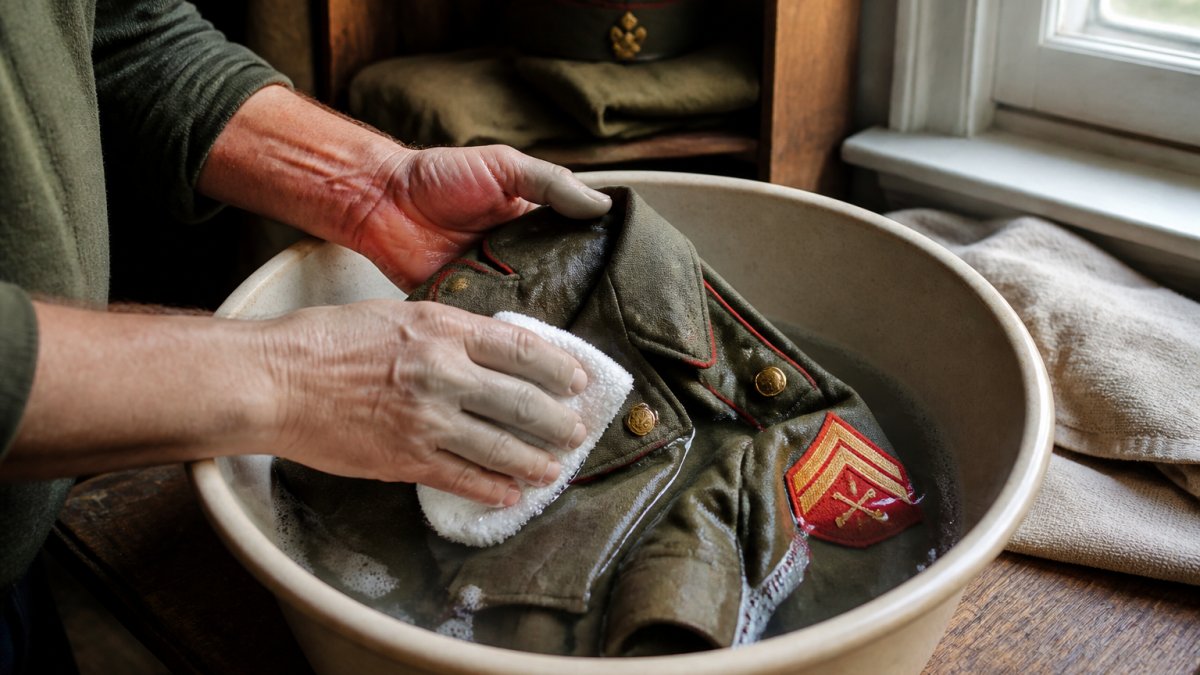
Step-by-Step Cleaning Process
Follow this process for uniform cleaning:
Step 1: Prepare Your Workspace Set up in a well-ventilated area with a clean basin filled with cool water and a small amount of pH-neutral soap.
Step 2: Test for Colorfastness Dampen a hidden seam with cool soapy water and press a white cloth against it. If color transfers, proceed only with surface cleaning, not soaking.
Step 3: Soak Gently Submerge in cool soapy water for 10-15 minutes without agitating or scrubbing.
Step 4: Work on Problem Areas For stubborn stains, use a soft cloth or soft-bristled brush with gentle circular motions. Stop if stains resist, forcing risks fiber damage.
Removing Dirt and Stains Without Damage
Different stains require different approaches. The key is patience and gentleness.
For surface dirt, use a soft dry brush. For ground-in dirt, soak in cool water and mild soap. For rust stains, use a very weak solution of distilled water with mild soap; deep rust requires professional treatment. For organic stains, use cool water and mild soap, never hot water. Avoid vinegar, lemon juice, and other home remedies, which are acidic and damage fabric and dyes.
Rinsing and Drying Your Military Uniforms
Rinsing removes soap residue. Drying prevents mold and mildew. Both steps are critical to long-term preservation.
Rinsing Thoroughly After Washing
Soap left in fabric attracts dirt and degrades fibers. Rinse with cool distilled water 3-4 times until no soap bubbles remain.
For delicate pieces, use a gentle spray from a low-pressure faucet. After the final rinse, gently press fabric against the basin wall to remove excess water, never wring or twist.
Air-Drying and Avoiding Heat or Direct Sunlight
Never use heat or direct sunlight. Dry flat on a clean surface or hang on a padded hanger in shade indoors. Use air circulation (open windows, gentle fan) to speed drying. Avoid humid environments. Allow 24-48 hours for complete drying.
How to Store Military Uniforms Long-Term
Storage conditions determine whether you can maintain vintage marine corps gear for decades or watch it degrade in years. The right environment prevents mold, pests, corrosion, and fading.
Creating Optimal Storage Conditions
Aim for 60-70°F and 30-50% relative humidity. Avoid basements, attics, and garages. Use dark, opaque storage with air circulation.
Never use plastic bags or bins, use cotton bags or acid-free boxes. Fold gently with acid-free tissue between layers, or use padded hangers in a covered closet. Store metal hardware separately, wrapped in acid-free tissue.
Preventing Mold, Pests, and Corrosion
Prevent mold by maintaining humidity below 50% and ensuring air circulation (Collection Emergencies - FAQ). If using desiccants, change them every 3-6 months.
Prevent pest infestations by cleaning gear before storage, using sealed containers with desiccants, and checking every 6 months. If you notice small holes or webbing, isolate the piece and seek professional pest treatment.
Metal corrosion happens when moisture contacts metal hardware. Keep humidity controlled and consider wrapping metal items in acid-free tissue. Check metal regularly for rust or tarnish.
Preserving Military Patches and Insignia
Patches and insignia are often the most meaningful parts of vintage gear. They identify units, rank, and service. Preserving them requires specific care.
Cleaning Embroidered and Woven Insignia
Never soak embroidered insignia. Use a soft dry brush first, then dampen a soft cloth with cool water and mild soap for light soiling. For stubborn stains, stop and seek professional conservation.
Woven insignia (unit patches, division markers) can tolerate slightly more water than embroidered items, but still require gentleness. Follow the same approach: dry brush first, then gentle spot cleaning with cool water and mild soap.
Protecting Metal Hardware and Rank Insignia
Metal insignia (officer ranks, military specialty badges) corrode when exposed to moisture and air. Prevent corrosion by:
- Keeping metal dry
- Wrapping in acid-free tissue
- Storing in low-humidity environments
- Checking regularly for tarnish or rust
If tarnish appears, do not use commercial metal cleaners. These are too aggressive for vintage insignia. Instead, gently wipe with a soft cloth. For stubborn tarnish, consult a conservator.
Rust indicates moisture exposure. If rust is minimal and surface-level, it can sometimes be gently removed with a soft cloth. But deep rust requires professional treatment. Do not scrub or use chemical rust removers, which damage the metal underneath.
For insignia still attached to uniforms, follow the garment's care instructions. Don't clean metal insignia separately if it's sewn on. Treat the whole piece as a unit.
Routine Inspection and Maintenance
Regular inspection catches problems early. A small issue found and addressed now prevents major damage later.
What to Look for During Inspection
Check your vintage marine corps gear every 6-12 months. Look for:
- Mold or mildew, Dark spots, musty smell, fuzzy growth
- Pest damage, Small holes, webbing, droppings
- Corrosion, Rust on metal, tarnish on insignia, discoloration around hardware
- Fabric weakening, Thin spots, brittleness, seams pulling apart
- Dye bleeding, Color loss, uneven fading, staining of adjacent items
- Odors, Musty (mold), sour (bacterial growth), chemical (pest treatment)
Document findings with photos. This creates a record of the piece's condition over time.
If you spot mold, isolate the piece immediately. Don't return it to storage with other items. Address the mold issue (see storage section above) before returning it.
If you spot pest damage, treat the piece separately and check all nearby items. A single infested piece can spread problems to your entire collection.
Repairing or Replacing Damaged Items
Small repairs can prevent major problems. But know when to stop and seek professional help.
For loose seams, careful hand stitching with matching thread can work. Use a needle and thread appropriate to the fabric weight. Make small, even stitches.
For tears, patches are sometimes an option. But patching vintage gear can reduce its value and authenticity. Consider whether the piece is a display item or a wearable.
For missing buttons or insignia, replacements are available. But match the era and style carefully. A 1960s uniform button doesn't belong on a 1940s jacket.
For worn elastic, fraying cuffs, or other minor wear, these are often left as-is on vintage pieces. They're part of the history.
Special Considerations for Field Gear and Combat Equipment
Field gear and combat equipment differ from dress uniforms. They're built tougher but often dirtier. Care approaches differ too.
Safe Cleaning of Field Gear and Hardware
Field gear includes load-bearing vests, packs, webbing, and utility items. These pieces often have:
- Heavy canvas or nylon fabric
- Plastic or metal hardware
- Multiple layers and pockets
- Straps and attachment points
Start with dry cleaning. Use a soft brush to remove dirt and dust from all surfaces. Pay attention to pockets, seams, and crevices where dirt collects.
For stubborn dirt on canvas, cool water and mild soap work. But submerging large field gear items is impractical.
For plastic hardware, cool water and mild soap are safe. Wipe gently with a soft cloth. Avoid harsh scrubbing, which can scratch or crack plastic.
For metal hardware on field gear, follow the same corrosion prevention approach as dress uniform insignia. Keep dry, store wrapped, check regularly.
Webbing (the straps and bands on gear) can be spot-cleaned with a damp cloth and mild soap.
Long-Term Archival Storage for Collectible Items
If your vintage marine corps gear is a collectible item, archival storage is worth the extra effort.
Use acid-free boxes, acid-free tissue, and acid-free labels.
Store in a climate-controlled space. Basements and attics are too variable.
Wrap each piece separately in acid-free tissue. Separate layers with tissue to prevent color transfer.
Keep a detailed inventory. Record the piece type, era, condition, materials, and any identifying marks.
Store photos and documentation separately from the gear itself. Digital copies backed up in the cloud are ideal.
Consider insurance for valuable pieces. A professional appraisal establishes value and helps with insurance claims if something happens.
Maintaining vintage marine corps gear is a long-term commitment.
Proper care honors that legacy.
Frequently Asked Questions
How do you clean a vintage Marine Corps uniform without damaging it?
Use cool water with pH-neutral or mild soap, and avoid heat or direct sunlight. Gently hand-wash delicate areas like embroidered insignia and patches. Rinse thoroughly with cool water until soap is completely gone. Air-dry flat in a well-ventilated area away from UV exposure. Never use a washing machine, bleach, or hot water, as these can damage fabric, fade colors, and degrade metal hardware. For heavily soiled uniforms, consider professional conservation.
How should you store vintage Marine Corps gear?
Store in a cool, dark, dry location away from moisture, direct sunlight, and UV exposure. Use acid-free storage boxes or archival-quality containers, and place items on acid-free tissue or cotton cloth. Ensure proper air circulation to prevent mold and mildew. Keep the storage area at a stable temperature and humidity level. Store metal hardware separately if possible to prevent corrosion. Check stored items regularly for signs of pests, mold, or deterioration.
What should you do with old Marine Corps uniforms?
If the uniform has sentimental or historical value, preserve it by cleaning and storing it properly according to archival standards. If it's no longer wearable, contact the Marine Corps for guidance on proper disposal or donation to military museums or veteran organizations. Some uniforms with significant insignia or historical markers may have collectible value; research the specific unit, era, and condition before discarding. Never throw away uniforms in regular trash if they contain metal hardware or insignia.
When should you not clean vintage Marine Corps gear?
Avoid cleaning if the item is extremely fragile, shows advanced deterioration, or has significant historical or monetary value. Items with delicate embroidery, rare insignia, or structural weakness should be assessed by a professional conservator before cleaning. If mold, pests, or corrosion are present, address the environmental issue first rather than attempting to clean. Uniforms from specific historical periods or units may lose value if cleaned improperly; research the item's provenance and rarity before proceeding with any cleaning.