

How to Organize a Military Coin Exchange Event
Quick Summary
To organize a military coin exchange, set the goal, expected attendance and budget first, then choose a weekend afternoon venue with room for tables and check-in. Publish clear trade tiers and written rules so every swap feels fair and disputes have a named referee.
- Write down the goal, expected attendance and budget before booking anything.
- Schedule about 30 minutes for arrival, 1 to 2 hours of open trading, and 30 minutes of display time.
- Sort coins into three tiers so common and limited coins are not compared directly.
- Use display-only cards for sentimental coins that are not for trade.
- Name one referee for trade disputes and log every dispute with the time and outcome.
Table of Contents
- What a Military Coin Exchange Is and Why Planning Matters
- Setting the Date, Venue, and Schedule
- Writing Exchange Rules and Fair Trading Procedures
- Military Coin Etiquette Rules Every Organizer Should Share
- Budgeting and Gathering Event Materials
- Display and Storage Setup for the Exchange Table
- Planning Your First Coin Exchange and Keeping Records Afterward
- Frequently Asked Questions
What a Military Coin Exchange Is and Why Planning Matters
Last Updated: November 3, 2026
A military coin exchange is a gathering where service members, veterans and their supporters trade challenge coins. Each coin usually carries a unit crest, a branch emblem or a commemorative design. Organizers who plan the event well keep trades fair, keep attendees comfortable, and leave everyone with a good story to tell.
A small exchange in a community hall can build lasting camaraderie. A poorly run one can leave people feeling cheated or ignored.
Planning matters because most problems at exchanges come from unclear expectations. Who can trade, what counts as a fair swap, and where people will display their coins are all questions to settle early.
- Clear purpose: Decide whether the exchange is for a unit, a veterans group or a mixed crowd.
- Set expectations: Tell attendees what to bring and how trades work.
- Protect the atmosphere: Respect and inclusion keep the event welcoming.
Start by writing down three things: the goal, the expected attendance, and the budget. Those answers shape every decision that follows.
Setting the Date, Venue, and Schedule
Pick a date that avoids major holidays, unit deployments and training schedules. Most organizers find that a weekend afternoon gives the best turnout. Check with the unit or group to confirm availability before you commit.
Choose a venue with enough space for tables, walking room, and a check-in area. A hall, a clubhouse or a large meeting room usually works well. Confirm parking, restroom access and whether the space allows food or drinks.
Build a simple schedule so attendees know what to expect:
- Arrival and check-in: 30 minutes
- Open trading: 1 to 2 hours
- Display and social time: 30 minutes
- Cleanup and wrap-up: 20 minutes
Send the schedule with the invitation. Attendees plan better when they know the start time, the end time and the trading window.
Writing Exchange Rules and Fair Trading Procedures
Clear rules prevent most arguments before they start. Write them down, print a copy for the check-in table, and read the key points aloud at the start of the event. The rules should answer three questions for every attendee: what can I trade, how do I know a swap is fair, and who settles a disagreement.
Set trade categories up front. A common pattern is to sort coins into three tiers so people are not comparing a common unit coin to a limited commemorative piece. Tier 1 is general-issue coins (unit crests, branch emblems, annual command coins). Tier 2 is commemorative and event coins (anniversaries, retirements, deployments). Tier 3 is limited, numbered, or personally presented coins.
Write the trade-value rule in plain language. Most organizers use a one-for-one default and allow multi-coin trades only when both parties agree out loud at the table. Do not assign dollar values to coins at the event.
Build a dispute process with named roles. Name one volunteer as the trade referee and one as the check-in lead. The referee handles disagreements at the table; the check-in lead handles eligibility and rule questions at the door. Make the referee's decision final for the day, and log every dispute in a notebook with the time, the coins involved, and the outcome.
Handle sentimental and unit-specific coins with a no-pressure rule. Some attendees bring coins they will not trade, a coin from a fallen friend, a retirement gift, a coin from a specific deployment. Give them a way to participate without pressure: a "display only" card they can set in front of those coins. The rule is simple: a display-only card means no trade offers, no exceptions.
Make participation inclusive by design. Welcome family members, civilians, and collectors who respect military heritage. Set a rule that everyone gets equal time at the table, and rotate table hosts so a newcomer with three coins is not stuck behind a collector with three cases.
Watch out: Verbal deals often lead to confusion later. Ask traders to confirm each swap with a quick, visible handshake at the table and, for multi-coin trades, a one-line note on the trade sheet so both parties leave with the same understanding.
The article sets out a tier system and named roles that keep trades clear and disputes manageable.
| Tier | Coin type | Trade note |
|---|---|---|
| Tier 1 | General-issue coins (unit crests, branch emblems, annual command coins) | One-for-one default |
| Tier 2 | Commemorative and event coins (anniversaries, retirements, deployments) | Label tray by tier |
| Tier 3 | Limited, numbered or personally presented coins | Trade only by mutual agreement |
| Display-only card | Sentimental coins not for trade | No trade offers, no exceptions |
Military Coin Etiquette Rules Every Organizer Should Share
Good etiquette sets the tone for the whole event. Share these basics in the invitation and again at the start of the exchange.
US Army Ranger Challenge Coin →
- Respect the coin: Handle coins with care and avoid rough tossing or stacking.
- Ask before trading: Do not pull a coin from someone's hand without asking.
- Honor service: Treat all branches, ranks and veterans with equal respect.
- Stay positive: Save heated debates about units or policies for another time.
Many organizers also agree on a few traditions. For example, the person who presents a coin often says a few words about why it matters. Some groups keep a "coin check" game going at the end of the night, but make sure everyone understands the rules first.
Inclusive etiquette matters too. Welcome family members, civilians and collectors who respect military heritage. Make it clear that the event is about shared respect, not about who has the rarest coin.
Budgeting and Gathering Event Materials
Costs for a small exchange are usually modest, but they are easy to underestimate because the supplies are small and scattered. Build a line-item budget before you book anything, and separate fixed costs (venue, insurance, rentals) from per-attendee costs (name tags, refreshments, printed rules). That split tells you whether a small participation fee is needed or whether a sponsor can cover the gap.
Fixed costs to price first. Confirm whether the venue is free or has a fee, and ask whether a certificate of insurance is required, many halls and clubhouses require one, and it can add a real cost if your group does not already carry coverage. Price tables and chairs as a rental line even if you plan to borrow them, so the budget shows the true cost if borrowing falls through. If the venue charges for setup or cleanup time, add those hours to the rental line.
Per-attendee materials checklist. Print and stage these before the event:
- Name tags with a line for branch or unit, so attendees can find common ground quickly.
- Tier labels for each tray (general-issue, commemorative, limited), printed on card stock.
- Display-only cards for coins that are not for trade.
- Rules sheet for the check-in table, one per attendee plus a few spares.
- Trade log for the referee, with columns for time, coins involved, and outcome.
- Display trays and felt or velvet mats, at least one tray per table and a spare.
- Refreshments kept simple: coffee, water, and snacks that do not require serving equipment.
Set the participation fee only after the budget is done. Add up fixed and per-attendee costs, subtract any sponsor contribution, and divide by expected attendance. A small fee that covers venue and materials is easier to explain than a fee set by guesswork. If a sponsor covers the venue, say so in the invitation, attendees are more willing to bring a coin for a display table when they know the event is not a fundraiser.
Sample coins for the display table. If you want a reference coin so guests can see the quality to expect, the US Army Ranger Challenge Coin at $16.95 is a clear example, and the America's Navy 250 Years Challenge Coin (Enlisted Version) at $16.95 works for a Navy-focused exchange. Treat these as display samples, not trade stock, and label them clearly so no one mistakes them for items on the table.


Watch out: Refreshments and printed materials are the two lines that most often run over. Buy refreshments against a headcount cap, and print rules sheets after registration closes so you are not paying for a stack of unused copies.
Display and Storage Setup for the Exchange Table
A well-arranged table makes coins easier to see and trade. Use shallow display trays with velvet or felt liners, and group coins by branch or unit. Leave walking room so people can move between tables without bumping into each other.
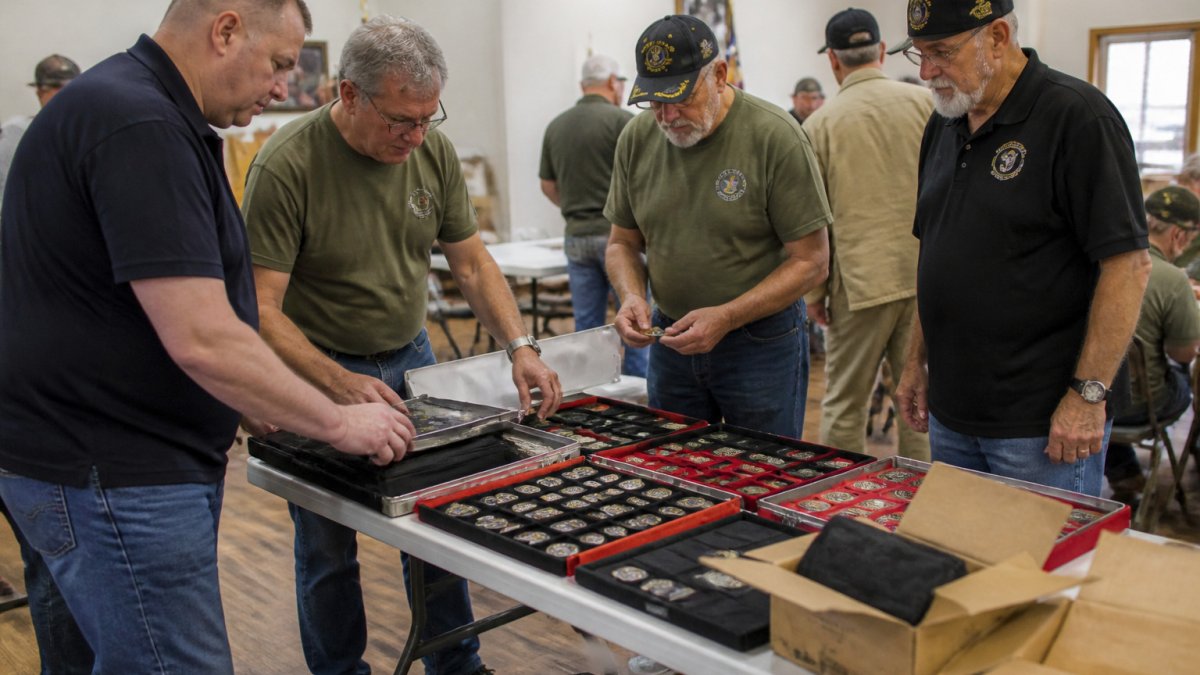
Many collectors use organized displays for challenge coins to keep large collections tidy, and the same ideas work well for an exchange table. For military unit items such as caps and patches, display ideas for military unit hat collections can help you arrange a mixed table attractively.
Set up a small storage area behind the table for spare coins and supplies. Keep valuable coins in closed cases until a trade is agreed.
- Keep lighting bright but not glaring.
- Place the check-in and rules sheet near the entrance.
- Assign one volunteer to watch the display tables at all times.
Planning Your First Coin Exchange and Keeping Records Afterward
Your first event will teach you a lot, so keep notes on what worked and what did not. Make a checklist covering the date, venue, attendance, trades completed and any disputes.
After the event, send a short thank-you message to attendees. Include a few photos if people agreed to be photographed, and invite feedback for next time.
Record basic details in a shared file:
- Date and location of the exchange
- Number of attendees and number of trades
- Notes on rules that caused confusion
- Ideas for improvement before the next event
Keeping records makes each future exchange easier to plan. Over time, you will know which times, venues and rules work best for your group.
Frequently Asked Questions
How do you present a military coin?
Present a coin with a firm, open hand, holding it by the edges so the face stays clean. Hand it over during a handshake or recognition moment, and say the name of the unit or the reason for the coin. At an exchange, set coins on a tray or cloth so others can see the design without touching the face. Avoid tossing coins or handing them over carelessly, since the design and finish can scratch. Keep the presentation brief and respectful, and let the recipient read the front and back before moving on to the next exchange.
What is the proper etiquette for a military coin exchange?
Treat every coin as a personal item from a unit or service member. Let each participant decide whether to trade, and never pressure anyone into an exchange. Do not handle coins belonging to others without asking. Keep conversation respectful, and avoid mocking any branch, rank or unit. If a coin check or challenge is part of the event, state the rules before it starts. Thank participants for taking part, and make sure newcomers, junior members and veterans are all welcomed equally.
How should military coins be stored to prevent damage?
Store coins in individual cases or holders with soft liners, such as clear acrylic cases or felt-lined trays, so coins do not scratch each other. Keep them in a cool, dry place away from direct sunlight and humidity, which can tarnish metal and fade enamel. Handle coins by the edges with clean hands. For event use, bring only the coins needed and return them to padded containers at the end of the day. Label trays or boxes by unit or branch to make later inventory simple.
What should an organizer include in the exchange rules?
Clear rules prevent most disputes. Include the start and end times, the trading format (one-for-one, open trading, or swap-only), how to handle coins with damage, and who holds the final say on disputes. State whether coin checks are allowed and what happens when a challenge is failed. Post the rules in writing at the entrance and read them aloud before trading begins. Keep the procedure the same for every participant so the exchange feels fair to everyone.
