

7 Legal Considerations for Wearing Tactical Apparel
Last Updated: November 16, 2026
Quick Summary
Civilians can legally wear tactical apparel in public in most places, because plain tactical pants, boots, and range jackets are ordinary clothing. The legal considerations center on what the item is, where you wear it, and what you claim by wearing it, with official insignia and body armor carrying separate rules.
- Federal law restricts wearing military uniforms and insignia without authorization under 10 U.S. Code § 771.
- No federal statute bans civilians from owning or wearing soft body armor or plate carriers.
- The federal Stolen Valor Act targets false claims of military service made to obtain money or benefits.
- Wearing a bulletproof vest in school is illegal in many states and restricted in most others.
- Body armor rules are not reciprocal between states, so crossing a state line can change your legal position.
Table of Contents
- Can Civilians Legally Wear Tactical Apparel in Public?
- Tactical Clothing vs. Official Military and Law-Enforcement Uniforms
- Is It Illegal to Wear a Military Uniform as a Civilian?
- Body Armor Laws by State: What Civilians Need to Know
- Is It Illegal to Wear a Bulletproof Vest in School?
- Stolen Valor and Wearing Military Clothing: Where the Line Sits
- A Jurisdiction-by-Jurisdiction Checklist Before You Buy
- Shop Branch-Specific Gear That Respects the Uniform
- Frequently Asked Questions
Can Civilians Legally Wear Tactical Apparel in Public?
Yes, civilians can legally wear tactical apparel in public in most places. The legal considerations for wearing tactical apparel center on three things: what the item is, where you wear it, and what you claim by wearing it. Readers who want to buy authentic military gear as a civilian can find guidance on authentic military gear for civilians.
Veterans and supporters often want to wear their pride without crossing a line. That line is real, and it varies by state.
Here is the short version: clothing is almost always fine, insignia is where trouble starts, and protective gear has its own rules.
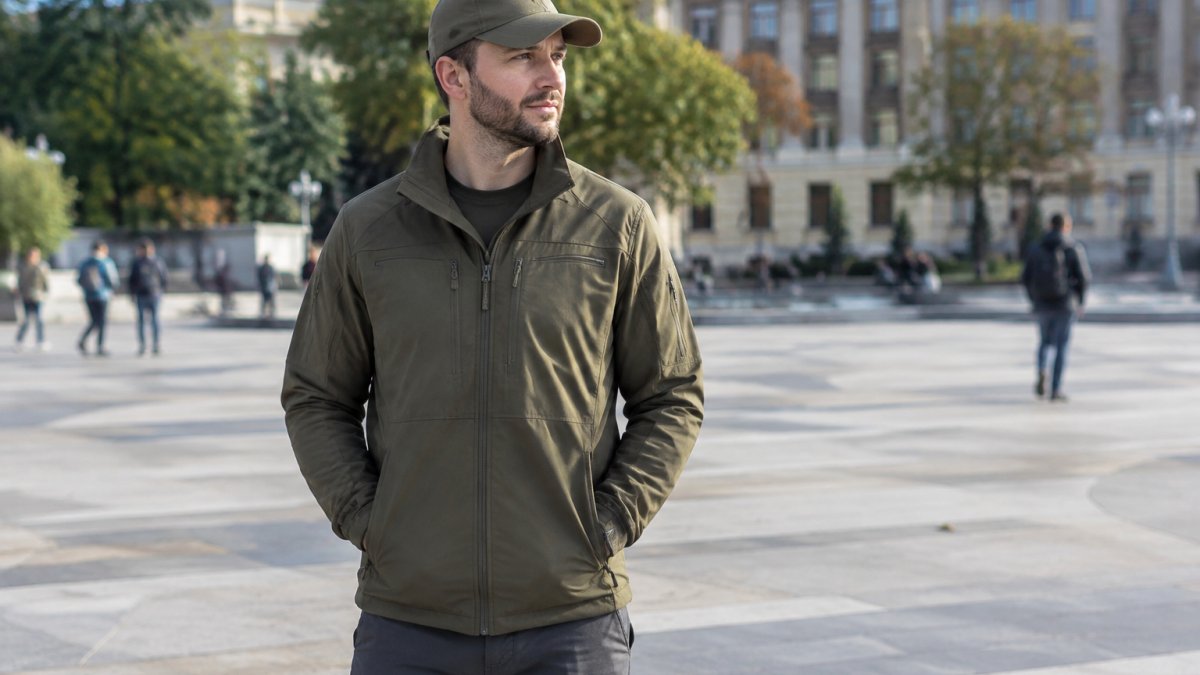
The man is American.
Tactical Clothing vs. Official Military and Law-Enforcement Uniforms
Tactical clothing is civilian apparel built for utility. An official military uniform is government-issued property worn under service regulation. Those are two very different things in the eyes of the law.
A common mistake is assuming a camouflage pattern makes something a uniform. It does not. Pattern alone is not the test.
The real test is whether the item carries official insignia: rank, badges, name tapes, unit patches, or agency identifiers. Strip those away and you have clothing. Leave them on and you may be presenting yourself as something you are not.
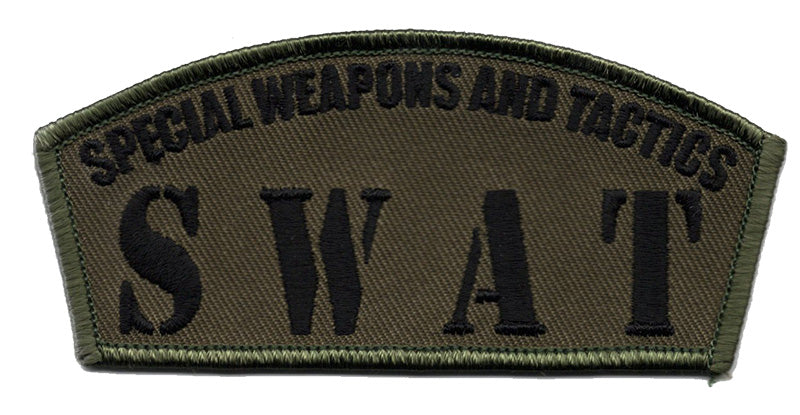
If you want to see where civilian tactical style starts to blur into official insignia, look at how a SWAT-style iron-on patch reads on a jacket. For a deeper comparison of real military gear against standard tactical apparel, our breakdown of Navy SEAL gear versus standard tactical apparel covers the differences in detail.
Is It Illegal to Wear a Military Uniform as a Civilian?
Wearing a military uniform as a civilian is not automatically illegal, but wearing one to pass yourself off as a service member can be. Federal law restricts wearing military uniforms and insignia without authorization (10 U.S. Code § 771 - Unauthorized wearing prohibited | U.S. Code | US Law). Several states have their own statutes on top of that.
A branch cap or a commemorative shirt is generally considered fine. A full dress uniform with rank and a name tape is not, unless the occasion genuinely calls for it and you have earned it.
Watch out: the risk is not the fabric. It is the impression you create in a crowded place, and a police officer or a veteran in the room will notice.
Body Armor Laws by State: What Civilians Need to Know
Body armor is where the legal ground shifts most, and it is the category most likely to get a well-meaning buyer into trouble.
The categories to keep straight:
- Ballistic vest or plate carrier: protective equipment, often restricted by criminal history
- Tactical helmet: protective equipment, treated similarly to body armor in some states
- Camouflage clothing: apparel, generally unrestricted
- Rank insignia and badges: official identifiers, restricted
The possession-restriction model. A number of states prohibit anyone convicted of a violent felony from owning or possessing body armor.
The sentencing-enhancement model. Other states do not restrict possession at all but add a separate charge or a penalty enhancement when body armor is worn or possessed during the commission of a violent crime.
The no-specific-statute position. Some states have no body armor statute on the books, which means ordinary criminal law and local rules govern.
Watch out: the most common mistake is assuming a permit or license from one state travels with you.
Is It Illegal to Wear a Bulletproof Vest in School?
Wearing a bulletproof vest in school is illegal in many states and restricted in most others. Even where no specific statute exists, a school's own conduct policy will usually treat body armor as a threat indicator.
This is not a gray area worth testing. Schools have broad authority over what students and visitors bring onto campus, and a ballistic vest or plate carrier will trigger a security response.
The same logic applies to other sensitive public settings: courthouses, airports, and government buildings. Protective equipment that is legal on the street can be prohibited at the door.
Stolen Valor and Wearing Military Clothing: Where the Line Sits
Stolen Valor and wearing military clothing are separate issues, and mixing them up causes confusion. The federal Stolen Valor Act targets false claims of military service made to obtain money, property, or other tangible benefits. It does not criminalize a t-shirt.
So what does that mean for you? Wearing a military-style jacket is not Stolen Valor. Claiming a combat deployment you never had, to get a discount or a donation, is where the law bites.
The Stolen Valor Act text via the U.S. Government Publishing Office sets out the benefit requirement clearly. Beyond federal law, many states have their own false-representation statutes covering impersonation of law-enforcement personnel and military members.
A general rule of thumb: wear the branch, not a rank you did not earn.
A Jurisdiction-by-Jurisdiction Checklist Before You Buy
Most guides tell you laws vary by state and stop there. This checklist is built to be run in order, with a primary source for each step, so you can document what you checked and when. Laws change, so re-run it before any purchase or public wear, and treat it as general information rather than legal advice.
-
Classify the item before anything else. Separate it into three buckets: apparel (camo pants, range jackets, branch caps), protective equipment (ballistic vests, plate carriers, helmets), and official identifiers (rank insignia, badges, name tapes, unit patches, agency logos). Apparel is rarely restricted; protective equipment is regulated by state; identifiers are the fastest route to an impersonation charge. If an item falls into two buckets, treat it as the more restricted one.
-
Read your state criminal code, not a blog summary. Go to your state legislature's official website and search the code for four terms: "body armor," "military uniform," "impersonating a peace officer," and "false representation." Read the definitions section first, it controls whether a plate carrier counts as body armor and whether a patch counts as a uniform component. Note the statute number and the date you checked it.
-
Determine which legal theory applies. For body armor, decide whether your state uses a possession ban (tied to criminal history) or a sentencing enhancement (tied to conduct during a crime). For uniforms, decide whether the statute targets wearing the uniform, wearing the insignia, or falsely claiming the status. The theory determines what you actually need to avoid.
-
Check local ordinances. Cities and counties sometimes add rules that state law does not, particularly on face coverings and masks worn with tactical-style clothing, and on carrying protective equipment at protests or public assemblies. Search your city and county code sites for "mask," "face covering," and "body armor."
-
Check the venue's own rules. Schools, courthouses, airports, federal buildings, and private venues set conduct and security policies that operate independently of criminal law. A vest that is legal on the sidewalk can be prohibited at the door, and security will treat it as a threat indicator. Call ahead for events.
-
Confirm no official insignia. Rank, badges, name tapes, unit patches, and agency identifiers stay off civilian clothing. This is the single highest-risk element and the easiest to remove.
-
Map your travel. If you are crossing state lines with body armor, identify every state on the route and check each one's possession rule, because the law of the state you are physically in governs. For air travel, plan for checked baggage and screening. For online purchases, check whether the seller or carrier restricts shipping of armor to your state.
-
Know the consequences before you decide. Impersonation offenses are typically charged as misdemeanors but can rise to felonies in some states, and they carry arrest, seizure of the items, and a record that follows you. Body armor possession charges usually surface during a separate stop or arrest and can result in seizure of the armor even when the underlying charge is dropped.
-
Buy from a source that understands the line. Reputable sellers do not put official insignia on civilian goods and will tell you when an item crosses into regulated territory.
Watch out: the step people skip is number 2. A search engine summary of "is body armor legal in my state" is frequently outdated or conflates possession bans with sentencing enhancements, and the two produce opposite answers for a lawful buyer.
When you are ready to buy, our guide to where to buy authentic military-themed apparel walks through what to look for in a legitimate seller.
| Item | Legal Category | Typical Restriction |
|---|---|---|
| Camo pants, range jacket | Apparel | Rarely restricted |
| Branch cap, commemorative shirt | Apparel | Rarely restricted |
| Ballistic vest, plate carrier | Protective equipment | Felony-conviction limits in some states; sentencing enhancement in others |
| Tactical helmet | Protective equipment | Similar to body armor in some states |
| Rank insignia, badges | Official identifiers | Restricted without authorization |
| Full dress uniform | Official uniform | Restricted for impersonation |
Shop Branch-Specific Gear That Respects the Uniform
You can show your pride without borrowing someone else's rank. That is the principle behind everything we make at US Troop Gear, Inc.
Our caps and apparel are branch-specific, with embroidered designs inspired by real heroes. We cover the Army, Navy, Air Force, Marine Corps, and Coast Guard, plus ship crests and military band items for collectors.
If you want a compliant starting point, our United States Army cap shows how branch pride looks when it stays on the right side of the line.
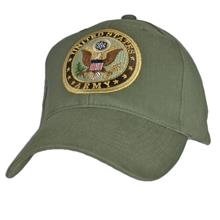
Military-themed gear can look generic or edge into insignia it should not touch. Our line is built to sit on the respectful side, with durable construction and embroidery designed to hold up.
Browse our collection and wear your pride with purpose.
Frequently Asked Questions
Is it illegal to wear tactical gear in public?
For most civilians, wearing tactical apparel such as cargo pants, plate carriers without armor, or military-style jackets is legal in public. The restrictions usually attach to specific items, not the style of clothing. Body armor, ballistic vests, and anything that mimics an official uniform with rank insignia, badges, or unit patches carry separate rules under state and federal law. Check your state's statutes and any local ordinances before wearing gear that could be mistaken for official issue.
Can a convicted felon legally own body armor?
It depends on the state. Some states restrict body armor possession for people convicted of certain violent felonies, and some require a permit or background check for purchase. Federal rules on civilian ownership should be checked against current official sources. Verify your state's rules and any permit requirements before buying a ballistic vest or plate carrier.
Is it illegal to wear a military uniform as a civilian?
Wearing a complete official military uniform as a civilian is restricted under federal law. Federal and state laws address falsely claiming military service or receiving a benefit through such claims; check current official sources for specifics. Simply wearing surplus camouflage or a branch-themed cap is not the same as impersonating a service member. The legal risk rises sharply when the outfit includes rank insignia, unit patches, or medals you did not earn, especially in a public setting.
Is it disrespectful to wear a military jacket?
Many veterans and family members wear military-style jackets as a sign of pride and respect, and surplus field jackets are common civilian outerwear. Disrespect usually comes from misusing earned symbols, such as wearing medals, rank insignia, or unit crests that do not belong to you. If you want to honor military heritage, choose branch-themed apparel, embroidered caps, or commemorative items that clearly read as tribute rather than official issue.
