

Military Heritage Apparel for Civilians: A Style Guide
Table of Contents
- Why Military Heritage Apparel Endures in Civilian Fashion
- The History of Military Fashion: From Battlefield to Runway
- Iconic Pieces: The Trench Coat, Bomber Jacket, and Beyond
- How to Style Field Jackets for Everyday Wear
- Military Surplus Clothing for Civilians: The Real Deal vs. Inspired
- The Modern Utility: Custom Embroidered Military Unit Caps
- Caring for Your Military Heritage Gear
- Conclusion: Wear Your Pride with Purpose
- Frequently Asked Questions
Last Updated: September 4, 2026
Why Military Heritage Apparel Endures in Civilian Fashion
Military heritage apparel for civilians is more than a trend; it is a lasting language of durability, function, and shared values. At US Troop Gear, Inc., we see daily that people are not just buying clothes; they are connecting with a legacy of resilience and service.
This style movement speaks to a desire for authenticity in a market flooded with fleeting trends. Below, we show you how to build a wardrobe around these staples, where to find the real deal versus modern reproductions, and how to care for gear built to last.
The History of Military Fashion: From Battlefield to Runway
The modern civilian wardrobe is built on garments that solved distinct, documented problems for service members, and understanding those problems reveals why the designs persist today.
The Wool Tunic and the Birth of the Modern Uniform
The American Civil War (1861-1865) standardized wool for Union and Confederate uniforms for its insulating properties even when wet. The heavy, dark blue sack coat worn by Union infantry was designed for mass production and durability, setting a template that would influence civilian workwear for decades.
The Trench Coat: A Response to Trench Warfare
The trench coat was not a single invention but an evolution. Thomas Burberry's gabardine fabric, patented in 1888, was a tightly woven, water-resistant cotton that was lighter and more breathable than rubberized mackintoshes (britannica.com). When World War I began in 1914, Burberry and Aquascutum both supplied officers with coats featuring storm flaps, D-ring belt fasteners, and epaulets for rank insignia, solutions to the conditions of static, muddy trench warfare.
The Bomber Jacket: Engineering for Altitude
The bomber jacket's lineage is tied to unpressurized aircraft cabins. The iconic A-2 jacket, standardized in 1931, used horsehide leather and knitted waistband and cuffs to trap warm air (nationalmuseum.af.mil). By World War II, the B-3 and B-15 jackets introduced shearling and, later, nylon shells. The MA-1, introduced in the 1950s for jet pilots, replaced leather with nylon and added the now-iconic orange lining for visibility if a pilot was downed.
The M-65 Field Jacket: A Cold War Standard
The M-65 field jacket, standard issue in 1965, was a direct response to the limitations of earlier field jackets in the Korean War. It featured a longer cut, a concealed hood that stows in the collar, and four bellows pockets with button flaps. Its defining feature was compatibility with the layered clothing system of the era, which included a quilted liner.
The Chino: From Colonial Uniforms to Casual Staple
The chino's origin is often traced to the Spanish-American War (1898), when U.S. troops in the Philippines wore khaki-colored twill trousers. These trousers were lightweight, breathable, and easy to maintain, making them practical for tropical climates. By the 1950s, chinos had become a standard of American casual wear, particularly on college campuses.
The Post-War Civilian Adoption
The mass demobilization after World War II and the Korean War flooded the civilian market with surplus clothing. This was not a curated fashion trend but a practical economic choice for millions of men who needed affordable, durable clothing. Only in the 1960s and 1970s, with the rise of the counterculture and anti-war movement, were items like the M-65 jacket deliberately adopted as a form of protest and personal expression.
The Runway Adoption
Designers did not "discover" military fashion in a vacuum; they observed the cultural resonance of these garments. Yves Saint Laurent's 1960s collections incorporated military tailoring, and by the 1980s, designers like Giorgio Armani and Ralph Lauren had fully integrated military silhouettes into mainstream menswear.
Iconic Pieces: The Trench Coat, Bomber Jacket, and Beyond
Certain garments have crossed over so completely that their military heritage is often overlooked.
- The Trench Coat: Born from the needs of soldiers in World War I, its features like epaulets and brass hardware were purely functional. Today, it remains a timeless layer for unpredictable weather, offering a sharp, structured look that works over a suit or with jeans.
- The Bomber Jacket: Originally created for pilots to keep warm in unheated cockpits, the bomber jacket is now a symbol of casual cool. Its durable build and ribbed cuffs have made it a favorite for adding a rugged edge to any outfit.
- The Field Jacket: With its four large cargo pockets, the M-65 field jacket is perhaps the most practical piece of military-inspired clothing. It is designed for layering and utility, making it a versatile choice for both outdoor adventures and city commutes.
- Chinos and Cargo Trousers: The chino, named for its origins in the Chinese theater of war, offers a smart-casual alternative to jeans. Cargo trousers, with their expansive pockets, bring a tactical, modern utility to the equation.
How to Style Field Jackets for Everyday Wear
The field jacket is the easiest military piece to integrate into a modern civilian wardrobe. Its olive drab hue acts as a neutral. For a classic look, layer it over a simple crew neck t-shirt or flannel shirt, and finish with well-worn jeans and combat boots.
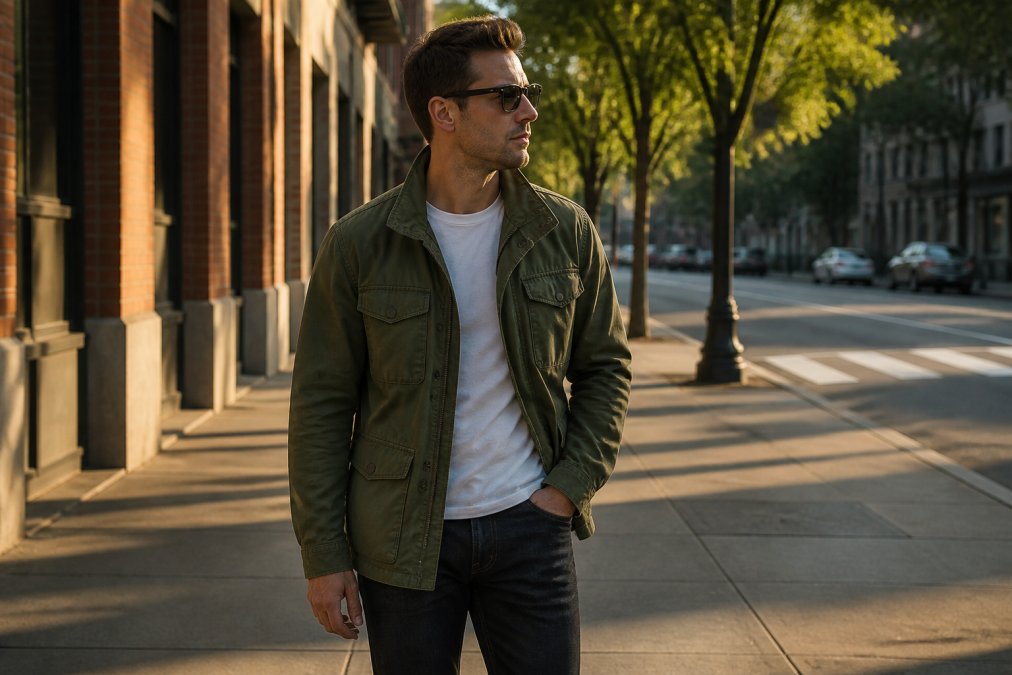
The key to styling field jackets is to avoid looking like you are in costume. Balance the utilitarian jacket with modern, clean pieces. Pairing a field jacket with a crisp button-down shirt and tailored chinos creates a smart-casual look perfect for a casual Friday at the office.
Military Surplus Clothing for Civilians: The Real Deal vs. Inspired
For those seeking authenticity, military surplus clothing for civilians offers a direct link to history. Buying genuine surplus means getting gear actually produced for service members, which often means superior durability and authentic details. However, genuine surplus can be hard to find in consistent sizes and conditions.
On the other hand, "military-inspired" apparel offers modern comfort and fit while borrowing the aesthetic. If you want a piece of history, seek out vintage or reproduction items. If you want a comfortable, everyday jacket that evokes the style, a modern interpretation is the better route. The best approach for most is a mix of both.
The Modern Utility: Custom Embroidered Military Unit Caps
While a field jacket connects you to a broader heritage, custom embroidered military unit caps offer a more personal and direct form of expression. For veterans and their families, wearing a cap that signifies a specific unit, ship, or squadron is a powerful way to honor service and maintain a bond with those who served alongside them. These caps are badges of identity and pride.
This is where a focus on quality matters most. At US Troop Gear, Inc., we ensure our branch-specific caps are built to last, using the same supplier that dispenses to exchanges and posts worldwide. For example, our US Army Veteran Cap is a high-quality, made-in-the-USA poly military ball cap, ensuring that the emblem you wear is as durable as the service it honors. Whether you choose a US Air Force Cap or a USMC (Bulldog) Cap, you are getting gear built to serve.


Caring for Your Military Heritage Gear
Owning a piece of military heritage comes with the responsibility of proper care, especially if you have invested in vintage or reproduction items. The goal is to preserve the fabric, hardware, and original character so the garment lasts another generation. This section provides a practical, material-specific guide to cleaning, repairing, and preserving your gear.
Know Your Fabric: Wool, Cotton, and Nylon
The first step in any care routine is identifying the primary fabric.
- Wool: Found in vintage greatcoats, peacoats, and service uniforms. Wool is naturally water-resistant and dirt-repellent, but it is prone to shrinking and felting when exposed to heat and agitation. It is also a target for moths.
- Cotton Canvas and Twill: The primary material for field jackets (M-65), chinos, and fatigue shirts. Cotton is durable but will fade with sun exposure and shrink if washed in hot water. It is also susceptible to mildew if stored damp.
- Nylon: Used in later MA-1 bomber jackets and some cold-weather gear. Nylon is lightweight, quick-drying, and resistant to mildew, but it can melt under high heat and is prone to tearing if snagged.
Cleaning Wool Garments
For wool items like a vintage peacoat, avoid machine washing; the agitation and spin cycle will cause the fibers to mat and shrink (extension.usu.edu). Air them out after each wear and spot-clean marks with a damp cloth and mild wool-safe detergent. For a deeper clean, take the garment to a professional dry cleaner specializing in vintage textiles.
Cleaning Cotton Field Jackets and Trousers
Cotton is more forgiving than wool, but it still requires a measured approach. For a cotton field jacket like the M-65, spot cleaning is the first line of defense. When a full wash is necessary, turn the garment inside out, use cold water on a gentle cycle, and a mild detergent free of bleach and optical brighteners. Hang to dry, but not in direct sunlight, as UV rays will accelerate fading of the olive drab dye.
Cleaning Nylon Bomber Jackets
Nylon jackets, such as the MA-1, are the easiest to clean. They can be machine-washed on a gentle cycle with cold water and a mild detergent. Remove any removable liners first and close all zippers to prevent snagging. Hang to dry, and never use a dryer or an iron on nylon, as heat will melt the synthetic fibers.
Repairing Common Issues: Zippers, Buttons, and Seams
The most common failure points on military heritage gear are the hardware and the seams. A broken zipper on a vintage M-65 or MA-1 is common but often repairable. If the zipper teeth are intact but the slider is broken, a tailor can replace the slider for a few dollars. For brass buttons and snaps, use a metal polish designed for brass to remove tarnishing. For loose seams, reinforce them with a needle and thread matching the original color, using a backstitch for strength.
Preserving Vintage Gear: Storage and Pest Control
Proper storage is critical for preserving vintage items. The enemy of all textiles is light, heat, and moisture. Store your gear in a cool, dry, dark place. Avoid plastic garment bags, which trap moisture and lead to mildew; use a breathable cotton garment bag or a clean cotton sheet. For wool items, add cedar blocks or lavender sachets to deter moths. Before storing any item for a long period, ensure it is completely clean and dry.
The Unique Angle: Sustainable Care as a Form of Respect
The most overlooked aspect of caring for military heritage gear is its connection to sustainability. In an era of fast fashion, maintaining and repairing a piece of military surplus is a counter-cultural statement. It extends the life of a product originally built to withstand extreme conditions, reducing demand for new, lower-quality reproductions that often end up in landfills. This is a form of respect that honors the original intent of the design, to be durable, serviceable, and long-lasting.
Conclusion: Wear Your Pride with Purpose
Building a wardrobe around military heritage apparel for civilians is about more than just aesthetics. It is a daily acknowledgment of the values of service, durability, and sacrifice that these garments represent.
To complete your look with a personal touch of service and pride, consider adding a custom embroidered cap from US Troop Gear, Inc. Our collection spans the U.S. Army, Navy, Air Force, Marine Corps, and Coast Guard, offering high-quality, durable gear that is built to serve. From specialized ship crests to commemorative challenge coins, we provide a meaningful connection to the strength and unity of America's Armed Forces. Continue shopping and wear your story with honor.
Frequently Asked Questions
Is it respectful for civilians to wear military-inspired apparel?
Yes, when done respectfully. The key is to avoid wearing actual military uniforms, medals, or rank insignia if you haven't served. Military heritage apparel, like a field jacket or a branch-specific cap, is a way to show support and appreciation for the armed forces. Choose items that honor the service rather than impersonate a service member. Wearing a US Army Veteran Cap, for example, is a clear statement of support and pride.
What is the difference between military surplus and military-inspired clothing?
Military surplus is actual issued or overstock gear originally made for the armed forces. It offers authentic durability and history but can be hard to find in good condition. Military-inspired clothing, like a new field jacket or cargo trousers, borrows design elements for civilian life, often with modern fabrics and fits. For a civilian, inspired gear is often more practical and comfortable for daily wear.
How do I style military heritage pieces for a modern look?
Start with one key piece, like a field jacket or bomber jacket, and build a simple outfit around it. Pair a utilitarian jacket with a plain crew neck t-shirt, jeans, and clean sneakers or combat boots. The goal is to let the heritage piece stand out without looking like a costume. Focus on fit, as a well-tailored jacket will look intentional and modern rather than like a hand-me-down.
What makes a custom embroidered military unit cap different from a generic one?
A custom embroidered cap is built around specific unit details, ship crests, or branch insignia. Generic caps often use a one-size-fits-all design that lacks the detail and authenticity veterans look for. A quality custom cap uses precise embroidery to capture the artwork's finer points, ensuring the insignia is readable and accurate. This focus on detail creates a meaningful connection to a specific service history.
This article was written using GrandRanker