

Are Vintage Air Force Flight Jackets Worth Money?
Last Updated: November 12, 2026
Quick Summary
Vintage Air Force flight jackets can be worth real money, but value depends on era, model, contract, and condition. Start by identifying the branch marking, model code, and label, then check authenticity and compare recent sold prices. Vintage flight gear values often hinge on small details that are easy to miss.
- Army Air Forces markings generally point to World War II-era gear, while U.S. Air Force markings indicate postwar production.
- Check the label for contract number, manufacturer, and size, and photograph it before handling the piece further.
- Grade condition on a five-tier scale, since the weakest major component sets the ceiling on value.
- Build your estimate from at least three to five recent sold comparables, not asking prices.
- Cleaning or oiling leather before grading can erase wear patterns that appraisers use to confirm age.
Table of Contents
- How to Value Vintage Flight Gear: A Step-by-Step Appraisal Workflow
- Identifying the Era and Model: Army Air Forces Versus U.S. Air Force Gear
- Reading Labels, Contracts, and Manufacturer Markings
- How Condition, Completeness, and Size Change a Vintage Flight Jacket Value
- Authenticating Originals and Spotting Reproductions and Altered Pieces
- Pricing Your Original Flight Suit: Comparable Sales, Market Methodology, and Price Ranges
- Getting Your Vintage Flight Gear Appraised and Deciding Your Next Step
- Frequently Asked Questions
Vintage Air Force flight jackets can be worth real money, but the answer depends on the era, the model, the contract, and the condition. Collectors can pay widely different amounts for the right piece, and the difference often comes down to a few small details. Vintage flight gear is a category where a careful look at the label can change the whole valuation.
This guide explains how to identify the era, read labels and contracts, judge condition, spot reproductions, and approach pricing so you can make an honest estimate before you buy, sell, or insure.
Vintage flight gear covers more than leather jackets. It includes flight suits, parkas, helmets, and accessories. Each category has its own value drivers, so a single rule of thumb will not work for everything.
How to Value Vintage Flight Gear: A Step-by-Step Appraisal Workflow
Start with a repeatable process. Valuing a jacket on instinct often leads to mistakes, so work through the same steps every time.
- Step 1: Identify the item type. Is it a jacket, a flight suit, a parka, or an accessory?
- Step 2: Identify the branch and era. Look for Army Air Forces markings or U.S. Air Force markings.
- Step 3: Read the label and contract information. Note the contract number, size, and manufacturer.
- Step 4: Grade the condition. Check the leather, lining, zippers, stitching, and patches.
- Step 5: Check completeness. Original hardware, patches, and matching pieces add value.
- Step 6: Authenticate. Compare the construction and materials against known originals.
- Step 7: Find comparable sales. Look at recent sold prices for similar items, not asking prices.
A common mistake is skipping Step 6. Many buyers focus on condition and forget to check whether the piece is genuine. A well-worn reproduction can still sell for less than a clean original.
Identifying the Era and Model: Army Air Forces Versus U.S. Air Force Gear
The branch name on older gear matters. Army Air Forces gear dates mostly from the World War II era. The U.S.
This split is one of your most useful clues, telling you where to start your research.
Model designations help too. Jackets are often identified by letter codes such as A-2, B-3, G-1, and MA-1.
The A-2 is a leather jacket closely tied to World War II-era aviation. The B-3 is a sheepskin-lined leather jacket with a distinct collar.
Flight suits and parkas follow their own timelines. A CWU flight jacket and an N-3B parka both have specific production windows, so check each model against known references.
Writing down the branch, the model code, and the era before you look at price is a useful habit.
Visual Identification Checklist for Jackets and Flight Suits
Use this checklist when you first examine a piece:
- Branch marking matches the era (Army Air Forces or U.S. Air Force)
- Model style matches a known code (A-2, B-3, MA-1, and so on)
- Collar, zippers, and pocket placement match the model
- Lining type fits the model's production period
- Hardware, such as zippers and snaps, shows period-appropriate markings
- Patches and insignia are consistent with the branch and era
- Overall construction looks like wartime or postwar production
If several boxes are unchecked, slow down and take a closer look.
Reading Labels, Contracts, and Manufacturer Markings
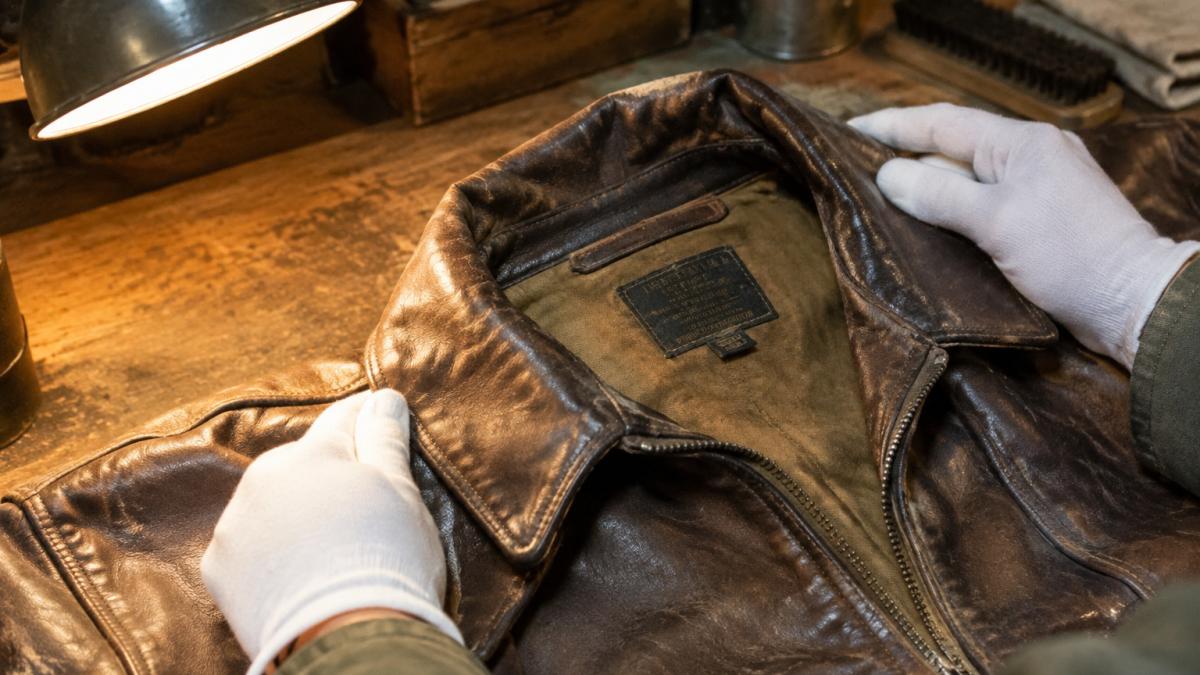
Labels are often the strongest evidence of a piece's history. Look inside the jacket, usually near the collar, the waistband, or along a side seam.
Common label information includes:
- Contract number: Ties the item to a specific government purchase
- Manufacturer name: Identifies the company that made the piece
- Size: Helps match the item to a standard size chart
- Date or lot information: Narrows the production period when present
Contract numbers are especially useful, pointing to a specific order and period, but they must be read carefully. A label that looks right can still be a reproduction, so treat labels as one piece of evidence rather than proof.
Manufacturer markings also help. Some wartime manufacturers are well documented, so compare what you see against trusted references before drawing conclusions.
Photograph every label before you handle the piece further. Clear images make it easier to compare against reference sources or to get a second opinion from an appraiser.
How Condition, Completeness, and Size Change a Vintage Flight Jacket Value
Condition is the largest value swing after authenticity, and the mistake most sellers make is describing wear in adjectives instead of grading it against a consistent scale.
Use a five-tier condition scale and write down the specific defects that place the item in each tier:
- Excellent: No visible wear beyond light handling. Leather supple, lining intact, all original hardware functional, no repairs, patches original and securely stitched.
- Very good: Minor wear consistent with age. Light surface scuffing, slight lining discoloration, original zipper working smoothly, no structural damage.
- Good: Noticeable wear but structurally sound. Surface cracking at stress points, some lining wear, possible replaced zipper pull, small professional repairs.
- Fair: Heavy wear or functional problems. Cracking through the leather, torn lining, non-working zipper, amateur repairs, missing patches or hardware.
- Poor: Structural failure or major loss. Split seams, extensive leather loss, water damage, mold, or missing major components. Value is often driven by salvageable parts rather than the garment.
Grade each component separately, then let the weakest major component set the ceiling. A jacket with excellent leather but a replaced lining is a very good jacket with a documented replacement, and the price should reflect that.
Watch out: Cleaning or oiling leather before you grade it can darken the finish, soften original creasing, and erase the wear patterns appraisers use to confirm age. For guidance on maintaining vintage military gear without damaging its value, see our dedicated article.
Completeness works as a multiplier rather than a flat add.
Size affects demand more than intrinsic value. Check sold listings filtered by size for your model before assuming a size premium or discount.
Separate originality from condition. If you are weighing whether worn seams reduce value, see how repairs are approached on tactical gear in our step-by-step field guide.
Authenticating Originals and Spotting Reproductions and Altered Pieces
Authentication is the step that protects you from expensive mistakes. Reproductions are common in this market, and some are made to look aged. You can learn how surplus differs from reproduction gear in Surplus vs Reproduction Gear: How to Tell the Difference.
Watch for these warning signs:
- Labels that look too clean, too new, or printed in an unusual font
- Construction methods that do not match known originals
- Hardware that is modern, mismatched, or poorly finished
- Materials that feel wrong for the period, such as synthetic linings in a supposedly wartime piece
- Patches sewn on with modern thread or in the wrong location
Altered pieces are harder to spot. A genuine jacket may have had its patches swapped, its label removed, or its lining replaced.
Compare the piece against multiple verified references, not just one. If you are unsure, an independent appraiser can give a second opinion; a careful look often reveals problems that are easy to miss at first glance.
An unfamiliar piece is not automatically fake. Some genuine items look unusual because they were made in limited runs or modified in the field, so document what you find and let the evidence guide your conclusion.
Pricing Your Original Flight Suit: Comparable Sales, Market Methodology, and Price Ranges
Price is the final step, and it should rest on evidence rather than asking prices.
Narrow your sold-search to the same model, era, branch, and condition tier, then record four data points per comparable: sale price, sale date, venue, and condition grade. Venue can matter, so note where each comparable sold. Note the venue alongside each price so you are not mixing retail asks with auction hammer prices.
Use this range-setting method:
- Collect at least three to five sold comparables from the last twelve to eighteen months. Fewer than three is anecdote, not evidence.
- Discard outliers that sold far above or below the cluster unless you can explain why (named provenance, exceptional condition, a rare contract).
- Set a midpoint from the remaining cluster, weighted toward the comparables closest to your item in condition and completeness.
- Apply condition and completeness adjustments as percentages of the midpoint rather than flat dollar add-ons, so the adjustment scales with the item's base value.
- State a range, not a single number. A defensible range is usually the midpoint plus or minus a modest band that reflects the spread in your comparables.
Item-specific factors shift the range more than most sellers expect. Leather jackets dominate the visible market, but flight suits, helmets, oxygen masks, goggles, boots, and cold-weather gear each have their own buyer pools and comparables.
Authenticity is the largest single adjustment. Confirmed originals with documented contracts and period hardware sell in a different market than reproductions, and altered pieces (replaced labels, modern patches, mismatched components) should be priced between the two.
Watch out: A single high sale can anchor your estimate to an outlier.
Finally, date your evidence. Collector demand shifts with interest in specific eras and models, so a range built on sales from several years ago may no longer reflect the current market.
Getting Your Vintage Flight Gear Appraised and Deciding Your Next Step
Once you have a working estimate, decide what you want to do next: buy, sell, insure, or simply document a collection. Each goal calls for a slightly different approach.
If you are selling, get a second opinion before you list. If you are buying, ask the seller for documentation and photographs of the label and construction.
Keep records of everything: photos of labels and wear, notes on comparable sales, and any authentication findings. Good documentation protects your value and makes future transactions easier.
For collectors who want to build or maintain a collection of military-themed gear, US Troop Gear, Inc. offers branch-specific apparel, embroidered caps, and challenge coins for the U.S.
Frequently Asked Questions
How do you determine the value of vintage Air Force flight gear?
Start by identifying the era, model, and contractor from labels and markings, then grade the condition and check completeness. Compare the piece against recent sold listings for the same model, contract, and size rather than asking prices. Original, complete, well-labeled pieces in good condition sell for the most, while alterations, missing parts, or heavy repairs lower the estimate. Keep notes on each factor so your valuation can be repeated and explained to a buyer or appraiser.
What vintage flight jackets are worth the most?
Jackets with verified World War II contract labels, documented service history, and intact original hardware tend to bring the highest prices. Early leather models such as the A-2 and B-3 are often sought after when they are original and well preserved, while later nylon or postwar designs usually sell for less. Rarity, size, and condition all influence the final figure, so compare sold examples of the same model before setting expectations.
How can you tell if a WWII flight jacket is authentic?
Examine the contract label, stitching pattern, zipper and snap hardware, and the materials against documented examples of the same period. Look for consistent construction, correct label typography, and wear that matches age and use rather than artificial distressing. Reproductions and civilian copies often have modern threads, incorrect labels, or hardware that does not match the era. When doubt remains, have the piece examined by a knowledgeable appraiser before purchase.
Where can you get vintage military flight gear appraised?
Options include independent appraisers who specialize in militaria, established vintage clothing dealers, and collector groups with experienced members who review photos and details. Ask whether the appraiser documents comparable sales and explains condition adjustments, and request a written estimate that states the method used. Bring clear photos of labels, markings, and any service records to speed the process.
